Taddinam • Shraddham • Abdhikam • Hyderabad
Yearly Rites Pooja in Hyderabad
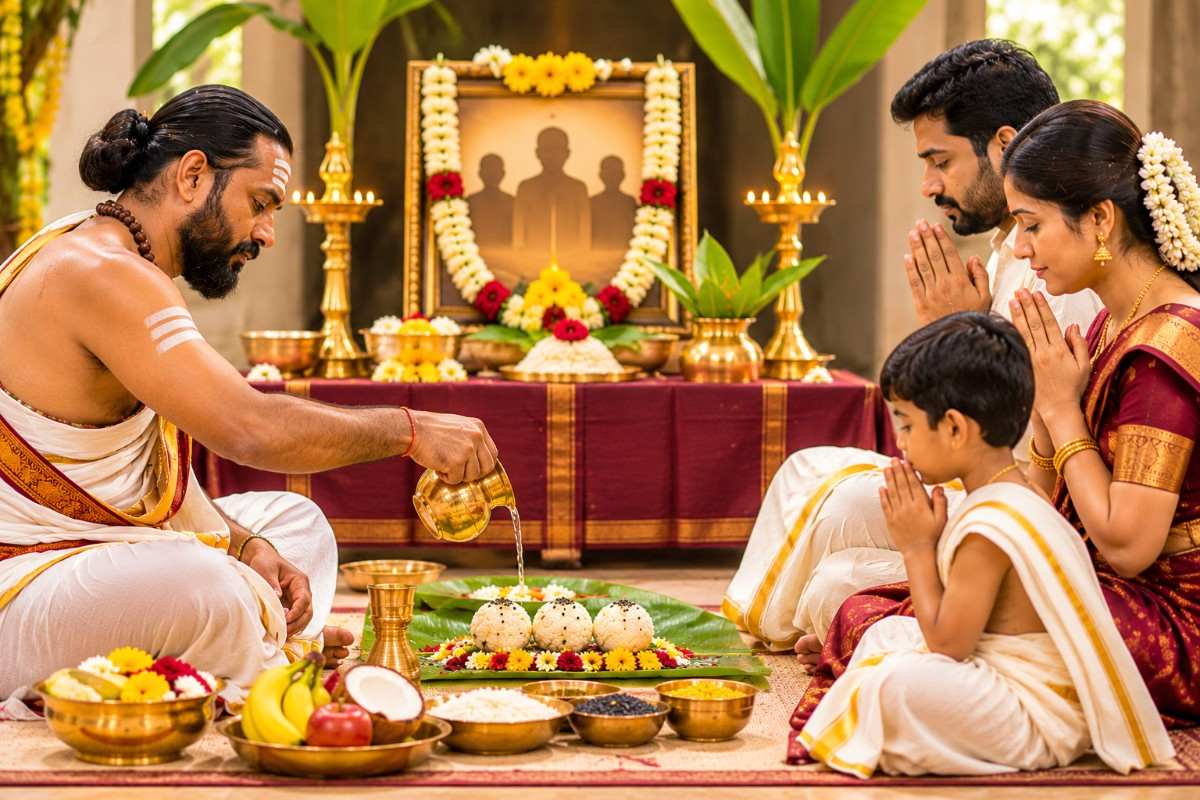
Planning Yearly Rites Pooja in Hyderabad for a departed parent or family member? Contact 99Poojas to enquire about Telugu pandit arrangements for Annual Shraddham, Taddinam (తద్దినం), Abdhikam (ఆబ్దికం) and related Pitru Karma ceremonies.
Yearly Rites Pooja is a traditional Hindu observance performed in remembrance of departed family members. Depending on the family's Sampradayam, the ceremony may include Sankalpam, Tila Tarpanam, Pinda Pradanam, prescribed Shraddha offerings and Brahmin Bhojanam.
The annual observance is commonly scheduled according to the deceased person's lunar death Tithi rather than simply repeating the English calendar date.
99Poojas can be contacted to discuss the required Telugu purohit, preferred Hyderabad location, ceremony type, Tithi details, Samagri, food arrangements and booking charges.
🌙
Lunar death Tithi
Not the English date alone
🌾
Tarpanam & Pinda
Per your Sampradayam
ॐ
Telugu purohits
First-year or recurring rites
₹
Itemised quotation
Dakshina, samagri, food
Quick Answer
Quick Answer: What Is Yearly Rites Pooja?
Yearly Rites Pooja is an annual Hindu ceremony performed to remember and honour departed parents or ancestors. In Telugu families, it is commonly called Taddinam, Shraddham or Abdhikam, although terminology and procedures vary. The observance is generally scheduled according to the lunar death Tithi and may involve Tila Tarpanam, Pinda Pradanam, prescribed offerings and Brahmin Bhojanam, depending on the family's tradition.
Yearly Rites Pooja at a Glance
Ceremony Details
Information
Service
Yearly Rites Pooja / Annual Shraddham
Telugu names
తద్దినం (Taddinam), శ్రాద్ధం (Shraddham), ఆబ్దికం (Abdhikam)
Religious purpose
Annual remembrance and ancestral worship
Associated tradition
Pitru Karma
Main participants
Karta and family members, according to Sampradayam
Common rituals
Sankalpam, Tarpanam, Pinda Pradanam and prescribed Shraddha rites
Main scheduling factor
Death Tithi, Paksham and lunar month
Muhurtham
According to applicable Shraddha rules and local Panchangam
Samagri
Darbha, sesame seeds, rice, water and other prescribed items
Food arrangements
According to family tradition and selected Vidhanam
Venue
Home or another suitable permitted location
Duration
Varies by first-year or recurring annual ceremony
Service area
Hyderabad, Telangana
Booking
Enquire with 99Poojas
Key Takeaways
- Yearly Shraddham is a traditional observance remembering departed parents and ancestors.
- Telugu families commonly use terms including Taddinam, Abdhikam and Shraddham.
- The annual date generally follows the lunar death Tithi rather than the same English calendar date.
- The first annual ceremony may differ from recurring yearly Shraddham.
- The role of the Karta and the prescribed rituals depend on family Sampradayam.
- Pinda Pradanam, Tila Tarpanam and Brahmin Bhojanam may be included according to the selected Vidhanam.
- Families should confirm the date, ceremony format, materials, food and required priests before booking.
- Religious rites should be approached with dignity and respect, without promises of guaranteed spiritual or material outcomes.
What & Why
2. What Is Yearly Rites Pooja and Why Is It Performed?
Yearly Rites Pooja is a traditional Hindu remembrance ceremony performed annually in honour of a departed parent, ancestor or other family member for whom the prescribed rites apply.
The observance is part of Pitru Karma, a broad group of religious duties associated with one's ancestors.
ॐ
What Is Annual Shraddham?
Shraddham (శ్రాద్ధం) is a traditional Hindu rite performed with reverence for departed ancestors.
The word is associated with Shraddha, meaning faith or sincere devotion.
In annual Shraddham, family members conduct prescribed rites in remembrance of a person who has passed away.
🪔
What Is Taddinam in Telugu?
Taddinam (తద్దినం) is a commonly used Telugu term for an annual death-anniversary observance.
Families may use it when referring to the recurring yearly Shraddham performed on the prescribed lunar Tithi.
The precise ceremony can vary according to Sampradayam.
📿
What Is Abdhikam?
Abdhikam or Aabdhikam (ఆబ్దికం) is associated with yearly Shraddha observances.
Some traditions use the term especially for the first annual ceremony, while other families use it more broadly for annual rites.
The correct Vidhanam should not be determined from the name alone.
Why Is Yearly Shraddham Performed?
Families perform yearly Shraddham to honour departed relatives and maintain an inherited religious tradition.
The observance may express:
- Remembrance of deceased parents and elders.
- Gratitude for family lineage.
- Respect for ancestral traditions.
- Fulfilment of customary Pitru Karma.
- Family participation in remembrance.
- Prayers for the departed according to religious belief.
What Is Pitru Karma?
Pitru Karma refers to traditional Hindu rites associated with deceased ancestors.
It can include different observances at different stages after a death and in subsequent years.
Not every Pitru Karma ceremony follows the same procedure.
What Is Pitru Runa?
Pitru Runa is the traditional concept of a duty or debt of gratitude owed to one's ancestors.
In Hindu religious teachings, honouring parents and preserving family responsibilities are often connected with this idea.
Is Yearly Shraddham the Same as a First Death-Anniversary Ceremony?
Not always.
The first-year observance may include or follow specific rites associated with the completion of the initial mourning and post-death ritual cycle.
Recurring annual Shraddham may use a different procedure.
The priest should confirm which ceremony applies.
Are the Religious Benefits of Yearly Shraddham Guaranteed?
No.
Families may perform the rites with prayers for ancestors and family well-being, but spiritual outcomes are matters of belief.
There is no reliable basis for promising that a ceremony will prevent misfortune, cure illness or guarantee prosperity.
Is Yearly Shraddham Only About Performing Rituals?
No.
For many families, it is also a time to remember a loved one's life, values and contributions.
The religious observance and personal remembrance can be meaningful in different ways.
Who Should Perform
3. Who Should Perform Yearly Shraddham and What Are the Telugu Family Traditions?
Yearly Shraddham is generally conducted by a designated family member called the Karta, according to the family's religious tradition.
The appropriate person and ritual responsibilities can differ across Telugu communities and lineages.
🙏
Who Is the Karta?
The Karta is the person who performs or leads the prescribed ancestral rites.
The Karta participates in Sankalpam, Tarpanam, Pinda Pradanam and other rituals as directed by the priest.
👤
Is the Eldest Son Usually the Karta?
In many traditional families, the eldest son has a recognised role in performing Shraddham.
However, this should not be treated as an absolute rule for every Hindu community.
Family traditions and religious interpretations vary.
👥
Can a Younger Son Perform Yearly Shraddham?
In some traditions, a younger son may perform the rites when appropriate.
The family should discuss the situation with a qualified priest familiar with its Sampradayam.
🤍
Can a Daughter Perform Shraddham?
Practices differ.
Some traditions and contemporary family arrangements permit daughters to perform ancestral rites, while others prescribe particular roles.
Families should seek respectful guidance rather than assume that daughters are universally ineligible.
💍
Can a Spouse Perform the Ceremony?
This depends on the relationship to the deceased and the applicable religious tradition.
A priest can advise on the proper Karta arrangement.
🪔
Can Yearly Shraddham Be Performed for a Mother or Father?
Yes.
Annual Shraddham is commonly performed for departed parents according to the prescribed family rites.
Can the Ceremony Be Performed for Other Relatives?
Potentially, depending on the relationship and religious tradition.
Do not assume the same procedure applies to every deceased relative.
What Details Are Needed for Sankalpam?
The officiating priest may request:
- Name of the deceased person.
- Relationship to the Karta.
- Gotram or family lineage information, where known.
- Date of death.
- Time and place of death, if available.
- Known lunar Tithi.
- Relevant family Sampradayam.
- Details of earlier rites, particularly during the first year.
What If the Gotram Is Unknown?
Tell the priest before the ceremony.
The appropriate way to proceed depends on the family tradition and available details.
Do All Telugu Families Follow the Same Shraddham Procedure?
No.
Telugu Smarta, Sri Vaishnava, Madhva and other traditions may have different ritual texts, Karta rules, offerings and food arrangements.
Some families also follow practices handed down through their own lineage.
What If Family Members Live Abroad?
Family members living outside India may wish to arrange the ceremony in Hyderabad.
They should clarify who will act as Karta, which family members will attend and whether remote participation is acceptable within their tradition.
An online video call does not automatically replace prescribed physical ritual participation.
What If This Is the Family's First Time Organising Taddinam?
The first step is to explain the family circumstances and earlier rites to the priest.
The correct ceremony should be identified before purchasing Samagri or confirming a venue.
Procedure
4. Yearly Rites Pooja Procedure – Step by Step
Yearly Rites Pooja commonly includes preparing the ritual space, Sankalpam, offerings to ancestors, Tila Tarpanam, Pinda Pradanam and other prescribed Shraddha observances.
The sequence and inclusion of rituals depend on whether the occasion is the first annual ceremony or a recurring yearly Shraddham.
1
Confirm the Ceremony and Date
Before the ritual begins, the priest confirms whether the family requires first-year Abdhikam, recurring Taddinam or another related observance. The selected date should follow the family's death-Tithi rules.
2
Prepare the Ritual Space
A clean space is arranged for the Karta, priest and prescribed offerings. Water, Darbha, sesame seeds, rice and other materials are kept ready.
3
Achamanam and Preliminary Observances
The priest guides the Karta through Achamanam and other prescribed preparations. These vary across traditions.
4
Pavitra Dharana, Where Prescribed
Some traditions require a Pavitra made from Darbha grass or another prescribed material. The priest explains its preparation and use.
5
Sankalpam
The Karta performs Sankalpam with the prescribed ancestral and family details. The relevant lunar date and ritual purpose are stated according to the Vidhanam.
6
Invocation of Ancestors
The prescribed Shraddha procedure may include ritual invocation of the ancestors being honoured. The specific mantras and sequence depend on Sampradayam.
7
Tila Tarpanam
Tila Tarpanam involves ritual water offerings, commonly using black sesame seeds, according to the prescribed procedure. The priest directs the Karta in performing these offerings.
8
Pinda Pradanam
Pinda Pradanam involves preparing and offering Pindas, commonly made from rice or other prescribed ingredients. The number, preparation and placement of Pindas vary according to the ritual.
9
Additional Shraddha Rituals
Depending on the tradition, the ceremony may include further prescribed mantras, offerings and worship. These should be performed according to the officiating priest's guidance.
10
Brahmin Bhojanam, Where Prescribed
Some Shraddham Vidhanams include serving a traditional meal to invited Brahmins or designated ritual participants. The requirements and number of participants differ.
11
Dakshina and Danam
The ceremony may include priest Dakshina or other prescribed offerings. These arrangements should be discussed respectfully before the event.
12
Concluding Prayers
The priest completes the prescribed closing rites. The family may then conclude its observance according to tradition.
🌾
Is Pinda Pradanam Required in Every Annual Shraddham?
Pinda offerings are part of many Shraddha traditions, but the precise requirement and procedure depend on the selected Vidhanam.
💧
Is Tila Tarpanam the Same as Shraddham?
No.
Tila Tarpanam is a ritual component involving prescribed water and sesame offerings.
Shraddham can be a broader ceremony containing additional rites.
🍃
Is Brahmin Bhojanam Compulsory?
It is an important component in several traditional Shraddham formats.
However, requirements differ, and alternative observances may exist in particular traditions.
Do not assume the same rule applies to all households.
ॐ
Can Yearly Shraddham Be Completed Without a Purohit?
Some families follow simplified forms of remembrance or ancestral offerings, while others require a priest-led traditional Vidhanam.
If a family wants a formal Shraddham according to its Sampradayam, it should obtain appropriate religious guidance.
Important: This is an educational overview, not a substitute for a priest's prescribed ritual sequence.
Samagri & Checklist
5. Yearly Shraddham Samagri List and Family Preparation Checklist
Yearly Shraddham Samagri commonly includes Darbha grass, black sesame seeds, rice, water, ritual vessels and materials for the prescribed offerings.
Additional items and food preparations depend on the family's Sampradayam and the selected ceremony.
🌾
General Shraddham Samagri
🍃
Food and Brahmin Bhojanam Arrangements
Where Bhojanam forms part of the selected Vidhanam, families may need to arrange:
The menu, ingredients and cooking restrictions should follow the family's Sampradayam.
🌿
What Is Darbha Used For?
Darbha is a sacred grass used in various Hindu rituals, including ancestral ceremonies.
Its exact ritual use depends on the prescribed procedure.
⚫
Why Are Black Sesame Seeds Used?
Black sesame seeds are traditionally associated with Tarpanam and ancestral offerings in several Hindu traditions.
The priest should explain their preparation and quantity.
🍚
What Materials Are Needed for Pinda Pradanam?
Pindas may be prepared from rice or other ingredients prescribed by the family's tradition.
Do not assume every ritual uses the same recipe or number of offerings.
Is Outside Catering Allowed?
This depends on the family's religious requirements.
Some families prefer food prepared at home following specific rules.
Others may use an accepted cooking or catering arrangement.
Confirm the requirements before placing a catering order.
Clothing and Seating Arrangements
The Karta and participating family members may follow prescribed clothing customs.
Arrange comfortable seating and sufficient space for the priest and rituals.
Yearly Shraddham Samagri and Family Checklist
Ritual Materials
Family Preparation
Darbha and Pavitra materials
Confirm the Karta
Black sesame seeds
Verify the death Tithi
Rice and Pinda ingredients
Explain the family's Sampradayam
Water and ritual vessels
Prepare the ceremony space
Plates and banana leaves
Arrange food and serving materials
Additional prescribed offerings
Confirm the number of priests and participants
Traditional meal ingredients
Organise the cooking arrangements
Dakshina arrangements
Confirm the quotation and any exclusions
Does the Pandit Bring the Samagri?
This depends on the booking.
Ask whether the priest provides Darbha, sesame seeds, ritual vessels and other materials, or whether the family needs to arrange them.
What Should Families Avoid Purchasing in Advance?
Avoid buying large quantities of food, ritual materials or specialised items until the priest confirms the Vidhanam and number of participants.
Request the complete yearly Shraddham Samagri list before making arrangements.
Death Tithi & Muhurtham
6. How to Find the Correct Death Tithi and Muhurtham for Yearly Rites in Hyderabad
Annual Shraddham is commonly performed according to the lunar Tithi associated with the person's death, rather than automatically on the same date of the English calendar every year.
The correct date can depend on the lunar month, Paksham, Tithi, local Panchangam and prescribed timing rules.
🌙
What Is Death Tithi?
A Tithi is a lunar day in the Hindu calendar.
The Tithi associated with a person's death is used in many traditions to determine future Shraddham observances.
🗓
Why Does the Annual Shraddham Date Change?
The Gregorian and Hindu lunar calendars follow different systems.
A particular lunar Tithi may therefore fall on different English calendar dates in successive years.
What Are Masam, Paksham and Tithi?
- Masam: The lunar month.
- Paksham: The fortnight within the lunar month, commonly Shukla Paksham or Krishna Paksham.
- Tithi: The lunar day.
Together, these details help identify the appropriate annual observance.
How Is the Correct Shraddham Date Calculated?
A priest generally needs to:
1
1.
Identify the original death Tithi from the relevant information.
2
2.
Confirm the lunar month and Paksham.
3
3.
Check the corresponding lunar observance in the intended year.
4
4.
Apply the date-selection rules of the family's Sampradayam.
5
5.
Use the Panchangam appropriate to the location where the ceremony will be performed.
What Is Aparahna Kala?
Aparahna is a period in the latter part of the day.
Several Shraddha traditions use Aparahna-related rules when determining the appropriate Tithi and ceremony timing.
It should not be treated as one fixed clock-time range for every location and date.
What Information Should the Family Share?
Information
Why It Matters
Date of death
Helps identify the original lunar date
Time of death, if available
Can affect the Tithi at the moment of death
Place of death
Helps determine the original local calendar calculation
Known death Tithi
Supports identification of the annual observance
Family Sampradayam
Determines relevant ritual and timing rules
Hyderabad ceremony location
Used for the local Panchangam
Year of observance
Distinguishes first-year and later rites
What If the Time of Death Is Unknown?
Share the available information with the priest.
An exact time may be important when the Tithi changed near the recorded date.
Do not guess the death Tithi from the English date alone.
What Happens During Adhika Masam?
Adhika Masam is an additional lunar month that occurs in certain years.
Annual Shraddham rules for such years can differ by tradition and circumstances.
A qualified purohit should determine the appropriate observance; a generic online rule may not fit every family.
What If the Death Tithi Falls Across Two Calendar Days?
The appropriate Shraddham date may depend on how the relevant Tithi overlaps with the prescribed period of the day.
This is one reason date selection should be checked carefully.
Can an Online Panchangam Help?
Yes.
A reliable Panchangam or Shraddha Tithi calculator can help identify candidate dates.
However, the final date should be checked against the family's religious tradition, especially for unusual calendar situations.
What If the Annual Tithi Was Missed?
Different traditions prescribe different remedies or alternative observances.
The family should consult its purohit rather than simply choose the next convenient date without guidance.
Can Shraddham Be Performed on the English Death Anniversary?
Some families may hold a separate remembrance gathering on that date.
However, the prescribed religious Shraddham date may differ.
Keep personal remembrance and ritual date-selection requirements distinct.
Should Families in Hyderabad Use a Hyderabad Panchangam?
Yes.
When the rite is performed in Hyderabad, location-specific calendar and timing information is relevant.
Cost in Hyderabad
7. Yearly Rites Pooja Cost in Hyderabad
Yearly Rites Pooja cost in Hyderabad depends on the type of Shraddham, priest Dakshina, number of ritual participants, Samagri, Pinda Pradanam requirements, Brahmin Bhojanam, venue and travel.
The first annual ceremony may involve different arrangements from a recurring yearly Taddinam.
Yearly Rites packages
Package
What's included
Price
Silver
1 experienced priest. You arrange the pooja materials.
₹3,000
Gold (recommended)
2 experienced priests. All pooja materials (samagri) provided by 99Poojas.
₹4,500
Yearly Shraddham with Brahmana Bhojanam or Tila Homam
Additional rituals, more priests or arrangements for invited Brahmins
Ask for a quote
How payment works
Package
Pay at booking (40%)
Pay after the pooja (60%)
Silver – ₹3,000
₹1,200
₹1,800
Gold – ₹4,500
₹1,800
₹2,700
Pay the 40% advance securely online when you book. The remaining 60% is paid after the pooja is completed. Cancellations made at least 48 hours before the pooja are refundable; cancellations within 48 hours are non-refundable.
Factors Affecting Yearly Rites Charges
Cost Factor
What It May Cover
Telugu pandit Dakshina
Services of the officiating purohit
Type of ceremony
First-year Abdhikam or recurring annual Shraddham
Number of priests
Priests required by the selected Vidhanam
Pinda Pradanam
Prescribed offerings and ritual materials
Tila Tarpanam
Sesame seeds, water and other materials
Samagri
Darbha, rice, vessels and additional items
Brahmin Bhojanam
Food, seating and serving arrangements
Danam
Customary offerings, where prescribed
Venue
Home or another appropriate location
Travel
Priest transportation
Ceremony duration
Time required for the selected rites
What Is Included in Yearly Rites Pooja Booking?
Before confirming a quotation, ask whether the arrangement includes:
- Death-Tithi consultation.
- Sankalpam.
- Pavitra Dharana, where prescribed.
- Tila Tarpanam.
- Pinda Pradanam.
- Other prescribed Shraddha rituals.
- Priest Dakshina.
- Additional ritual participants.
- Darbha and other Samagri.
- Brahmin Bhojanam arrangements.
- Danam or associated items.
- Priest travel.
- Guidance on family food preparation.
These are items to clarify, not claims that every 99Poojas booking includes all of them.
Is First-Year Abdhikam More Expensive?
It can be, because some first-year observances involve additional rites, participants or preparation.
The exact difference depends on Sampradayam.
Does the Cost Include Brahmin Bhojanam?
Not necessarily.
Food preparation, serving and the number of invited participants may be managed separately by the family.
Is Samagri Included?
This depends on the agreed service.
Confirm which materials are supplied and which are the family's responsibility.
Are Danam and Dakshina the Same?
Not necessarily.
Dakshina generally refers to an offering or remuneration given to the officiating priest.
Danam can refer to other prescribed gifts or offerings according to the ritual tradition.
The priest should explain their intended purpose and whether they are included in the quotation.
Does a Home Ceremony Cost Less Than a Hall Ceremony?
A home ceremony may avoid venue rental, but costs depend on the selected ritual, available facilities, cooking arrangements and number of participants.
How Can Families Request an Accurate Quotation?
Share the deceased person's available Tithi details, the year of observance, family Sampradayam, Hyderabad venue and expected food arrangements.
Ask for a clear breakdown of priest services, Samagri, food, additional participants, travel and other expenses.
Request Yearly Rites Pooja Charges – Contact 99PoojasShraddham vs Abdhikam vs Masikam
8. Annual Shraddham vs Abdhikam vs Masikam vs Pitru Paksha Tarpanam – Key Differences

Annual Shraddham, Abdhikam, Masikam and Pitru Paksha Tarpanam are related ancestral observances, but they are not interchangeable.
Their purposes, timing and procedures vary.
Comparison Table
Ceremony
When It Is Observed
Main Distinction
Annual Shraddham / Taddinam
Generally every year on the prescribed death Tithi
Recurring annual ancestral ceremony
Abdhikam / Samvatsarikam
Often associated with the first annual observance, depending on tradition
May involve first-year completion rites
Masikam
Prescribed monthly occasions during the first year in traditions that follow them
Monthly post-death observance
Pitru Paksha Shraddham / Tarpanam
During the traditional ancestral fortnight
Separate seasonal ancestral observance
What Is Annual Shraddham?
Annual Shraddham is the recurring yearly observance for departed ancestors according to the relevant Tithi and Sampradayam.
What Is Abdhikam?
Abdhikam is associated with yearly Shraddha observances.
Some lineages use the term especially for the first year, while others apply it more broadly.
What Is Samvatsarikam?
Samvatsarikam is another term associated with annual observances.
Its exact relationship to first-year or later rites varies by family tradition.
What Is Masikam?
Masikam refers to prescribed monthly post-death rites in traditions that observe them during the first year.
The timing and sequence depend on the selected Vidhanam.
What Is Pitru Paksha Shraddham?
Pitru Paksha is a traditional period dedicated to ancestral observances.
Families may perform Tarpanam or Shraddham according to their custom during this period.
Does Pitru Paksha Replace Annual Shraddham?
Not universally.
Some families follow both observances, while others have different requirements.
The priest should clarify the family's practice.
Is Pinda Pradanam a Separate Ceremony?
Pinda Pradanam is a ritual offering that may form part of various ancestral ceremonies.
It is not identical to the complete Shraddham Vidhanam in every context.
Is Tila Tarpanam a Separate Ceremony?
Tila Tarpanam may be performed as a component of Shraddham or as a distinct prescribed ancestral offering.
The procedure depends on the occasion.
How Do Families Know Which Ceremony to Book?
Confirm:
- How much time has passed since the death.
- Which post-death rites have already been completed.
- The relevant death Tithi.
- The family's Sampradayam.
- The preferred place of performance.
This information allows the purohit to identify the appropriate ceremony.
At Home & Food
9. Yearly Shraddham at Home – Duration, Food Arrangements and Preparation
Yearly Shraddham may be performed at home when the household has suitable space for the prescribed rituals and any required food arrangements.
Families should confirm the Karta, Tithi, ritual format, Samagri and meal requirements before the ceremony.
🏠
Preparing a Suitable Space
Choose a clean and reasonably quiet area for the ritual.
Arrange sufficient space for the Karta, purohit, offerings and other required participants.
🪑
Seating for the Karta and Purohit
Provide appropriate seating according to the family's ritual requirements.
Some Vidhanams may prescribe particular orientations or positions.
🍚
Arranging Pinda Pradanam
Prepare the ingredients and ritual vessels specified by the priest.
The number and form of Pindas should not be assumed without confirming the tradition.
💧
Water and Tarpanam Arrangements
Clean water and suitable ritual vessels are needed for prescribed water offerings.
Protect the surrounding floor from spills.
🍲
Preparing Traditional Food
Where the selected ceremony includes traditional meal offerings, confirm the menu, cooking requirements and serving arrangements beforehand.
🍃
Brahmin Bhojanam
If required, arrange the invited participants and their meal respectfully.
Clarify the number of people, food arrangements and any associated expenses.
Can Taddinam Be Performed in an Apartment?
Yes, where the available space and family tradition permit it.
An apartment may require additional planning for seating, cooking, water handling and building access.
Can a Hall Be Used Instead of a Home?
A suitable hall or traditional ritual venue may be an option.
Confirm that the place permits the intended Shraddham procedure and food arrangements.
How Long Does Yearly Shraddham Take?
The duration varies significantly.
A simpler annual observance may take a few hours, while an elaborate first-year ceremony with associated rites and meals may occupy much of the day or involve additional scheduled observances.
Do not rely on one fixed duration for every Taddinam or Abdhikam booking.
What Should the Family Wear?
Clothing requirements depend on Sampradayam.
Ask the priest if any particular traditional dress is prescribed.
Sample Yearly Shraddham Ceremony-Day Schedule
Stage
Activity
Before the ceremony
Prepare the ritual space and ingredients
Priest arrival
Confirm Tithi, Karta and Vidhanam
Preliminary rites
Achamanam and prescribed preparations
Sankalpam
State the relevant ancestral and ritual details
Main rites
Tarpanam, Pinda Pradanam and prescribed Shraddha procedure
Food arrangements
Bhojanam or other offerings, where customary
Conclusion
Dakshina, Danam and prescribed closing prayers
After completion
Clean and organise the ritual area
The actual sequence should be provided by the officiating priest.
Yearly Shraddham at Home – Family Checklist
- Identify the year and type of observance.
- Confirm the correct death Tithi.
- Select the Karta according to Sampradayam.
- Share the required family details with the priest.
- Arrange a suitable venue.
- Obtain the final Samagri list.
- Prepare rice, sesame, Darbha and other prescribed materials.
- Confirm whether Brahmin Bhojanam is required.
- Organise cooking and serving arrangements.
- Confirm the priest count.
- Review Dakshina, Danam and travel charges.
- Keep the day's schedule clear of unnecessary commitments.
Why 99Poojas & Booking
10. Why Choose 99Poojas and How to Book Yearly Rites Pooja?
99Poojas provides an enquiry channel for traditional Hindu Pooja services and Telugu purohit arrangements in Hyderabad.
When arranging annual Shraddham, it is important to explain the family tradition and the stage of the post-death ritual cycle before confirming a booking.
🗣
Telugu Pandit Enquiries for Pitru Karma
Families can enquire about a Telugu purohit suitable for their prescribed annual remembrance ceremony.
Confirm that the available priest is familiar with the family's Sampradayam and required Vidhanam.
🌙
Death-Tithi Discussion
Share the original date, time and place of death, if known, together with any previously recorded Tithi.
Ask the priest to confirm the appropriate annual observance date.
🗓
First-Year or Recurring Ceremony
Explain whether this is the first annual observance or a later-year Taddinam.
Different ceremonies may require different arrangements.
🌾
Tarpanam and Pinda Pradanam
Discuss the prescribed rites and required Samagri before booking.
🍃
Food and Brahmin Bhojanam
Clarify whether the family must organise the complete meal and any invited participants.
₹
Priest Availability and Quotation
Confirm the officiating priest, required additional participants, duration, materials and total charges.
How to Book Yearly Rites Pooja with 99Poojas
1
Contact 99Poojas through the website or available enquiry channels.
2
Specify Yearly Rites Pooja, Taddinam, Shraddham or Abdhikam.
3
Share the deceased person's date of death and known Tithi details.
4
Explain whether it is the first annual observance or a later year.
5
Share the family Sampradayam and preferred Hyderabad venue.
6
Confirm the appropriate ceremony, Tithi and prescribed rituals.
7
Discuss Samagri, food arrangements, priest availability and itemised charges.
8
Finalise the booking once the date, requirements and quotation are confirmed.
Yearly Rites Pooja Enquiries Across Hyderabad
Families can enquire about annual Shraddham arrangements in Kukatpally, KPHB, Miyapur, Nizampet, Bachupally, Chandanagar, Gachibowli, Kondapur, Madhapur, Manikonda, Financial District, Ameerpet, Banjara Hills, Jubilee Hills, Secunderabad, Kompally, Uppal, Nagole, LB Nagar and other Hyderabad localities.
- Kukatpally
- KPHB
- Miyapur
- Nizampet
- Bachupally
- Chandanagar
- Gachibowli
- Kondapur
- Madhapur
- Manikonda
- Financial District
- Ameerpet
- Banjara Hills
- Jubilee Hills
- Secunderabad
- Kompally
- Uppal
- Nagole
- LB Nagar
Priest availability and venue arrangements depend on the selected date, family tradition and ritual requirements.
Families Living Outside Hyderabad or Abroad
If family members live elsewhere, clarify who will physically perform the rites and which participants will attend.
The priest should explain whether any additional arrangements are appropriate under the family's Sampradayam.
Respectful Handling of Family Information
Details such as the deceased person's name, date of death, family lineage and personal circumstances should be requested only when relevant to arranging the ceremony.
Families should know which information is needed and should not be asked to share unnecessary private details publicly.
Customer Reviews and Ceremony Photographs
Annual remembrance ceremonies are private and sensitive.
Only use genuine customer feedback with explicit permission.
Avoid publishing photographs of grieving families or ritual participants without their informed consent.
Practical Guidance Before Booking
- Confirm the exact ceremony. First-year Abdhikam and recurring Taddinam may have different requirements.
- Verify the lunar Tithi. Do not automatically use the English calendar anniversary.
- Identify the Karta. Different family traditions may have different rules.
- Discuss the food arrangements. Brahmin Bhojanam, cooking practices and required participants can affect preparation.
- Clarify Samagri responsibilities. Ask who will bring Darbha, sesame seeds, rice and ritual vessels.
- Request an itemised quotation. Separate priest Dakshina, food, Samagri, additional participants and venue charges.
FAQs
11. Frequently Asked Questions About Yearly Rites Pooja
1. What is Yearly Rites Pooja in Hindu tradition?
Yearly Rites Pooja is an annual Hindu remembrance ceremony performed for departed ancestors. It commonly includes prescribed Shraddha observances according to the family's Sampradayam.
2. What is Taddinam or Abdhikam in Telugu?
Taddinam generally refers to annual Shraddham in Telugu families. Abdhikam is associated with annual rites and may refer especially to the first-year ceremony in some traditions.
3. How much does Yearly Rites Pooja cost in Hyderabad?
Yearly Rites in Hyderabad costs ₹3,000 with the Silver package (one priest; your family arranges the samagri) or ₹4,500 with the Gold package (two priests, with all samagri provided by 99Poojas). You pay a 40% advance when booking and the remaining 60% after the pooja.
The cost depends on the ceremony type, priest Dakshina, Samagri, required participants, Brahmin Bhojanam, venue and travel. Contact 99Poojas for an itemised quotation.
4. How do I book a Telugu pandit for Taddinam?
Contact 99Poojas with the available death details, year of observance, family Sampradayam and Hyderabad venue. Confirm the Tithi, priest availability and charges before booking.
5. How is the annual death Tithi calculated?
It is identified using the relevant lunar month, Paksham, Tithi and the prescribed date-selection rules. A qualified priest should confirm the date using an appropriate Panchangam.
6. Should Shraddham be performed on the English death date or lunar Tithi?
In many Hindu traditions, Shraddham follows the lunar death Tithi rather than the same Gregorian date each year.
7. What is the difference between first-year Abdhikam and annual Shraddham?
First-year Abdhikam may include rites associated with completing the first-year observances. Later annual Shraddham is generally a recurring remembrance ceremony. The details vary by tradition.
8. Who should perform yearly Shraddham for deceased parents?
The Karta is selected according to family tradition. In many families a son performs the rites, but the appropriate arrangement should be confirmed with the priest.
9. Can a daughter perform Shraddham?
Practices and interpretations vary. Some traditions permit daughters to perform ancestral rites. Families should seek respectful guidance from a priest familiar with their Sampradayam.
10. What is Pinda Pradanam in yearly Shraddham?
Pinda Pradanam is the ritual offering of prescribed Pindas, commonly prepared from rice or other ingredients, as part of ancestral worship.
11. Is Tila Tarpanam performed during Taddinam?
Tila Tarpanam is included in many Shraddham traditions, but the exact requirements depend on the selected Vidhanam.
12. What Samagri is needed for annual Shraddham?
Common materials include Darbha grass, black sesame seeds, rice, water, ritual vessels and other prescribed offerings.
13. Is Brahmin Bhojanam necessary for yearly Shraddham?
It is important in several traditional Shraddham procedures. The requirement, number of participants and possible alternatives depend on Sampradayam.
14. Can yearly Shraddham be performed at home?
Yes. Many families arrange the ceremony at home with suitable space, materials, food arrangements and the required priest.
15. How long does Taddinam Pooja take?
The duration varies by Vidhanam. Some annual ceremonies take a few hours, while more elaborate rites and associated meals require additional time.
16. What if the annual death Tithi is missed?
Different traditions prescribe different alternative observances. Consult the family priest for an appropriate date and procedure.
17. What is the difference between yearly Shraddham and Pitru Paksha Shraddham?
Yearly Shraddham is generally tied to a particular ancestor's annual death Tithi. Pitru Paksha is a separate traditional period for ancestral observances.
18. Can I arrange annual Shraddham in Hyderabad while living abroad?
You can enquire about arrangements in Hyderabad, but the Karta's physical participation and any alternative arrangements must be confirmed according to the family's tradition.
Book & Enquiry Form
12. Book Yearly Rites Pooja Pandit in Hyderabad – Final CTA
Yearly Shraddham is a meaningful Hindu tradition of remembering departed parents and ancestors through prescribed religious observances.
Whether your family is preparing for the first annual Abdhikam or a recurring Taddinam, confirming the correct Tithi, ceremony procedure, Karta, Samagri and food arrangements can help the day proceed respectfully and without avoidable confusion.
With 99Poojas, you can enquire about Telugu pandit arrangements for annual Shraddham at your preferred Hyderabad location.
Arrange Yearly Rites Pooja with 99Poojas
Website: https://99poojas.com/
Book Yearly Rites PoojaShare the available death-Tithi information, year of observance, family Sampradayam and Hyderabad venue to begin your enquiry. You may also explore Pitru Pooja, Samvatsarikam and Shanthi Pooja.