Punyahavachanam
Punyahavachanam in Hyderabad
Arrange Traditional Punyahavachanam Pooja at Home with Pandit Guidance
Planning Punyahavachanam in Hyderabad after the birth of your baby or before an important family ceremony? 99poojas helps you enquire about a suitable pandit, discuss the muhurtham, understand the required materials and plan the ceremony at home or another appropriate venue.
Punyahavachanam (పుణ్యాహవాచనం) is a traditional Hindu purification ritual involving sacred water, Vedic mantras and blessings. Telugu families commonly associate it with the completion of the Purudu observance, Namakaranam (Barasala) and other auspicious ceremonies.
Whether you need a standalone Punyahavachanam or want to combine it with your baby's naming ceremony, clarifying the ritual requirements beforehand helps your family prepare comfortably.
After Childbirth
Before Namakaranam
During Barasala
Before Griha Pravesham
⚱
Kalasham
Sacred-water preparation
💧
Prokshanam
Ritual sprinkling of water
◷
45–90 minutes
A standalone ceremony, approximately
✿
Namakaranam
Formal naming of a child
What Is Punyahavachanam?
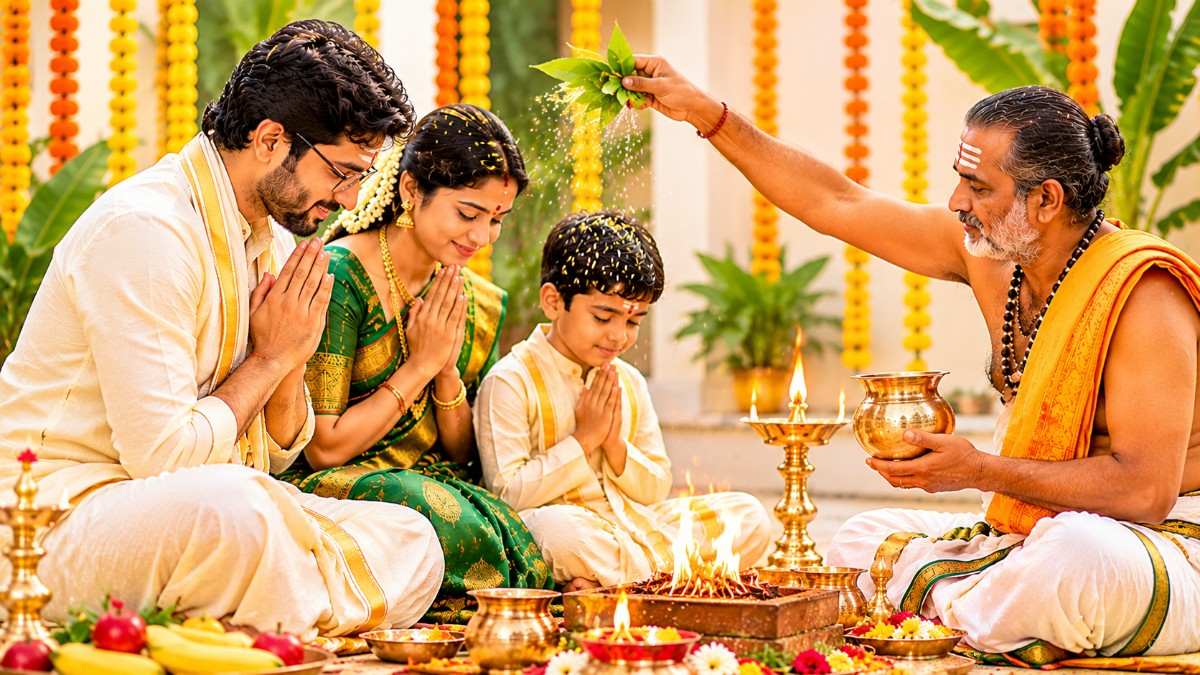
Punyahavachanam is a Hindu purification ceremony in which a pandit chants prescribed mantras, sanctifies water in a Kalasham and ceremonially sprinkles it as a symbol of ritual purification and auspiciousness. In Hyderabad, families commonly arrange it after childbirth, before Namakaranam or as part of other religious ceremonies. The date, procedure and materials vary according to family tradition.
Key Takeaways
- Punyahavachanam is a ritual purification ceremony, not a physical cleaning or medical procedure.
- It is commonly associated with childbirth, Purudu and Namakaranam.
- Some Telugu families observe it on the 11th day, while others follow different dates.
- A standalone ceremony may take approximately 45–90 minutes, depending on the tradition.
- Punyahavachanam and Namakaranam can be arranged together.
- Families should confirm the pandit, samagri, total cost and ritual requirements before booking.
Cost & Packages
2. Punyahavachanam Cost and Packages in Hyderabad
How Much Does Punyahavachanam Cost in Hyderabad?
Punyahavachanam cost depends on whether it is conducted as a standalone purification ceremony or combined with Namakaranam, Barasala or another family function.
The quotation may also vary according to the pandit, ceremony duration, required materials, travel distance and specific family customs.
99Poojas offers two clear packages for Punyahavachanam in Hyderabad, so you know the price before you book.
Punyahavachanam packages
Package
What's included
Price
Silver
1 experienced priest. You arrange the pooja materials.
₹3,500
Gold (recommended)
2 experienced priests. All pooja materials (samagri) provided by 99Poojas.
₹4,500
With Namakaranam, Barasala or another ceremony
Punyahavachanam combined with your baby's naming ceremony or another family function
Ask for a quote
How payment works
Package
Pay at booking (40%)
Pay after the pooja (60%)
Silver – ₹3,500
₹1,400
₹2,100
Gold – ₹4,500
₹1,800
₹2,700
Pay the 40% advance securely online when you book. The remaining 60% is paid after the pooja is completed. Cancellations made at least 48 hours before the pooja are refundable; cancellations within 48 hours are non-refundable.
What Affects the Final Cost?
The cost may include pandit dakshina, samagri, travel and additional rituals. If Namakaranam, a Homam or another ceremony is included, request an itemised quotation.
Is Punyahavachanam with Namakaranam More Expensive?
A combined ceremony may involve additional mantras, materials and time. However, the total cost depends on what is included. Ask whether the quotation covers both rituals rather than booking them separately without checking.
What's Included
3. What's Included in Your Punyahavachanam Booking?
Understand Your Ceremony Arrangements Before Booking
The exact inclusions should be confirmed with 99poojas before payment.
A Punyahavachanam ceremony commonly involves:
- A pandit to conduct the prescribed prayers.
- Sankalpam for the family and occasion.
- Preparation and worship of the Kalasham.
- Chanting of Punyahavachana mantras.
- Ceremonial sprinkling of sanctified water.
- Concluding prayers and blessings.
The ritual may be one part of a larger ceremony, so confirm whether naming rituals or other worship are included.
Booking Confirmation Checklist
Before finalising, ask:
- Is the booking for Punyahavachanam alone or a combined ceremony?
- How many pandits are required?
- Is the preferred date available?
- Are the required materials included?
- Can the ceremony be explained in Telugu?
- How long will the rituals take?
- What is the complete amount payable?
- What happens if the date needs to be changed?
Important: Do not assume that a Punyahavachanam booking automatically includes Barasala, Namakaranam, a cradle ceremony or additional Homam rituals.
Book a Pandit
4. Book a Punyahavachanam Pandit in Hyderabad
Find a Punyahavachanam Pandit for Your Family Ceremony
A pandit conducts the prescribed prayers, prepares the Kalasham and guides the family through the ritual according to its religious tradition.
When enquiring with 99poojas, share the occasion, preferred date, Hyderabad locality, language preference and any relevant family customs.
What Should You Look for in a Pandit?
Choose a pandit familiar with Punyahavachanam and the related ceremony you plan to conduct.
For example, if the ritual is part of a newborn's naming ceremony, the pandit should also understand the Namakaranam procedure followed by your family.
Before confirming, discuss:
- Familiarity with Punyahavachana mantras and procedures.
- Telugu, Sanskrit or other preferred languages.
- Relevant Smarta, Vaishnava or family-specific customs.
- Muhurtham and date-selection requirements.
- Necessary samagri and expected duration.
- Pandit dakshina and travel arrangements.
A clear explanation of the ceremony can be particularly helpful to parents organising their first religious function after childbirth.
When & Why
5. When and Why Is Punyahavachanam Performed?
Common Occasions for Punyahavachanam
Punyahavachanam is traditionally conducted to establish ritual auspiciousness and purity before or during important religious occasions.
It may be performed:
✿
After Childbirth
Some Hindu families conduct Punyahavachanam after completing the traditional post-birth observance period.
ॐ
Before Namakaranam
The ceremony may precede the formal naming of a newborn.
❋
During Barasala
In Telugu families, Punyahavachanam may be included in the broader celebration associated with the baby's naming and family blessings.
⌂
Before Griha Pravesham
Punyahavachanam may form part of the preliminary rituals performed before entering a new home.
✦
Before Weddings or Other Religious Functions
Certain family traditions include purification prayers before a major ceremony.
Is Punyahavachanam Necessary for Every Family Function?
No. The requirement depends on the religious procedure, regional traditions and the guidance followed by the family.
A standalone Punyahavachanam should not be confused with all the rituals performed during an entire wedding, Griha Pravesham or naming ceremony.
After Childbirth
6. Punyahavachanam After Childbirth – 11th Day and Purudu Ceremony
What Is Purudu in Telugu Traditions?
Purudu (పురుడు) refers to a traditional observance period associated with childbirth in many Telugu Hindu families.
The customs observed during this period differ by community and family. Some families conclude the observance with Punyahavachanam, followed by naming rituals or blessings.
Is Punyahavachanam Performed on the 11th Day After Delivery?
Some Telugu families traditionally perform it on the 11th day after childbirth. Others follow the 12th, 16th, 21st day or another date recommended by their family priest.
There is no single compulsory date followed by every Hindu family.
What if the Mother or Baby Is Not Ready on the 11th Day?
The ceremony can be discussed for a later suitable date.
A mother's recovery and a newborn's health, feeding and rest needs should come before ceremonial scheduling.
If either requires medical attention, follow the advice of the treating healthcare professionals. A religious observance should not interfere with medical care or recovery.
Can Purudu Pooja and Barasala Be Conducted Together?
Yes. Many families arrange a combined ceremony, but the exact sequence depends on their customs.
Before booking, confirm whether you require only Punyahavachanam, Punyahavachanam with Namakaranam, or a broader Barasala celebration.
Muhurtham
7. Punyahavachanam Muhurtham and Date Selection
How Is the Date for Punyahavachanam Selected?
The date may be determined by the family's traditional observance period, a preferred date or the guidance of a pandit.
For ceremonies combined with Namakaranam, the family may also seek an auspicious time based on the Hindu Panchangam.
What Does a Pandit Consider?
Depending on the tradition, the pandit may consider:
- The purpose of the ceremony.
- The baby's birth date.
- The family's post-birth observance practices.
- Panchangam details such as Tithi and Nakshatra.
- The preferred date and available family members.
- Whether Namakaranam or another ritual is included.
Is a Horoscope Required for Punyahavachanam?
A horoscope is not necessarily required for a standalone purification ceremony.
If the family is arranging Namakaranam with personalised astrological or Nakshatra guidance, additional birth details may be useful.
Can the Ceremony Be Performed Later Than the Traditional Date?
In many families, a later date may be arranged when the original date is inconvenient. Discuss any customary requirements with the family priest before making a decision.
Meaning & Significance
8. What Is Punyahavachanam? Meaning and Religious Significance
Punyahavachanam, also written as Punyaha Vachanam or Punyahavachan, is a Hindu religious purification rite.
The ceremony involves the recitation of sacred mantras and the ritual sanctification of water.
The pandit uses the sanctified water for Prokshanam, a ceremonial sprinkling performed as a symbol of purification and auspiciousness.
What Does Punyahavachanam Mean?
The term is associated with the declaration of an auspicious or sacred occasion.
The ritual marks a transition into an important religious event or the conclusion of a customary observance.
What Is the Role of Kalasham?
The Kalasham is a water-filled ritual vessel used during the ceremony. Its preparation and worship follow the tradition of the performing pandit.
What Is Prokshanam?
Prokshanam refers to the ritual sprinkling of water accompanied by prescribed mantras.
It is a symbolic religious act and should not be confused with sanitisation, infection control or physical cleaning.
Benefits & Purpose
9. Traditional Benefits and Purpose of Punyahavachanam
What Is the Spiritual Significance of Punyahavachanam?
Punyahavachanam is performed as part of Hindu religious observances to mark purification, auspiciousness and readiness for a ceremony.
Its traditional purposes include:
💧
Ritual Purification
Families perform the ceremony as an expression of religious purity according to their customs.
✦
Auspicious Beginning
Punyahavachanam may precede important ceremonies such as Namakaranam or Griha Pravesham.
❋
Family Participation
The ritual brings family members together to participate in prayers and blessings.
✿
Continuity of Tradition
Families observe customs passed down through generations.
ॐ
Devotional Significance
The recitation of mantras and use of sanctified water form part of the family's religious practice.
Does Punyahavachanam Remove Physical Impurities or Prevent Illness?
No. Punyahavachanam is a spiritual and symbolic ceremony. It does not replace bathing, household cleaning, medical care or infection-prevention practices.
The meaning of ritual purity should not be confused with the physical health or personal worth of a mother or newborn.
Procedure & Duration
10. Punyahavachanam Pooja Procedure and Ceremony Duration
How Is Punyahavachanam Performed?
The exact procedure varies by Vedic tradition and the purpose of the ceremony.
A commonly followed sequence includes the following steps.
1
Preparation of the Worship Area
The family prepares a clean space with the Kalasham and required pooja materials.
2
Ganapathi Pooja
Prayers to Lord Ganesha may be conducted as part of the opening rituals.
3
Sankalpam
The pandit states the intention of the ceremony along with the relevant family details.
4
Kalasha Sthapana
The sacred water vessel is prepared and established according to the ritual tradition.
5
Punyahavachana Mantra Chanting
The pandit chants the prescribed mantras associated with ritual auspiciousness and purification.
6
Prokshanam
Sanctified water is ceremonially sprinkled on participants or designated spaces and objects.
7
Concluding Prayers
The ceremony may conclude with Ashirvachanam and other prayers.
8
Additional Ceremony, If Selected
When Punyahavachanam is part of Namakaranam or another event, the next prescribed ritual follows.
How Long Does Punyahavachanam Take?
A standalone ceremony may take approximately 45–90 minutes, depending on the ritual tradition and number of participants.
A combined Punyahavachanam and Namakaranam ceremony may take approximately 1.5–2 hours or longer.
The performing pandit should confirm the duration for the selected ritual.
Samagri & Checklist
11. Punyahavachanam Samagri and Preparation Checklist
Punyahavachanam Pooja Samagri List
Commonly requested materials include:
Pooja material
Purpose
Kalasham
Sacred-water preparation
Clean water
Ritual purification
Mango leaves or prescribed leaves
Kalasham and Prokshanam
Coconut
Traditional worship offering
Turmeric and kumkum
Pooja preparation
Akshatalu
Ritual offerings
Flowers
Worship and decoration
Betel leaves and nuts
Traditional offerings
Fruits
Naivedyam
Oil or ghee lamp
Opening or concluding prayers
Incense and cotton wicks
Pooja materials
Clean vessels and plate
Ritual preparation
Additional items
As instructed by the pandit
What Should the Family Prepare?
- Confirm the final samagri list with the pandit.
- Prepare a clean worship area.
- Arrange suitable seating for the family.
- Keep the required names and Gotra details ready, if known.
- Confirm whether Namakaranam is included.
- Arrange a comfortable space for the mother and newborn, if applicable.
- Keep drinking water and basic household items available.
- Confirm the arrival time and expected duration.
Practical Advice: Do not buy a large generic pooja kit before checking the actual ritual requirements. Different traditions may use different items and quantities.
At Home
12. Punyahavachanam at Home in Hyderabad
Can Punyahavachanam Be Performed at Home?
Yes. Punyahavachanam is commonly performed in a home worship area, especially after childbirth or before a family ceremony.
A separate Homam setup is not necessarily required for a standalone Punyahavachanam because its central ritual involves sacred-water worship.
How Much Space Is Needed?
A clean, quiet area with room for the pandit, Kalasham and participating family members is generally sufficient.
If another ritual is included, the space requirements may change.
Preparing Your Home After Childbirth
When the ceremony follows childbirth, families should keep preparations manageable.
Choose a comfortable location where the mother can sit or rest as needed. Avoid overcrowding the room and allow flexibility for feeding, rest and childcare.
Family members can prepare the materials and welcome the pandit without placing unnecessary responsibilities on the recovering parent.
Can Punyahavachanam Be Performed in an Apartment?
Yes. A standalone sacred-water ceremony is generally suitable for an apartment.
If the booking also includes a Homam, obtain any required building permissions and follow appropriate fire-safety precautions.
vs Namakaranam & Barasala
13. Punyahavachanam vs Namakaranam vs Barasala – What's the Difference?
These terms are related in Telugu family traditions, but they do not always refer to the same ritual.
Ceremony
Main purpose
Typical occasion
Punyahavachanam
Ritual purification and auspiciousness
After childbirth or before a religious ceremony
Namakaranam
Formal naming of a child
Naming ceremony
Barasala
Telugu family observance commonly associated with a baby's naming and celebration
After childbirth, according to family tradition
Purudu
Traditional post-birth observance period
Following childbirth
Is Punyahavachanam Part of Namakaranam?
Yes, in many traditions. Punyahavachanam may be performed before the formal naming ritual.
Is Barasala the Same as Namakaranam?
Barasala commonly refers to the Telugu naming celebration. Namakaranam is the formal naming ritual that may be included in it.
However, individual family customs can include additional observances.
Do You Need to Book These Ceremonies Separately?
Not always. Families may arrange a combined ceremony when suitable.
Before booking, request a quotation that clearly lists Punyahavachanam, Namakaranam and any other rituals to be performed.
Other Ceremonies
14. Punyahavachanam for Gruha Pravesham, Weddings and Other Ceremonies
Is Punyahavachanam Only Performed After Childbirth?
No. Punyahavachanam is also part of the preparatory rituals for various Hindu ceremonies.
Punyahavachanam During Gruha Pravesham
In some traditions, Punyahavachanam is included as part of the preliminary purification prayers before or during a housewarming ceremony.
It is not a substitute for the complete Gruha Pravesham procedure.
Punyahavachanam Before Weddings
Some wedding traditions include Punyahavachanam within the broader sequence of religious ceremonies.
Its placement depends on the community and prescribed wedding rituals.
Punyahavachanam Before Homam or Other Poojas
Sacred-water purification may be performed before certain religious rituals when required by the tradition.
Can I Book Punyahavachanam Alone?
Yes. A standalone ceremony can be discussed with a pandit when it is appropriate to the family's tradition.
For a larger function, confirm whether Punyahavachanam is already included in the main ceremony package to avoid unnecessary duplicate bookings.
Choosing the Right Ceremony
15. Choosing the Right Punyahavachanam Ceremony for Your Family
Which Punyahavachanam Arrangement Do You Need?
✿
After Childbirth
Discuss the family's Purudu observance, preferred date and whether any naming rituals will follow.
ॐ
For Namakaranam
Request a combined ceremony covering Punyahavachanam and the formal naming of the baby.
❋
For Barasala
Clarify whether the family wants only the religious rituals or also a broader celebration with additional customs.
⌂
Before Griha Pravesham
Check whether Punyahavachanam is included within the planned housewarming ritual.
✦
Before Another Religious Ceremony
Share the full ceremony name with the pandit so the appropriate sequence can be confirmed.
Expert Planning Insight
Families sometimes use the terms Purudu, Punyahavachanam and Barasala interchangeably when discussing a newborn's ceremony.
However, the names may refer to different observances or different stages of the same family event.
Before requesting a quotation, ask the family elders or priest exactly which rituals should be performed. A clear ceremony list helps the pandit estimate the duration, materials and cost accurately.
Why 99poojas
16. Why Choose 99poojas for Punyahavachanam?
Plan Your Family Ceremony with Clear Booking Information
99poojas provides a point of contact for families enquiring about Punyahavachanam arrangements in Hyderabad.
When contacting 99poojas, you can discuss important requirements before confirming the ceremony.
✧
Pandit and Language Preferences
Specify your preferred language, family tradition and ritual requirements.
ॐ
Ceremony Selection
Discuss standalone Punyahavachanam or a combined ceremony with Namakaranam or Barasala.
◷
Date and Muhurtham Guidance
Share the preferred date and any existing recommendation from your family priest.
✿
Samagri Arrangements
Clarify which materials must be arranged by the family.
₹
Cost and Booking Details
Request a complete quotation covering the selected rituals, travel and any applicable additional charges.
⌂
Home Preparation
Discuss the expected duration and space requirements, especially when the ceremony follows childbirth.
The goal is to make the arrangements clear so family members know what to prepare.
How to Book
17. How to Book Punyahavachanam with 99poojas
Punyahavachanam Pandit Booking Process
1
Submit an Enquiry
Share your name, mobile number and Hyderabad locality.
2
Explain the Occasion
Mention whether the ceremony is after childbirth, part of Namakaranam, Barasala or another religious event.
3
Choose the Date
Provide the preferred date or request guidance about a suitable day.
4
Discuss the Ritual Requirements
Confirm the preferred language, pandit, samagri and additional ceremonies.
5
Review the Quotation
Check the total cost, inclusions, travel charges and booking terms.
6
Prepare for the Ceremony
Follow the agreed material checklist and prepare the venue.
Information to Keep Ready
For a post-childbirth ceremony, the family's preferred observance date and the baby's birth date may be useful.
For a combined naming ceremony, confirm the naming-related requirements with the pandit.
Gallery & Reviews
18. Punyahavachanam Ceremony Gallery and Family Reviews
Punyahavachanam Ceremony Gallery
A ceremony gallery helps families understand the ritual setup and how a typical home event may look.
Recommended photographs include:
Punyahavachanam Ceremony GalleryExplore traditional Punyahavachanam ceremony arrangements, sacred Kalasham preparations and Vedic rituals performed by pandits in Hyderabad.
Reviews from Hyderabad Families
Authentic customer experiences can help visitors understand the booking process and preparation requirements.
Useful reviews may describe communication, pandit punctuality, language preferences, material arrangements and the clarity of the ceremony.
Do not publish invented reviews, customer names or ratings.
Service Areas
19. Punyahavachanam Service Areas in Hyderabad
Punyahavachanam Pandit Enquiries Across Hyderabad
Families can enquire through 99poojas about Punyahavachanam arrangements in Hyderabad and Secunderabad.
We accept Punyahavachanam booking enquiries across the following areas in Hyderabad and Secunderabad:
- Kukatpally
- KPHB
- Miyapur
- Kondapur
- Madhapur
- Gachibowli
- Manikonda
- Nizampet
- Bachupally
- Kompally
- Secunderabad
- Uppal
- Nagole
- LB Nagar
- Dilsukhnagar
- Mehdipatnam
- Attapur
- Tellapur
- Banjara Hills
- Jubilee Hills
- Himayatnagar
Actual pandit availability, travel requirements and any applicable charges should be confirmed for each locality.
Can I Arrange Punyahavachanam in Gachibowli or Kukatpally?
You can submit an enquiry for either area. Availability depends on the preferred date, ceremony type and pandit arrangements.
FAQs
20. Frequently Asked Questions
1. What is Punyahavachanam?
Punyahavachanam is a traditional Hindu ritual involving Vedic prayers and the ceremonial sprinkling of sanctified water for ritual purification and auspiciousness.
2. How much does Punyahavachanam cost in Hyderabad?
Punyahavachanam in Hyderabad costs ₹3,500 with the Silver package (one priest; your family arranges the samagri) or ₹4,500 with the Gold package (two priests, with all samagri provided by 99Poojas). You pay a 40% advance when booking and the remaining 60% after the pooja.
The cost depends on the pandit, ceremony duration, materials, location and whether other rituals are included. Request a complete quotation from 99poojas.
3. Can Punyahavachanam be performed at home?
Yes. It is commonly performed at home after childbirth or as part of other family religious ceremonies.
4. Is Punyahavachanam performed on the 11th day after delivery?
Some Telugu families follow the 11th-day tradition. Others observe different dates based on their customs and religious guidance.
5. Can Punyahavachanam be postponed after childbirth?
Yes, families can discuss a later suitable date if necessary. The mother's recovery and the baby's health should take priority.
6. Is Punyahavachanam the same as Purudu?
Not exactly. Purudu generally refers to a traditional post-birth observance period, while Punyahavachanam is a ritual that may mark its conclusion.
7. Is Punyahavachanam necessary before Namakaranam?
It is commonly included in many Namakaranam traditions, but exact requirements vary by family and community.
8. Can Punyahavachanam and Barasala be performed together?
Yes. Families may arrange them together when consistent with their traditions.
9. How long does Punyahavachanam take?
A standalone ceremony may take approximately 45–90 minutes. Combined rituals generally require more time.
10. What materials are required for Punyahavachanam?
Common materials include Kalasham, water, mango leaves, coconut, turmeric, kumkum, flowers, Akshatalu and other offerings prescribed by the pandit.
11. Is a Homam required for Punyahavachanam?
No. A standalone Punyahavachanam is principally a sacred-water purification ceremony and does not automatically require a fire ritual.
12. Can Punyahavachanam be performed in an apartment?
Yes. A standalone ceremony is generally suitable for an apartment with a clean worship area and sufficient space.
13. Can adults participate in Punyahavachanam?
Yes. Family members may participate according to the pandit's guidance and the family's customs.
14. Is a horoscope necessary for Punyahavachanam?
Not always. Birth details may be useful for a combined Namakaranam or personalised muhurtham consultation.
15. Can I request a Telugu-speaking Punyahavachanam pandit?
You can specify Telugu as your preferred language when enquiring with 99poojas. Availability should be confirmed.
16. Is Punyahavachanam performed before Griha Pravesham?
It may be included as a preliminary purification rite in some Griha Pravesham traditions.
17. Is Punyahavachanam performed before weddings?
Some Hindu wedding traditions include Punyahavachanam as part of their prescribed ritual sequence.
18. Who should arrange the Punyahavachanam samagri?
Either the family or the service provider may arrange the materials, depending on the agreed booking. Confirm the inclusions before payment.
19. Can Punyahavachanam be performed without Namakaranam?
Yes. Punyahavachanam can be a standalone ceremony when appropriate to the family's tradition.
20. How early should Punyahavachanam be booked?
Enquiring several days in advance is useful, especially if the family needs a particular date, language or combined ceremony.
21. How can I book Punyahavachanam through 99poojas?
Share your ceremony details, preferred date, locality and contact information. Confirm the pandit, materials, quotation and other arrangements before finalising.
Enquiry Form
21. Book Your Punyahavachanam in Hyderabad
Arrange Your Family's Punyahavachanam with 99poojas
Punyahavachanam is a meaningful part of Hindu religious tradition, often connected with childbirth, naming ceremonies and auspicious family occasions.
Whether you are planning a standalone ceremony, Purudu-related observance or Punyahavachanam with Namakaranam, discussing your family's requirements in advance helps make the event comfortable and organised.
Enquire About Punyahavachanam with 99poojas
Conclusion
Punyahavachanam is a traditional Hindu ceremony associated with ritual purification and auspicious beginnings. It may be performed after childbirth, before Namakaranam or as part of another important family observance.
Understanding the purpose of the ceremony, confirming the appropriate date and preparing the materials in advance can help families arrange the ritual with greater clarity.
For Punyahavachanam in Hyderabad, contact 99poojas to enquire about pandit availability, ceremony requirements, muhurtham and booking costs.