Book Telugu Pandits
Naming Ceremony Pooja in Hyderabad
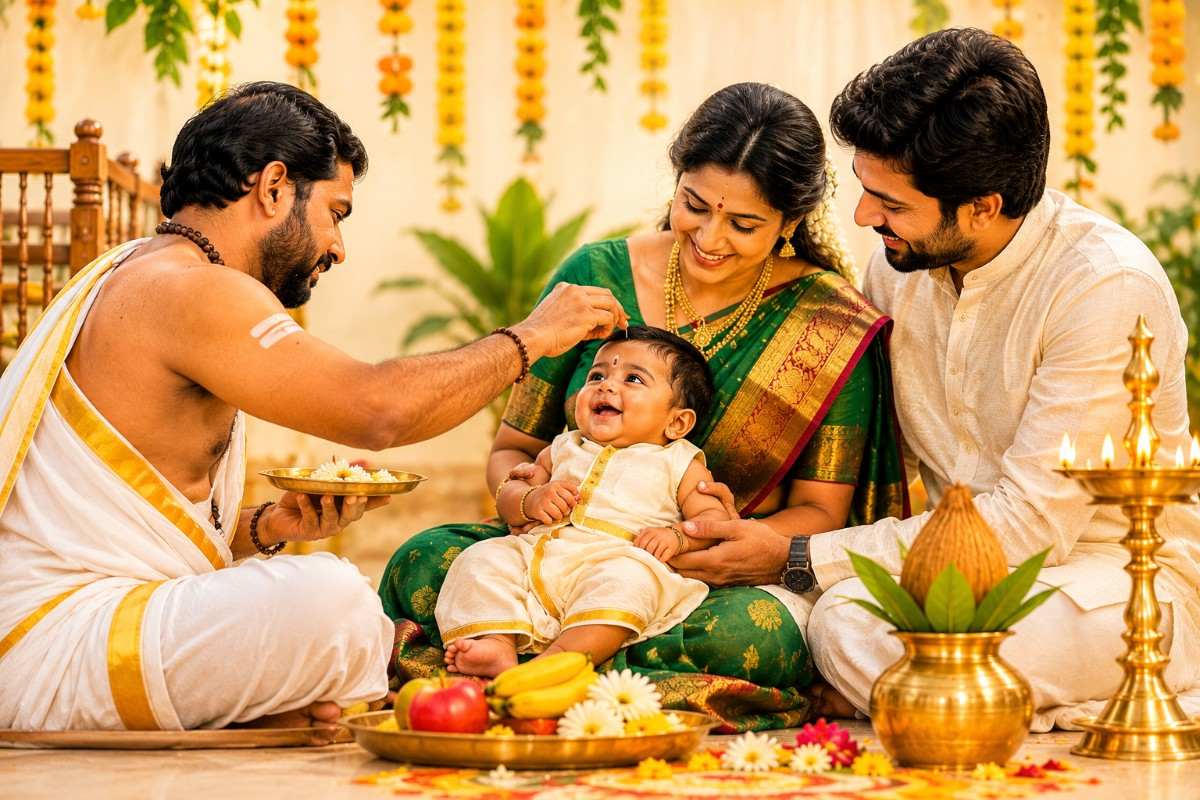
Welcoming a newborn and planning a traditional naming ceremony? Arrange Naming Ceremony Pooja in Hyderabad with 99Poojas and celebrate your baby's Namakaranam or Barasala with sacred prayers and family blessings.
Namakaranam is a Hindu ceremony in which a baby is formally given a name. In many Telugu families, the celebration also includes an Uyyala or cradle ceremony, the announcement of the baby's name and blessings from grandparents and other elders.
Whether you are organising a small gathering at home or celebrating in a function hall, contact 99Poojas to enquire about a Telugu pandit, Namakaranam Muhurtham, Pooja Samagri and booking charges.
Namakaranam
Barasala
Uyyala
Family Blessings
ॐ
Telugu pandits
As per your family tradition
✎
Name on rice plate
Where customary
🛏
Uyyala ceremony
Brief, supervised and safe
◷
Muhurtham guidance
Janma Nakshatram, where used
What Is Naming Ceremony Pooja?
Naming Ceremony Pooja, called Namakaranam or Barasala in Telugu families, is a traditional Hindu ceremony in which a newborn is formally given a name through prayers and family blessings. It commonly includes Ganapathi Pooja, Punyahavachanam, Sankalpam and the naming ritual. Some families also write or whisper the baby's name and perform an Uyyala ceremony. The exact procedure and date depend on family customs.
Naming Ceremony Pooja at a Glance
Details
Information
Ceremony
Naming Ceremony / Namakaranam / Barasala
Telugu names
నామకరణం / బారసాల
Purpose
Formally naming the newborn
Religious tradition
Hindu Namakarana Samskara
Common rituals
Ganapathi Pooja, Punyahavachanam, Sankalpam and naming
Name selection
Family choice, sometimes guided by Janma Nakshatram
Cradle ceremony
Uyyala, where customary
Participants
Baby, parents, grandparents and designated elders
Muhurtham
According to Telugu Panchangam and family tradition
Venue
Home, apartment or suitable function hall
Duration
Depends on the selected Vidhanam
Service location
Hyderabad, Telangana
Enquiries
99Poojas
Key Takeaways
- Namakaranam is the traditional Hindu baby-naming ceremony.
- Barasala is a common Telugu name for the family celebration.
- The naming ritual and the Uyyala ceremony may be conducted together, depending on family custom.
- Some families celebrate on the 11th, 12th or 21st day, while others choose a later date.
- The baby's name may be selected using Janma Nakshatram or family preferences.
- The mother's recovery, the newborn's health and feeding routine should guide event planning.
- Priest Dakshina, Samagri, cradle decoration and other event expenses should be confirmed separately.
- A decorated cradle used for a symbolic ritual is not automatically a safe infant sleeping space.
What & Why
2. What Is Naming Ceremony Pooja (Namakaranam or Barasala) and Why Is It Performed?
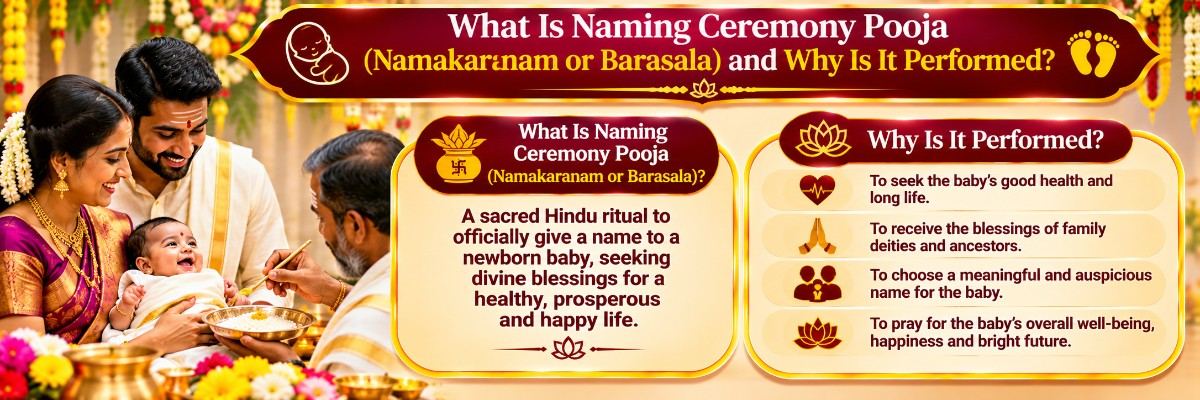
Namakaranam is a traditional Hindu Samskara in which a child is formally given a name through prescribed prayers and blessings.
The ceremony marks an important milestone in the baby's life and introduces the chosen name to family members.
✎
Meaning of Namakaranam
The Sanskrit term Nama refers to a name, while Karana refers to the act of giving or making.
Namakaranam is therefore the formal act of naming a child.
🎉
What Is Barasala in Telugu Tradition?
Barasala is a Telugu term commonly used for the newborn's naming celebration.
Depending on family custom, Barasala may include the religious Namakaranam ritual, traditional cradle observances, songs, gifts and family blessings.
ॐ
Religious Significance of the Naming Ceremony
Parents perform the ceremony to offer gratitude and seek blessings for the baby's well-being.
The occasion also connects the child with family traditions and the name chosen by the parents.
Traditional Benefits of Namakaranam
Families observe the ceremony with prayers for:
❋
The baby's health and well-being.
✦
A happy beginning to life.
🌱
Nourishment and growth.
◎
Wisdom and good character.
🏠
Family harmony.
🙏
Blessings from grandparents and elders.
📜
A meaningful connection to the child's name and heritage.
These are spiritual intentions and traditional beliefs, not guaranteed health or life outcomes.
Which Deities Are Worshipped During Namakaranam?
Lord Ganesha is commonly worshipped at the beginning of the ceremony.
Other prayers may be offered to the family's chosen deity or according to the prescribed Vidhanam.
What Is the Importance of the Baby's Name?
The name becomes part of the child's personal identity and family life.
Some families select a name based on religious tradition, while others choose a name for its meaning, pronunciation or connection to a family member.
Is Namakaranam the Same as a Cradle Ceremony?
Not exactly.
Namakaranam is the formal naming ritual. Uyyala refers to the traditional cradle observance.
They may be celebrated together, but the practices are conceptually different.
When & Who
3. When Should Namakaranam Be Performed and Who Participates?
Namakaranam is traditionally performed during the early weeks or months after birth. The exact ceremonial date depends on family tradition, religious guidance and practical circumstances.
📅
On Which Day Is Namakaranam Performed?
Some Telugu families follow the 11th, 12th or 21st day after birth.
Other families observe a later date according to their Sampradayam or selected Muhurtham.
There is no single date followed by every Hindu family.
✓
Can Namakaranam Be Performed After the 21st Day?
Yes.
Families may postpone the ceremony because of the baby's health, the mother's postpartum recovery, travel difficulties or other personal circumstances.
The religious date can be discussed with the family's purohit.
❋
Does the Ceremony Date Depend on the Baby's Gender?
Certain traditional texts and regional customs describe different naming practices.
These are family-specific religious customs and should not determine the baby's healthcare or the mother's recovery arrangements.
Who Participates in Namakaranam?
The ceremony commonly involves:
- The newborn baby.
- The mother.
- The father.
- Grandparents.
- Other designated elders.
- The officiating Telugu purohit.
- Relatives invited by the family.
🗣
Who Announces the Baby's Name?
In some families, the father whispers the chosen name into the baby's ear.
Other families involve the mother, grandparents or a designated elder.
The exact participant and method should be confirmed with the priest.
🎁
What Is the Maternal Family's Role?
Some Telugu traditions give maternal relatives particular responsibilities during Barasala or cradle celebrations.
These may include gifts, clothing or participation in the ceremony. The specific roles vary between families.
🤱
Should the Mother Observe Any Special Requirements?
Postpartum practices vary by family. The mother's comfort and recovery should come first.
Avoid requirements involving prolonged standing, fasting, excessive physical effort or postponing medical care.
🩺
What If the Baby Was Born Prematurely or Needs Extra Care?
The family can arrange a later ceremony or adapt the celebration to the baby's needs.
Follow the paediatrician's guidance about visitors, travel, feeding and other health considerations.
Procedure
4. Naming Ceremony Pooja Procedure – Step by Step
Namakaranam commonly includes preliminary worship, Sankalpam, the formal naming ritual and blessings for the child.
The following procedure describes widely recognised elements. The actual sequence and inclusion of rituals depend on Sampradayam.
1
Preparing the Pooja Area
Select a clean, comfortable location with enough space for the priest, parents and baby.
2
Achamanam and Preliminary Prayers
The priest may begin with traditional purification prayers, where prescribed.
3
Ganapathi Pooja
Lord Ganesha is worshipped at the beginning of many Hindu ceremonies.
4
Punyahavachanam
Some Namakaranam traditions include Punyahavachanam, involving prescribed purification prayers and sanctified water.
5
Sankalpam
The priest conducts Sankalpam for the naming ceremony.
6
Kalasha Sthapana, Where Prescribed
A Kalasham may be prepared and worshipped as part of the ceremony.
7
Formal Namakaranam Ritual
The chosen name is formally introduced through prescribed prayers and family participation.
8
Writing the Baby's Name on Rice, Where Customary
Some families write the selected name on a plate containing rice.
9
Whispering or Announcing the Name
The father, mother or another designated elder may gently whisper or announce the name according to custom.
10
Uyyala or Cradle Ceremony, If Included
Some Telugu families perform a symbolic cradle ceremony with traditional songs and family participation.
11
Blessings from Family Elders
Grandparents and other elders offer customary blessings.
12
Mangala Harathi
The ceremony concludes with Harathi and the prescribed prayers.
13
Prasadam and Family Gathering
Prasadam may be distributed to adult family members and guests.
Important: Name writing, name whispering and cradle celebrations vary between families. Confirm the final procedure with the officiating Telugu pandit.
Samagri & Baby Prep
5. Naming Ceremony Pooja Samagri List and Baby Preparation Checklist
Namakaranam requires traditional worship materials and separate arrangements for the baby's comfort.
The final Samagri list should come from the officiating purohit.
Common Namakaranam Pooja Materials
- Lord Ganesha picture or suitable idol.
- Other deity representations, where prescribed.
- Pooja Peetam.
- Clean altar cloth.
- Kalasham.
- Coconut.
- Mango leaves.
- Turmeric (Pasupu).
- Kumkum.
- Akshatalu.
- Sandalwood paste.
- Fresh flowers.
- Fruits.
- Betel leaves and betel nuts.
- Oil or ghee lamps.
- Cotton wicks.
- Incense.
- Camphor.
- Harathi plate.
- Water and ritual vessels.
- Naivedyam.
- Other items specified by the priest.
✎
Materials for Writing the Baby's Name
Depending on family custom, the ceremony may require a clean plate, uncooked rice and a suitable object for writing the name.
Ask the priest whether these items are required.
🛏
Cradle Ceremony Materials
If Uyyala is included, families may arrange:
Do not place loose flowers, ribbons, strings, balloons, pillows or other decorative objects inside a baby's sleeping space.
Baby Preparation Essentials
- Clean baby clothes.
- Spare clothes.
- Nappies or diapers.
- Wipes and changing supplies.
- Usual feeding supplies.
- A quiet feeding area.
- Comfortable seating for the mother.
- A suitable, separate safe-sleep surface.
- Handwashing or sanitising supplies for caregivers.
Pooja Samagri vs Baby-Care Checklist
Pooja Preparation
Baby and Parent Preparation
Ganapathi picture and altar
Comfortable clothing
Kalasham and coconut
Feeding supplies
Turmeric, kumkum and Akshatalu
Diapers and wipes
Flowers, fruits and Naivedyam
Quiet feeding space
Rice plate, if prescribed
Safe sleeping arrangement
Harathi materials
Room for rest and changing
Cradle for symbolic ritual, if included
Constant adult supervision
What Should Parents Arrange Separately?
Confirm whether cradle decoration, photography, clothing, catering and the baby's personal supplies are excluded from the priest's quotation.
Request the Namakaranam Samagri list before purchasing ceremonial items.
Muhurtham & Name
6. Auspicious Dates, Muhurtham and Baby Name Selection for Namakaranam
Namakaranam Muhurtham is selected according to family customs and the Telugu Panchangam.
Some families also use the baby's Janma Nakshatram when choosing the starting sound of the name.
How Is Namakaranam Muhurtham Selected?
Depending on tradition, a purohit may consider:
- Tithi.
- Nakshatram.
- Vaaram.
- Lagnam, where prescribed.
- Janma Nakshatram.
- Family Sampradayam.
- Local Panchangam details.
- The baby's and mother's practical needs.
☾
What Is Janma Nakshatram?
Janma Nakshatram refers to the lunar mansion associated with the Moon's position at the time of birth in traditional Jyotisha.
It may be used when selecting customary starting sounds for a baby's name.
✦
How Is a Baby's Name Selected Using Nakshatram?
Each Nakshatra is traditionally divided into four Padas.
Some naming systems associate a starting syllable with each Pada.
The correct association depends on the tradition and birth details used.
✕
Is a Nakshatra-Based Name Compulsory?
No.
Some families use the recommended syllable for the child's formal religious name.
Others choose a name based on their family deity, grandparents, cultural preferences or personal meaning.
📛
Can a Baby Have a Religious Name and a Commonly Used Name?
Some families distinguish between a name used for religious purposes and the name used in everyday life.
If you follow this custom, tell the priest which name should be used in the ceremony.
✎
Can the Name Be Changed Before Namakaranam?
Parents can finalise their chosen name before the religious ceremony.
If documents have already been issued, any official name changes must follow the applicable administrative procedures.
What Information Does the Priest Need?
Depending on the chosen rituals, the priest may request:
- Baby's proposed name.
- Date and time of birth.
- Place of birth.
- Parents' names.
- Gotram, where relevant.
- Preferred ceremony date.
- Family naming tradition.
Only share information necessary for the chosen ceremony.
Should the Ceremony Date Be Delayed Until an Auspicious Day?
Parents may choose a later religious date according to family custom.
However, the ceremony should not prevent medical appointments, necessary travel precautions, feeding or postpartum care.
Contact 99Poojas to enquire about Namakaranam Muhurtham guidance and Telugu pandit availability.Cost
7. Naming Ceremony Pooja Cost in Hyderabad
Naming Ceremony Pooja cost in Hyderabad depends on Telugu pandit Dakshina, the selected Vidhanam, Samagri, Muhurtham consultation, cradle ceremony arrangements, duration, venue and travel.
A simple home Namakaranam may involve different expenses from a larger Barasala celebration in a function hall.
Naming Ceremony packages
Package
What's included
Price
Silver
1 experienced priest. You arrange the pooja materials.
₹3,500
Gold (recommended)
2 experienced priests. All pooja materials (samagri) provided by 99Poojas.
₹4,500
Namakaranam with Barasala, Punyahavachanam or a larger family function
Additional rituals, homam, more priests or a function-hall ceremony
Ask for a quote
How payment works
Package
Pay at booking (40%)
Pay after the pooja (60%)
Silver – ₹3,500
₹1,400
₹2,100
Gold – ₹4,500
₹1,800
₹2,700
Pay the 40% advance securely online when you book. The remaining 60% is paid after the pooja is completed. Cancellations made at least 48 hours before the pooja are refundable; cancellations within 48 hours are non-refundable.
Factors Affecting Naming Ceremony Charges
Cost Factor
What It May Cover
Pandit Dakshina
Services of the officiating priest
Ritual scope
Namakaranam and additional prescribed prayers
Samagri
Pooja materials and offerings
Muhurtham consultation
Date and time selection, where included
Baby name guidance
Nakshatram-based syllable guidance, if offered
Cradle ceremony
Additional customs or ritual coordination
Ceremony duration
Time required for the selected Vidhanam
Priest travel
Transportation to the venue
Venue
Home, apartment or function hall
Additional arrangements
Decorations, photography and catering, if separately organised
What Is Included in Naming Ceremony Pooja Booking?
Before confirming the booking, ask whether the quotation includes:
- Telugu pandit Dakshina.
- Ganapathi Pooja.
- Punyahavachanam, where prescribed.
- Sankalpam.
- Kalasha Pooja, where prescribed.
- Namakaranam ritual.
- Name writing or announcement guidance.
- Uyyala ceremony guidance, if required.
- Mangala Harathi.
- General Pooja Samagri.
- Muhurtham consultation.
- Priest travel.
These are items to confirm, not a statement that every 99Poojas booking includes all of them.
✿
Does the Pandit Bring Namakaranam Samagri?
This depends on the agreed service.
Some arrangements may include the materials, while others require the family to purchase items from the priest's list.
🛏
Is Cradle Decoration Included?
Do not assume so.
Decorative cradle setup, flowers, photography and other event arrangements should be discussed separately.
🎁
Are Baby Clothes and Gifts Included?
These are generally family arrangements unless a separate service has been agreed.
How Can You Request a Clear Quotation?
Contact 99Poojas with the baby's ceremony date, Hyderabad locality, family tradition and whether the event includes Uyyala.
Ask for the final price, inclusions and exclusions before booking.
Request Naming Ceremony Pooja Charges – Contact 99PoojasCeremonies Compared
8. Namakaranam vs Barasala vs Annaprasana – Key Differences
Namakaranam, Barasala, Uyyala and Annaprasana are associated with early childhood traditions, but they do not all refer to the same ritual.
Comparison Table
Ceremony
Main Purpose
Typical Tradition
Namakaranam
Formal naming of the child
Naming prayers and name announcement
Barasala
Telugu naming celebration
Namakaranam, often with family and cradle customs
Uyyala ceremony
Traditional cradle observance
Symbolic cradle placement and family songs
Annaprasana
Ceremonial first-food milestone
Prayers and symbolic introduction of suitable food
✎
Is Namakaranam the Same as Barasala?
The terms are often used interchangeably in Telugu families.
More precisely, Namakaranam describes the naming Samskara, while Barasala can refer to the broader family celebration surrounding it.
🛏
Is Uyyala Compulsory During Namakaranam?
No.
Some families include a cradle ceremony, while others perform only the religious naming ritual.
🍚
What Is the Difference Between Namakaranam and Annaprasana?
Namakaranam marks the formal naming of the baby.
Annaprasana marks the traditional first-food milestone, usually at a later developmental stage.
✓
Can Namakaranam and the Cradle Ceremony Be Performed Together?
Yes.
Many families combine them on the same day, depending on tradition and the baby's comfort.
✦
Can Namakaranam and Annaprasana Be Combined?
Some families may request combined religious observances at a later date.
The priest should explain which rituals remain separate and how they can be conducted.
Any feeding associated with Annaprasana must follow the baby's developmental readiness.
At Home & Baby Safety
9. Naming Ceremony Pooja at Home – Duration, Baby Safety and Preparation
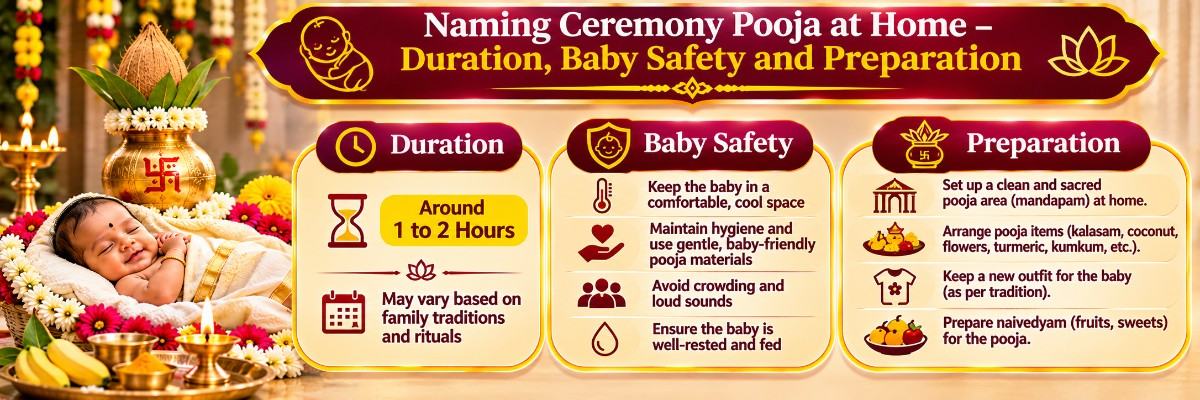
Namakaranam can be arranged at home when a clean worship area, comfortable seating and appropriate newborn-care arrangements are available.
A small ceremony may be easier to schedule around the baby's normal routine.
✿
Preparing the Home Pooja Area
Choose a quiet, well-ventilated space.
Keep lamps, incense, hot vessels, coins, flowers and small ritual objects out of the baby's reach.
◷
How Long Does Namakaranam Pooja Take?
A straightforward naming ceremony may take approximately one to two hours.
Additional prayers, cradle customs and family celebrations can extend the overall event.
Confirm the duration with the priest.
🏢
Can Naming Ceremony Pooja Be Performed in an Apartment?
Yes, if the space is suitable.
Follow building rules and avoid unnecessary smoke, noise and crowding around the newborn.
🏛
Can Barasala Be Performed in a Function Hall?
Yes.
Confirm that the venue has a suitable Pooja area, comfortable facilities for the mother and baby, and access to a quiet space for feeding and rest.
Newborn Safety During the Naming Ceremony
- Keep the baby with a responsible caregiver.
- Allow regular feeding and sleep breaks.
- Ask guests to wash their hands before handling the baby.
- Avoid close contact with anyone who is unwell.
- Keep incense smoke, camphor fumes and flames away from the newborn.
- Avoid excessive handling or passing the baby between many guests.
- Keep small Pooja items and decorations away from the baby's mouth.
- Do not place necklaces, garlands or decorative strings around the baby's neck.
- Stop an activity if the baby becomes distressed.
Safe Cradle Arrangements
A decorated Uyyala may be used as a brief, supervised part of the ceremony.
For sleep, use a safety-compliant crib, bassinet or other approved infant sleeping space with a firm, flat surface and fitted sheet. Place the baby on their back and keep pillows, loose blankets, toys and decorative items out of the sleep area.
A traditional hanging cradle or decorated ceremonial cradle should not automatically be assumed safe for sleeping.
Sample Namakaranam-Day Schedule
Stage
Activity
Before the ceremony
Prepare altar, name details and Samagri
Priest arrival
Confirm rituals and family participants
Preliminary prayers
Ganapathi Pooja and prescribed purification
Naming ritual
Formal name announcement or whispering
Optional tradition
Symbolic Uyyala ceremony
Conclusion
Blessings and Harathi
Celebration
Family greetings and refreshments
The baby's feeding, sleep and comfort should determine when breaks are needed.
Parent Preparation Checklist
- Confirm the baby's chosen name.
- Select the Muhurtham.
- Book the Telugu pandit.
- Obtain the Samagri checklist.
- Confirm who announces the name.
- Decide whether Uyyala is included.
- Arrange a safe, supervised ceremonial setup.
- Prepare baby clothes and care supplies.
- Provide a quiet feeding and resting space.
- Coordinate guests and photographs.
- Confirm the final charges.
Why 99Poojas & Booking
10. Why Choose 99Poojas and How to Book Naming Ceremony Pooja?
99Poojas provides an enquiry channel for Hindu Pooja services and Telugu pandit arrangements in Hyderabad.
For Namakaranam, discussing the baby's chosen name, family Sampradayam, Muhurtham and Uyyala arrangements before booking helps clarify the ceremony requirements.
అ
Telugu Pandit Enquiries
Share your preference for a Telugu-speaking purohit and explain your family's traditional naming procedure.
◷
Muhurtham Discussion
Provide the preferred date and the birth details required for the selected religious method.
✎
Name Selection and Announcement
Explain whether the family needs Nakshatram-based name guidance, a rice-plate naming ritual or a traditional name announcement.
🛏
Cradle Ceremony Arrangements
Confirm whether Uyyala is included and who will prepare the ceremonial cradle.
₹
Samagri and Pricing
Request the priest's Samagri list and the complete quotation.
How to Book Naming Ceremony Pooja with 99Poojas
1
Step 1
Contact 99Poojas through the website or available enquiry channels.
2
Step 2
Specify Namakaranam, Barasala or Naming Ceremony Pooja.
3
Step 3
Share your preferred date and Hyderabad venue.
4
Step 4
Explain the family's Sampradayam and naming customs.
5
Step 5
Discuss Muhurtham and name-selection requirements.
6
Step 6
Confirm whether the ceremony includes Uyyala.
7
Step 7
Review priest availability, Samagri, duration and charges.
8
Step 8
Finalise the booking after confirming the agreed details.
Naming Ceremony Pooja Enquiries Across Hyderabad
Families can enquire about ceremonies in Kukatpally, KPHB, Miyapur, Nizampet, Bachupally, Chandanagar, Gachibowli, Kondapur, Madhapur, Manikonda, Nanakramguda, Financial District, Ameerpet, Banjara Hills, Jubilee Hills, Secunderabad, Kompally, Uppal, Nagole, LB Nagar and other Hyderabad localities.
Priest availability depends on the selected date, location and ceremony requirements.
Genuine Customer Reviews and Ceremony Photos
Original photographs can help parents understand the naming ritual, Pooja setup and Uyyala arrangements.
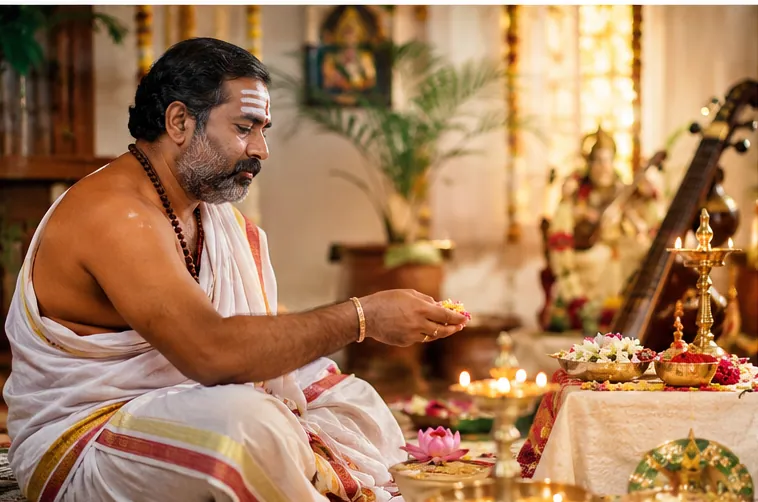
Illustrative image
Genuine feedback can describe priest communication, Samagri coordination and ceremony scheduling.
Only publish customer reviews that can be verified. Obtain parent or guardian consent before using photographs of babies.
Practical Guidance Before Booking
1
Confirm the naming method.
Some families whisper the name, some write it on rice, and others use a different customary practice.
2
Decide whether Barasala includes Uyyala.
A decorated cradle may need separate preparation and should not be used as an unsafe sleeping space.
3
Keep the ceremony flexible.
Newborn feeding and rest breaks should take priority over a tightly scheduled event programme.
4
Clarify charges.
Priest services and event decorations are not necessarily part of the same package.
FAQs
11. Frequently Asked Questions About Naming Ceremony Pooja
1. What is Namakaranam Pooja?
Namakaranam Pooja is a Hindu ceremony in which a newborn is formally given a name through prescribed prayers and blessings.
2. What is Barasala in Telugu tradition?
Barasala is the Telugu naming celebration, which may include Namakaranam, Uyyala and traditional family activities.
3. How much does Naming Ceremony Pooja cost in Hyderabad?
Naming Ceremony in Hyderabad costs ₹3,500 with the Silver package (one priest; your family arranges the samagri) or ₹4,500 with the Gold package (two priests, with all samagri provided by 99Poojas). You pay a 40% advance when booking and the remaining 60% after the pooja.
Charges depend on priest Dakshina, Samagri, Muhurtham consultation, selected rituals, venue and travel. Contact 99Poojas for a quotation.
4. How can I book a Telugu pandit for Namakaranam?
Contact 99Poojas with the preferred date, Hyderabad locality and family tradition. Confirm the priest's availability and charges before booking.
5. When should the baby's naming ceremony be performed?
Some families observe the 11th, 12th or 21st day after birth. Others select a later auspicious date according to tradition and family circumstances.
6. Can Namakaranam be performed after the 21st day?
Yes. Families may arrange the ceremony later, especially when recovery, travel or the baby's health requires additional time.
7. What is the difference between Namakaranam and Barasala?
Namakaranam is the religious naming ritual. Barasala commonly refers to the broader Telugu celebration that may include naming and cradle customs.
8. Who announces the baby's name during Namakaranam?
The father, mother or another designated elder may announce or whisper the name according to the family's custom.
9. How is a baby's name selected using Nakshatram?
Some families choose a starting syllable associated with the baby's Janma Nakshatram and Pada. This is a traditional preference rather than a universal requirement.
10. What rituals are performed during Naming Ceremony Pooja?
Common elements include Ganapathi Pooja, Punyahavachanam, Sankalpam, the naming ritual, family blessings and Harathi.
11. What Samagri is required for Namakaranam?
Common materials include Kalasham, coconut, flowers, turmeric, kumkum, Akshatalu, lamps, fruits and items used for the naming ritual.
12. How is Namakaranam Muhurtham selected?
A priest may consider Tithi, Nakshatram, Vaaram, Janma Nakshatram and family Sampradayam.
13. Can Naming Ceremony Pooja be performed at home?
Yes. A Namakaranam ceremony may be performed at home with suitable Pooja and newborn-care arrangements.
14. How long does Namakaranam Pooja take?
A straightforward ceremony may take approximately one to two hours. Additional rituals and cradle customs may extend the schedule.
15. Is the cradle ceremony included in Namakaranam?
Not automatically. Uyyala is included according to family custom and the agreed booking scope.
16. What is the difference between Namakaranam and Annaprasana?
Namakaranam marks the baby's naming. Annaprasana celebrates the traditional first-food milestone.
17. Does the pandit bring Namakaranam Samagri?
This depends on the service arrangement. Confirm the materials included before booking.
18. Can Barasala be performed in a function hall?
Yes, subject to venue suitability and priest availability. Arrange a quiet, comfortable space for the baby and mother.
Book Now
12. Book Naming Ceremony Pooja Pandit in Hyderabad – Final CTA
Namakaranam is a meaningful Hindu tradition that formally introduces your baby's name and brings the family together for prayers and blessings.
Whether you are planning a simple naming ritual at home or a Telugu Barasala celebration with Uyyala, confirming the Muhurtham, Samagri and priest requirements in advance can make the occasion easier to organise.
With 99Poojas, you can enquire about Telugu pandit arrangements for Naming Ceremony Pooja at your preferred Hyderabad location.
Arrange Naming Ceremony Pooja with 99Poojas
Website: https://99poojas.com/
Book Naming Ceremony PoojaShare your preferred ceremony date, Hyderabad location, family tradition and cradle ceremony requirements to begin your enquiry.