Tulasi Kota • Karthika Masam • Tulasi Vivah
Tulasi Pooja in Hyderabad
Planning to perform Tulasi Pooja in Hyderabad with your family? 99Poojas helps devotees enquire about pujaris for traditional Tulasi worship, Tulasi Kalyanam and Karthika Masam pooja arrangements at home.
Tulasi Devi holds a sacred place in Hindu households and is closely associated with Lord Vishnu. Whether you are planning a special Tulasi Kota Pooja, celebrating Ksheerabdi Dwadashi or arranging Tulasi Vivah, understanding the ritual and preparing the required materials can make the ceremony more meaningful.
With 99Poojas, families can discuss their preferred ceremony, Telugu pandit requirements, pooja samagri, muhurtham and booking charges before finalising arrangements.
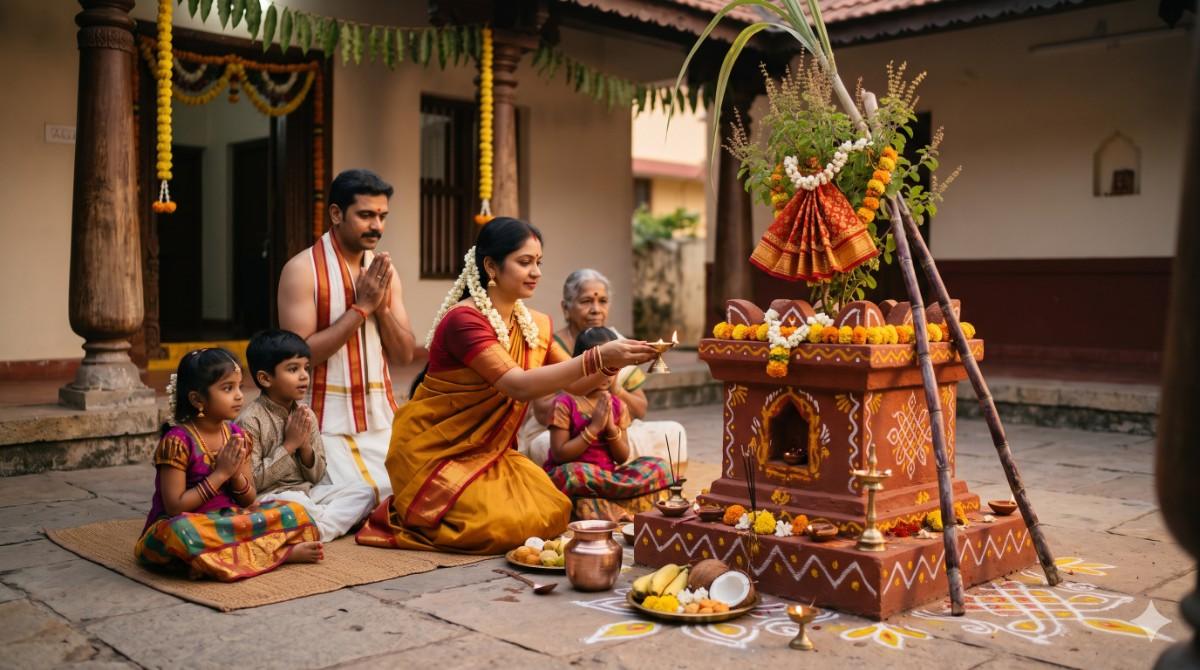
🌿
Tulasi Kota Pooja
Regular or special worship
💍
Tulasi Kalyanam
Tulasi Vivah at home
🪔
Karthika Masam
Ksheerabdi Dwadashi
₹
Request a quotation
Confirm charges before booking
What Is Tulasi Pooja?
Tulasi Pooja is a Hindu devotional ceremony dedicated to the sacred Tulasi plant, revered as Tulasi Devi and associated with Lord Vishnu. Worship commonly includes cleaning and decorating the Tulasi Kota, lighting a lamp, offering flowers and naivedyam, and reciting prayers. In Hyderabad, families may perform daily Tulasi worship or arrange a pandit-led ceremony for Karthika Masam, Ksheerabdi Dwadashi or Tulasi Kalyanam.
Key Takeaways
- Main purpose: Worship Tulasi Devi and seek the blessings of Lord Vishnu according to Hindu tradition.
- Pooja options: Regular Tulasi Pooja, Tulasi Kota Pooja, Karthika Masam worship and Tulasi Kalyanam.
- Tulasi Vivah 2027: Commonly listed for Thursday, 11 November 2027; confirm the date and muhurtham with your family priest.
- Basic samagri: Tulasi plant, flowers, turmeric, kumkum, akshata, diya, fruits and suitable naivedyam.
- Pandit booking: Share your Hyderabad location, selected ritual, preferred language and date with 99Poojas.
- Pricing: Charges depend on the ceremony, materials, priest requirements and duration.
Book a Pandit
Book a Pandit for Tulasi Pooja in Hyderabad
Looking for a Tulasi Pooja Pujari in Hyderabad to guide your family through a traditional ceremony?
99Poojas helps families enquire about pandits for Hindu rituals at home. You can explain whether you need a simple Tulasi Pooja, a special Karthika Masam observance or a complete Tulasi Kalyanam.
A pandit-led ceremony can help families perform the Sankalpam, deity worship, mantra recitation and offerings according to their religious traditions.
Some households prefer daily Tulasi worship without a priest but request a pujari for occasions such as Ksheerabdi Dwadashi or Tulasi Vivah.
Before booking, share:
- Your name and Hyderabad locality.
- The pooja date and preferred time.
- Whether the ceremony is Tulasi Pooja or Tulasi Kalyanam.
- Your family tradition and preferred language.
- Whether a healthy Tulasi plant and Tulasi Kota are available.
- The number of participating family members.
- Any special mandapam or Kalyanam arrangements.
Pandit availability, the specific ritual procedure and the total charges should be confirmed before finalising the booking.
Services Offered
Tulasi Pooja Services Offered by 99Poojas
Tulasi worship takes different forms depending on the occasion and family tradition.
Some families perform simple prayers before the Tulasi plant, while others arrange a special Kalyanotsavam with Lord Vishnu represented by Shaligramam or a Krishna idol.
Understanding the differences helps you choose the appropriate ceremony.
🌿
Traditional Tulasi Pooja at Home
Traditional Tulasi Pooja at home involves worshipping the sacred Tulasi plant through prayers and offerings.
The ceremony may include Ganapati Prarthana, Sankalpam, Tulasi Devi Avahanam, flowers, akshata, naivedyam and Mangala Harathi.
In many Telugu households, the Tulasi plant is placed in a decorated Tulasi Kota in the courtyard, balcony or another suitable part of the home.
Family members may recite Tulasi Stotram, Vishnu prayers or other devotional verses according to their tradition.
For a special occasion, a pandit can guide the family through a more formal pooja procedure.
💍
Tulasi Kalyanam (Tulasi Vivah) at Home
Tulasi Kalyanam, also called Tulasi Vivah, is the ceremonial marriage of Tulasi Devi to Lord Vishnu, traditionally represented by Shaligramam or a form of Lord Krishna.
This ceremony is particularly associated with Karthika Masam and the observances around Prabodhini Ekadashi and Dwadashi.
Depending on the tradition, a home Tulasi Kalyanam may include Sankalpam, deity decoration, wedding prayers, Mangalyadharanam, Talambralu and Harathi.
A complete Kalyanam generally requires additional samagri, decoration, preparation and ritual time compared with regular Tulasi worship.
If your family is planning Tulasi Kalyanam in Hyderabad, mention that you require the marriage ceremony rather than a basic Tulasi Pooja.
🪔
Tulasi Pooja During Karthika Masam
Karthika Masam is an important devotional period in Hindu tradition, especially for the worship of Lord Shiva and Lord Vishnu.
Many Telugu households perform Tulasi Pooja, light lamps and offer prayers during this month.
Tulasi worship during Karthika Masam may include special deepam arrangements, Tulasi Stotram, Vishnu Nama chanting and family prayers.
The procedure can be simple or elaborate depending on the family's customs.
For Karthika Masam ceremonies, discuss whether your family requires a one-day special pooja, Tulasi Kalyanam or worship on a particular auspicious day.
✿
Tulasi Kota Pooja and Deepam Rituals
Tulasi Kota is the raised platform, planter or decorated structure in which the sacred Tulasi plant is traditionally maintained.
Many Hindu households decorate the Tulasi Kota with turmeric, kumkum and rangoli, and light a lamp nearby during worship.
The deepam symbolises devotion and auspiciousness.
Families may perform Tulasi Pradakshina, offer prayers and decorate the area with flowers.
The arrangement should be safe and suitable for the plant. Keep open flames away from dry leaves, plastic planters and flammable decorations.
Cost
Tulasi Pooja Cost in Hyderabad
The cost of Tulasi Pooja in Hyderabad depends on the type of ceremony, pandit arrangements, duration, samagri and location.
A short home pooja generally requires fewer materials and less preparation than an elaborate Tulasi Vivah ceremony.
For an accurate quotation, tell the 99Poojas team which ritual you want and whether your family will provide the required materials.
Tulasi Pooja packages
Package
What's included
Price
Silver
1 experienced priest. You arrange the pooja materials.
₹2,500
Gold (recommended)
2 experienced priests. All pooja materials (samagri) provided by 99Poojas.
₹3,500
Tulasi Kalyanam (Tulasi Vivah)
Full ceremonial Kalyanam with mandapam, wedding samagri or more priests
Ask for a quote
How payment works
Package
Pay at booking (40%)
Pay after the pooja (60%)
Silver – ₹2,500
₹1,000
₹1,500
Gold – ₹3,500
₹1,400
₹2,100
Pay the 40% advance securely online when you book. The remaining 60% is paid after the pooja is completed. Cancellations made at least 48 hours before the pooja are refundable; cancellations within 48 hours are non-refundable.
Pooja Service
Typical Scope
Charges
Traditional Tulasi Pooja
Sankalpam, Tulasi Devi worship, archana and Harathi
Silver ₹2,500 / Gold ₹3,500
Tulasi Kota Special Pooja
Tulasi plant worship with special offerings and deepam
Request a quotation
Karthika Masam Tulasi Pooja
Festival-specific worship and prayers
Request a quotation
Tulasi Kalyanam / Tulasi Vivah
Ceremonial marriage with traditional Kalyanam rituals
Request a quotation
What Is Included in the Pooja Package?
Before confirming the booking, ask for details about:
- Pandit dakshina.
- The rituals included.
- Expected ceremony duration.
- Whether pooja samagri is provided.
- Number of priests, if applicable.
- Special Tulasi Kalyanam materials.
- Travel expenses.
- Additional decoration or mandapam requirements.
- Payment and rescheduling conditions.
If a family requires a complete Kalyanam, it is important to confirm whether the quotation includes the wedding-related ritual materials.
Tulasi Pooja vs Tulasi Kalyanam Cost
The major cost difference comes from the ceremony's scope.
Factor
Tulasi Pooja
Tulasi Kalyanam
Purpose
Worship of Tulasi Devi
Symbolic divine marriage
Ritual complexity
Usually simpler
More elaborate
Samagri
Basic pooja materials
Additional wedding materials
Decoration
Tulasi Kota decoration
Kalyana mandapam and deity decoration
Duration
Generally shorter
Usually longer
Charges
Based on the selected pooja
Based on complete Kalyanam arrangements
Practical Advice: Ask whether you are booking a simple Tulasi Devi Pooja, a symbolic Tulasi Vivah or a complete Kalyanotsavam. The terms may be used differently by families and service providers.
2027 Dates & Muhurtham
Tulasi Pooja and Tulasi Vivah 2027 Dates, Timings and Muhurtham in Hyderabad
Tulasi Pooja can be performed regularly throughout the year, while Tulasi Vivah is an annual religious observance associated with Karthika Masam.
For Hyderabad, several 2027 panchang references list Tulasi Vivah and Ksheerabdi Dwadashi on Thursday, 11 November 2027.
Occasion
Date or Observance
Regular Tulasi Pooja
Throughout the year, according to household tradition
Karthika Masam Tulasi Pooja
During the Hindu lunar month of Kartika
Tulasi Vivah 2027
Commonly listed as Thursday, 11 November 2027
Ksheerabdi Dwadashi 2027
Commonly listed as Thursday, 11 November 2027
Special Tulasi Kalyanam Muhurtham
To be confirmed with the family's pandit and preferred panchang
When should Tulasi Vivah be performed?
Tulasi Vivah is traditionally associated with the bright fortnight of Kartika. Many families observe it around Dwadashi, while some customs permit celebrations on other days within the period leading to Kartika Purnima.
The suitable time for the ceremony depends on the regional tradition and the panchang followed.
Important date note: Published 2027 sources differ on the observance date and precise timing. Families should verify the date and complete muhurtham with an officiating pandit before printing invitations, arranging the ceremony or finalising bookings.
Pooja Vidhi
Tulasi Pooja Vidhi – Step-by-Step Procedure at Home
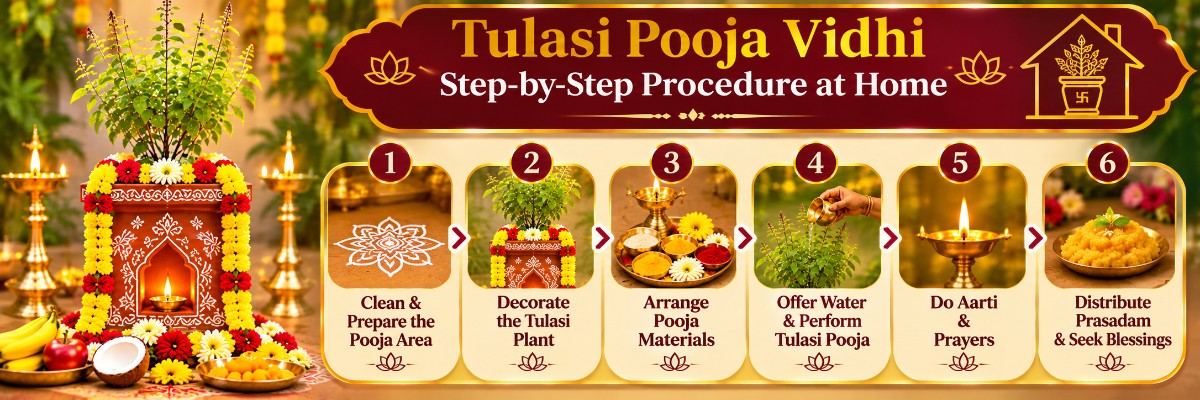
Tulasi Pooja Vidhi usually includes preparing the Tulasi Kota, Sankalpam, offerings, mantra recitation and Harathi.
The exact procedure differs by household and religious tradition.
1
Clean the Tulasi Kota
Clean the area surrounding the Tulasi plant. Remove fallen leaves and arrange the pooja space neatly without damaging the plant.
2
Decorate the Worship Area
Decorate the Tulasi Kota with flowers, rangoli, turmeric and kumkum according to family custom. Avoid putting excessive powders or decorations directly on delicate leaves.
3
Prepare the Pooja Samagri
Arrange flowers, akshata, water, a lamp, fruits and other prescribed items.
4
Ganapati Prarthana
A formal ceremony may begin with prayers to Lord Ganesha.
5
Sankalpam
The pandit guides the family in making the religious Sankalpam for Tulasi Devi Pooja.
6
Tulasi Devi Worship
Prayers are offered to Tulasi Devi, with appropriate flowers, akshata and other permitted materials.
7
Mantra Chanting
The pandit may recite Tulasi Stotram, Vishnu-related prayers or other traditional mantras.
8
Naivedyam Offering
Suitable fruits, sweets or other customary preparations are offered.
9
Deepam and Mangala Harathi
A lamp is lit safely near the Tulasi Kota, and Harathi is performed.
10
Pradakshina and Prayers
Family members may perform Tulasi Pradakshina and offer their final prayers, following their household tradition.
A special Tulasi Kalyanam requires additional steps beyond this basic sequence.
Tulasi Kalyanam Procedure
Tulasi Kalyanam (Tulasi Vivah) Procedure and Rituals
Tulasi Kalyanam represents the sacred marriage of Tulasi Devi and Lord Vishnu.
The ritual is especially important in Vaishnava traditions, although its customs vary across different regions and households.
A general home ceremony may involve the following stages.
1
1. Kalyana Mandapam Preparation
The Tulasi plant is decorated as the bride. Shaligramam or a suitable idol or image of Lord Vishnu or Krishna is prepared as the groom.
2
2. Ganapati Pooja and Sankalpam
The ceremony begins with preliminary prayers and the formal religious intention.
3
3. Tulasi Devi and Vishnu Avahanam
The divine couple is invoked and worshipped.
4
4. Kalyana Sankalpam
The pandit begins the symbolic marriage ceremony with the prescribed prayers.
5
5. Kanyadanam
In traditions that include this step, family members symbolically participate in the giving away of the bride.
6
6. Mangalyadharanam
A ceremonial mangalyam may be offered according to the family's custom and the priest's instructions.
7
7. Talambralu
Some Telugu traditions include Talambralu as part of the divine wedding celebration.
8
8. Mangala Harathi
The ceremony concludes with auspicious prayers and Harathi.
9
9. Naivedyam and Prasadam
Traditional offerings are presented and later distributed as prasadam.
Not all forms of Tulasi Vivah include identical wedding rituals. The officiating pandit should explain which steps are appropriate for your family's sampradaya.
Samagri List
Tulasi Pooja Samagri List
Preparing the Tulasi Pooja samagri in advance helps families avoid last-minute purchases and confusion.
Samagri
Purpose
Healthy Tulasi plant
Main focus of worship
Tulasi Kota or clean planter
Plant and altar arrangement
Turmeric and kumkum
Traditional decoration and offerings
Akshata
Ritual offerings
Fresh flowers
Decoration and archana
Diya, oil or ghee and wicks
Deepam
Incense and camphor
Worship and Harathi
Fruits and coconut
Naivedyam
Betel leaves and nuts
Traditional offerings, where prescribed
Kalasham and water
Ritual preparation
Clean cloth and pooja plates
Altar and material arrangement
The exact list may vary by the religious tradition and type of ceremony.
Additional Samagri for Tulasi Kalyanam
A complete Tulasi Vivah may require:
- Shaligramam or a suitable Vishnu or Krishna deity representation.
- Special cloth and decorative accessories.
- Mangalyam and related wedding items, if prescribed.
- Talambralu.
- Flower garlands.
- Sugarcane stalks for decoration, in traditions that use them.
- Kalyana peetham or mandapam materials.
- Additional fruits, sweets and naivedyam.
- Extra ritual vessels and pooja materials.
Important: Do not purchase all these items automatically. Ask the pandit for the exact samagri list and quantities for your ceremony.
Preparing at Home
How to Prepare for Tulasi Pooja at Home
Tulasi Pooja at home does not always require a large or elaborate setup.
A clean, safe and suitable area is usually enough for a regular ceremony.
- Choose a suitable locationSelect a place with adequate space around the Tulasi plant for the pandit and participating family members.
- Check the plant's conditionEnsure the plant is healthy and the planter is stable. Avoid moving or disturbing the roots unnecessarily.
- Arrange the samagriKeep flowers, offerings, lamps and other materials organised.
- Prepare family seatingProvide space for participating family members, particularly elderly devotees.
- Confirm the pooja timingIf the ceremony is related to a particular festival, confirm the time with the pandit.
- Plan safe lamp arrangementsKeep deepam flames away from dry plant material, curtains, plastic decorations and electrical fittings.
Kota Decoration & Mandapam
Tulasi Kota Decoration and Mandapam Setup
A Tulasi Kota can be decorated simply with rangoli, flowers and suitable traditional colours.
For Tulasi Kalyanam, some families create a miniature wedding mandapam around the plant.
Decorative sugarcane, garlands, colourful cloth and small deity ornaments may be included according to tradition.
Avoid tightly tying decorations to the plant or placing heavy objects on its branches.
The main goal is to create an attractive and respectful worship area while protecting the living plant.
Apartment Arrangements
Tulasi Pooja Arrangements in Apartments
Families living in apartments in Kukatpally, Miyapur, Kondapur, Gachibowli or other Hyderabad localities can perform Tulasi Pooja in a suitable balcony, terrace or permitted common area.
Keep these points in mind:
- Confirm whether the balcony or terrace is suitable for the ceremony.
- Avoid placing open flames directly under dry foliage.
- Use a stable lamp stand and keep water nearby for safety.
- Check society rules before organising a gathering in a shared area.
- Avoid blocking passageways or emergency exits.
- Protect floors and drainage systems from spilled offerings.
If you do not have a Tulasi plant, ask your pandit whether a suitable plant can be arranged or whether another form of devotional observance is appropriate for your family tradition.
Karthika Masam & Dwadashi
Tulasi Pooja During Karthika Masam and Ksheerabdi Dwadashi
Karthika Masam is traditionally associated with special devotional practices, including lamp lighting, temple visits, prayers and household worship.
Tulasi Pooja is particularly important in Vaishnava households because Tulasi Devi is closely associated with Lord Vishnu.
🪔
Karthika Masam Tulasi Worship
During this month, families may:
ॐ
Significance of Ksheerabdi Dwadashi
Ksheerabdi Dwadashi is an important observance associated with Lord Vishnu and Tulasi worship in Telugu religious traditions.
The occasion is connected with the conclusion of the Chaturmasya period and the devotional celebration of Lord Vishnu.
Many households observe special Tulasi prayers, deepam rituals or Tulasi Kalyanam around this period.
The exact date and sequence vary according to the family's panchang and sampradaya.
Pooja vs Kalyanam
Difference Between Tulasi Pooja and Tulasi Kalyanam
Tulasi Pooja and Tulasi Kalyanam are connected, but they are not identical rituals.
Tulasi Pooja refers to worship of Tulasi Devi through prayers, offerings and traditional household rituals.
Tulasi Kalyanam is the ceremonial marriage of Tulasi Devi to Lord Vishnu or Krishna, traditionally represented through Shaligramam or an appropriate deity image.
Feature
Tulasi Pooja
Tulasi Kalyanam
Main purpose
Worship Tulasi Devi
Celebrate the divine marriage
Frequency
Regularly or on special occasions
Usually during the traditional annual observance
Main rituals
Archana, naivedyam and Harathi
Wedding-related prayers and ceremonies
Samagri
Basic pooja items
Additional Kalyanam materials
Preparation
Simple home setup
Decorated wedding arrangement
Duration
Generally shorter
Usually longer
Pandit requirement
Depends on family preference
Often arranged with a pandit
Which ceremony should you choose?
- Choose traditional Tulasi Pooja if your family wants to perform special worship of Tulasi Devi.
- Choose Tulasi Kalyanam if your intention is to celebrate the divine marriage ceremony with the prescribed wedding rituals.
- If you are uncertain, describe your family's custom to the pandit before selecting the service.
Naivedyam & Prasadam
Tulasi Pooja Naivedyam, Prasadam and Traditional Offerings

Naivedyam is the food offering presented to the deity during worship.
For Tulasi Pooja, families commonly offer fruits, coconut, sweets or other sattvic preparations according to their tradition.
Common offerings may include:
- Fresh seasonal fruits.
- Coconut.
- Jaggery-based preparations.
- Payasam or other customary sweets.
- Traditional homemade prasadam.
Some families prepare additional offerings for Tulasi Kalyanam, especially when relatives are participating.
There is no need to prepare every possible item. Follow your family's established practice and the guidance of the pandit.
Keep all offerings clean and suitable for consumption. Avoid leaving food directly in the planter or placing materials around the roots that may damage the plant.
Rules & Daily Worship
Tulasi Pooja Rules, Daily Worship and Important Traditions
Tulasi worship is practised differently among Hindu households.
Many families begin the day by cleaning the Tulasi Kota, watering the plant when needed, offering prayers and lighting a lamp.
Common Traditional Practices
- Maintain the Tulasi plant in a clean, suitable location.
- Offer prayers with devotion.
- Light lamps safely according to household custom.
- Perform Tulasi Pradakshina where space permits.
- Follow the family's rules regarding the collection of Tulasi leaves.
- Avoid damaging the plant during decoration or rituals.
- Observe special days according to the preferred panchang.
🌿
Can Tulasi Leaves Be Plucked Every Day?
Customs vary. Some households avoid plucking Tulasi leaves at night or on certain religious days.
If leaves are needed for another pooja, collect them respectfully according to the family's tradition.
The religious practice should also take the health of the living plant into account.
🙏
Is a Pandit Required for Daily Tulasi Pooja?
A pandit is not universally required for simple daily Tulasi worship.
Many families perform these prayers themselves.
A pandit may be requested for a formal Sankalpam, special festival ceremony, Tulasi Kalyanam or a procedure unfamiliar to the family.
Significance
Significance of Tulasi Devi and Her Connection with Lord Vishnu
Tulasi Devi is revered in Hindu tradition as a sacred manifestation associated with purity, devotion and the worship of Lord Vishnu.
Tulasi leaves are especially important in many Vaishnava rituals and are offered during the worship of Vishnu and Krishna.
ॐ
Who Is Tulasi Devi?
Tulasi Devi is worshipped as a sacred divine figure in several Hindu devotional traditions.
The Puranic narratives associated with Tulasi include the story of Vrinda and her devotion, although the details differ between texts and regional traditions.
🌿
Why Is Tulasi Associated with Lord Vishnu?
In Vaishnava worship, Tulasi is regarded as particularly dear to Lord Vishnu.
The Tulasi Vivah celebration symbolically connects Tulasi Devi with Lord Vishnu through the sacred marriage ritual.
For Hindu households, maintaining and worshipping a Tulasi plant can also serve as a daily reminder of devotion and religious discipline.
Spiritual Benefits
Spiritual Benefits of Performing Tulasi Pooja
In Hindu devotional tradition, Tulasi Pooja is considered spiritually meaningful.
Devotees commonly associate the worship with:
- Seeking the blessings of Tulasi Devi and Lord Vishnu.
- Cultivating devotion and inner peace.
- Practising gratitude and self-discipline.
- Encouraging daily prayer and reflection.
- Strengthening family participation in religious observances.
- Preserving Hindu household traditions.
- Developing respect for sacred plants and nature.
These are devotional beliefs and spiritual aspirations, not guarantees of financial, medical or other material outcomes.
The intention behind the worship and the family's sincere participation are central to the observance.
Why 99Poojas
Why Choose 99Poojas for Tulasi Pooja in Hyderabad?
99Poojas helps families in Hyderabad enquire about pujaris for traditional Hindu ceremonies.
For Tulasi Pooja, a clear discussion before booking can help ensure that the chosen ritual matches the family's customs and expectations.
ॐ
Ceremony-specific arrangements
Explain whether your family needs a regular Tulasi Pooja, a Karthika Masam special pooja or complete Tulasi Kalyanam.
🗣
Language preferences
Request a Telugu-speaking pujari or another preferred language, subject to availability.
🏠
Family traditions
Share any special Vaishnava, Telugu or other sampradaya requirements.
✿
Samagri guidance
Discuss the necessary materials and who will arrange them.
₹
Cost clarification
Ask for the complete quoted amount, ritual inclusions and any additional requirements.
📍
Hyderabad service enquiries
Share your locality and preferred ceremony time so pandit availability can be checked.
Telugu Pujaris
Experienced Telugu Pujaris and Pandits for Tulasi Pooja
If you are searching for a Tulasi Pooja Pandit in Hyderabad, consider the priest's familiarity with your specific ritual and family tradition.
A simple Tulasi Devi Pooja and a complete Tulasi Kalyanam can involve different mantras, ceremonial steps and samagri.
Many Telugu families prefer a pujari who can guide the Sankalpam in Telugu and explain the religious significance of the ceremony while performing the prescribed Sanskrit recitations.
Before confirming, ask about:
- Experience with Tulasi Devi Pooja.
- Familiarity with Tulasi Kalyanam, if required.
- Preferred language.
- Ritual procedure and applicable sampradaya.
- Availability on the required date.
- Expected duration and samagri.
- Whether additional priests are needed.
Ask 99Poojas to confirm these details for the actual pandit assigned to your ceremony.
Service Areas
Tulasi Pooja Services Across Hyderabad
99Poojas accepts pooja service enquiries from families across Hyderabad and Secunderabad. Availability for a specific locality and date should be confirmed with the booking team.
Families may enquire from areas including:
- Kukatpally and KPHB
- Miyapur and Nizampet
- Kondapur and Gachibowli
- Madhapur and HITEC City
- Manikonda and Narsingi
- Jubilee Hills and Banjara Hills
- Ameerpet and Begumpet
- Secunderabad
- Uppal and LB Nagar
- Dilsukhnagar
- Bachupally and Pragathi Nagar
If your locality is not listed, share your address and pincode to check the available arrangements.
For festival-day Tulasi Kalyanam, it is sensible to enquire ahead of time, especially when a specific muhurtham or Telugu-speaking pandit is required.
How to Book
How to Book Tulasi Pooja with 99Poojas
Arranging a Tulasi Pooja begins with deciding which ceremony you want to perform.
1
Choose the Ceremony
Select traditional Tulasi Pooja, special Karthika Masam Pooja or Tulasi Kalyanam.
2
Share Your Details
Provide your name, mobile number, Hyderabad locality and preferred language.
3
Confirm the Date and Ritual Requirements
Discuss the desired date, muhurtham, family customs and required ceremony.
4
Review the Pooja Charges
Ask about pandit dakshina, materials, travel requirements and additional costs.
5
Confirm the Arrangements
Proceed after the team confirms availability and the agreed booking details.
Website: https://99poojas.com/
Service Page: https://99poojas.com/tulasi-pooja-in-hyderabad/
Enquire About Tulasi Pooja Booking
Call +91 88850 43059Confirm Before Booking
Important Details to Confirm Before Booking a Tulasi Pooja Pandit
Before confirming a pandit for Tulasi Pooja, consider the following questions:
- Is the booking for Tulasi Pooja or complete Tulasi Kalyanam?
- What is the exact ceremony procedure?
- Has the date and muhurtham been checked against your preferred panchang?
- How long will the ceremony take?
- Is a Shaligramam or Vishnu idol required?
- Who will arrange the Tulasi plant and mandapam?
- Will the pandit provide the complete samagri list?
- Are wedding materials included for Tulasi Kalyanam?
- Does the quotation include dakshina and travel?
- Is the booking suitable for an apartment or terrace?
- What happens if the ceremony needs to be rescheduled?
Expert Planning Insight
A common source of confusion is the difference between Tulasi Pooja and Tulasi Kalyanam. Some families request a special “Tulasi Pooja” but actually expect a complete ceremonial marriage with Lord Vishnu.
To avoid a mismatch, discuss whether your family needs only Tulasi Devi worship or the complete divine wedding procedure. Confirm the role of Shaligramam, marriage-related materials, total ceremony time and muhurtham before booking.
For an apartment, also ensure the Tulasi planter and decorations can be arranged safely without blocking walkways or damaging the plant.
FAQs
Frequently Asked Questions
1. What is Tulasi Pooja, and why is it performed?
Tulasi Pooja is the traditional worship of the sacred Tulasi plant, revered as Tulasi Devi and associated with Lord Vishnu. Devotees perform it to express devotion, seek divine blessings and maintain household religious traditions.
2. How much does Tulasi Pooja cost in Hyderabad?
Tulasi Pooja in Hyderabad costs ₹2,500 with the Silver package (one priest; your family arranges the samagri) or ₹3,500 with the Gold package (two priests, with all samagri provided by 99Poojas). You pay a 40% advance when booking and the remaining 60% after the pooja.
The cost depends on the ceremony, pandit requirements, samagri, duration and locality. Contact 99Poojas for a quotation based on your selected ritual.
3. How can I book a Tulasi Pooja Pandit in Hyderabad?
Contact 99Poojas through its website and share your locality, preferred date, language and ceremony requirements. The team can discuss pandit availability and booking arrangements.
4. Can Tulasi Pooja be performed at home?
Yes. Tulasi Pooja is commonly performed at home. Families may conduct simple daily worship themselves or arrange a pandit for a formal ceremony.
5. What is the difference between Tulasi Pooja and Tulasi Kalyanam?
Tulasi Pooja involves worship of Tulasi Devi through prayers and offerings. Tulasi Kalyanam is the symbolic marriage ceremony of Tulasi Devi and Lord Vishnu or Krishna, performed through additional wedding-related rituals.
6. When is Tulasi Vivah in Hyderabad in 2027?
Several Hyderabad panchang references list Thursday, 11 November 2027. However, some sources use different observance rules, so confirm the final date with your family's preferred panchang and pandit.
7. What is the suitable muhurtham for Tulasi Pooja?
Regular Tulasi Pooja follows household worship customs. The muhurtham for Tulasi Kalyanam depends on the festival date, tradition and local panchang. Confirm the exact time with your priest.
8. How is Tulasi Pooja performed step by step?
The usual procedure includes cleaning and decorating the Tulasi Kota, Sankalpam, Tulasi Devi prayers, archana, naivedyam, deepam and Mangala Harathi.
9. What samagri is required for Tulasi Pooja?
Common items include a healthy Tulasi plant, flowers, turmeric, kumkum, akshata, a lamp, incense, fruits, coconut and pooja vessels. A complete Tulasi Kalyanam may require additional wedding materials.
10. What is the procedure for Tulasi Kalyanam at home?
The ceremony may include Sankalpam, Tulasi Devi and Vishnu worship, marriage prayers, Kanyadanam, Mangalyadharanam, Talambralu and Harathi, depending on the family's tradition.
11. Why is Tulasi Pooja performed during Karthika Masam?
Karthika Masam is a sacred period associated with Hindu devotional practices. Tulasi worship is especially significant in Vaishnava traditions, and many Telugu families observe special prayers and lamp-lighting rituals.
12. What is the significance of Ksheerabdi Dwadashi?
Ksheerabdi Dwadashi is associated with Lord Vishnu and special Tulasi worship. Many Telugu households perform Tulasi prayers, deepam rituals or Tulasi Kalyanam around this observance.
13. Which days are traditionally observed for Tulasi worship?
Tulasi may be worshipped regularly throughout the year. Karthika Masam, Dwadashi and Tulasi Vivah are important occasions in many traditions, although individual family practices vary.
14. Can Tulasi Pooja be performed in an apartment?
Yes. Families can perform Tulasi Pooja in a suitable apartment balcony, terrace or designated worship area, provided the arrangement is safe and complies with building rules.
15. What should we do if we do not have a Tulasi plant at home?
Ask your pandit whether you should arrange a Tulasi plant before the ceremony. A healthy potted plant is generally suitable, but the prescribed approach depends on the ritual.
16. Which naivedyam is offered during Tulasi Pooja?
Fruits, coconut, sweets and other suitable sattvic offerings are commonly used. The exact naivedyam depends on family tradition and the ceremony.
17. How long does Tulasi Pooja take?
A simple formal home pooja may take around 30–90 minutes, while a Tulasi Kalyanam can take longer. Actual duration depends on the selected rituals and should be confirmed with the pandit.
18. Can I book a Telugu-speaking pandit for Tulasi Pooja?
You can request a Telugu-speaking pujari through 99Poojas. Availability depends on the selected date, locality and ceremony requirements.
19. Is pooja samagri included in the booking?
Samagri inclusion depends on the agreed booking arrangements. Ask the 99Poojas team to clarify which materials are supplied and which must be arranged by your family.
20. Which areas of Hyderabad does 99Poojas serve?
99Poojas accepts enquiries from Hyderabad localities including Kukatpally, Miyapur, Kondapur, Gachibowli, Madhapur, Manikonda and Secunderabad. Specific service availability must be confirmed.
Related Services
Related Lord Vishnu and Hindu Pooja Services in Hyderabad
Families interested in Tulasi worship may also explore other Hindu ceremonies associated with Lord Vishnu and traditional household worship.
ॐ
Satyanarayana Swamy Vratham in Hyderabad
A religious observance dedicated to Lord Satyanarayana, a form of Lord Vishnu, commonly performed in Hindu households.
🔥
Sudarshana Homam in Hyderabad
A Vedic fire ritual associated with Lord Sudarshana and Vaishnava traditions.
🏹
Sri Rama Navami Pooja in Hyderabad
A festival celebration dedicated to the birth of Lord Rama, traditionally regarded as an incarnation of Lord Vishnu.
🪈
Krishna Janmashtami Pooja in Hyderabad
A festival observance celebrating the birth of Lord Krishna, with prayers, naivedyam and devotional traditions.
💍
Kalyanotsavam in Hyderabad
A ceremonial celebration of a divine marriage, with the procedure depending on the deity and the religious tradition.
Explore the relevant service pages on 99Poojas and discuss your family's requirements before arranging a ceremony.
Book & Enquiry Form
Book Tulasi Pooja in Hyderabad with 99Poojas
Tulasi Pooja is a meaningful part of Hindu household worship, bringing together devotion to Tulasi Devi, remembrance of Lord Vishnu and cherished family traditions.
Whether you want to perform a regular Tulasi Pooja at home, observe Karthika Masam or arrange a complete Tulasi Kalyanam, choosing the appropriate ceremony and preparing in advance can help your family participate with peace of mind.
99Poojas helps families in Hyderabad enquire about pandits, discuss traditional pooja requirements and plan ceremonies according to their customs.
Contact the team to check availability, confirm the ritual procedure and request information about samagri, timings and charges.
Website: https://99poojas.com/
Tulasi Pooja Service: https://99poojas.com/product/tulasi-pooja/
Enquire About Tulasi Pooja in Hyderabad
Call +91 88850 4305999Poojas – Pandit Booking and Traditional Hindu Pooja Services in Hyderabad. You may also explore Satyanarayana Vratham, Lakshmi Pooja and Kalyanotsavam.