Book Experienced Telugu Pandits
Samvatsarikam in Hyderabad
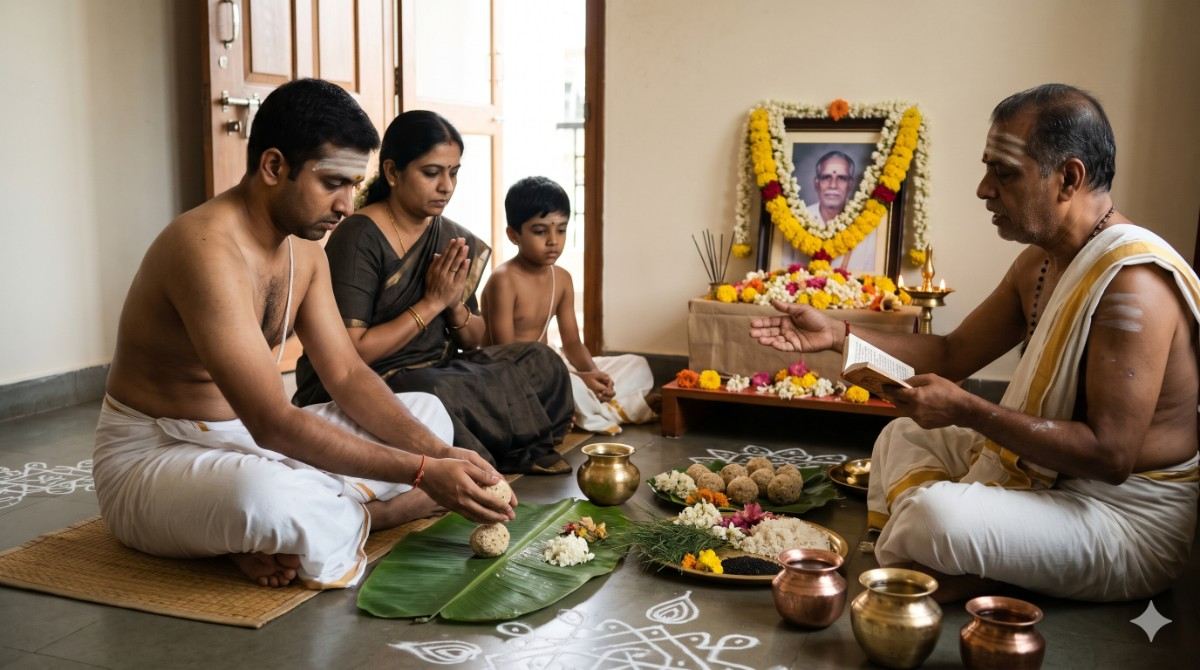
Arrange Samvatsarikam in Hyderabad with 99Poojas and observe your family's traditional ancestral rites with respect and care. If you are looking for a Telugu pandit for the first-year death-anniversary ceremony or an annual Shraddham, you can enquire about priest availability, tithi guidance, samagri and the required arrangements.
We understand that families may be organising these ceremonies during a sensitive time. Our service enquiry helps you discuss the religious procedure, family Sampradayam, venue and responsibilities before confirming the arrangements.
Prathama Abdikam
Pinda Pradanam
Tarpanam
Tithi Guidance
ॐ
Telugu purohit
Family Sampradayam respected
☾
Tithi guidance
Based on the Hindu lunar calendar
💧
Pinda Pradanam & Tarpanam
As per the prescribed Vidhanam
✦
Bhokta arrangements
Discussed before booking
Quick Answer
Quick Answer: What Is Samvatsarikam?
Samvatsarikam is a Hindu ancestral remembrance ceremony commonly associated with the first death anniversary of a family member. In Telugu traditions, it is generally observed according to the departed person's lunar tithi rather than simply the English calendar date. Depending on the family's Sampradayam, the observance may involve Masikam, Samvatsara Vimokam, Prathama Abdikam, Pinda Pradanam, Tarpanam and Brahmin Bhojanam.
Samvatsarikam at a Glance
Ceremony Details
Information
Ceremony
Samvatsarikam / Samvathsarikam
Telugu name
సంవత్సరీకం
Related terms
Prathama Abdikam, Taddinam, Shraddham, Pitru Karma
Main occasion
Completion of the first year after a family member's passing
Religious purpose
Remembering and honouring departed ancestors
Traditional timing
Based on the prescribed lunar tithi
Main participant
Karta, determined according to family tradition
Rituals
Sankalpam, Pinda Pradanam, Tarpanam and other prescribed rites
Priest arrangements
Main purohit and Bhoktas, as required
Duration
One day or a multi-day programme, depending on tradition
Venue
Home or another suitable religious venue
Location
Hyderabad, Telangana
Booking
Contact 99Poojas to discuss requirements and availability
Key Takeaways
- Samvatsarikam is commonly associated with the first-year death-anniversary observance.
- The correct ceremony date is traditionally determined by lunar tithi.
- Some families follow a one-day procedure, while others observe a three- or four-day programme.
- The Karta, priest and Bhokta requirements depend on the family's religious tradition.
- Samagri, Brahmin Bhojanam, Danam and dakshina should be discussed before booking.
- Samvatsarikam, Abdikam, Taddinam and Masikam are related terms but do not always refer to identical procedures.
- Families should confirm the prescribed Vidhanam with a knowledgeable purohit rather than relying on a universal checklist.
Book a Pandit
2. Book a Pandit for Samvatsarikam in Hyderabad
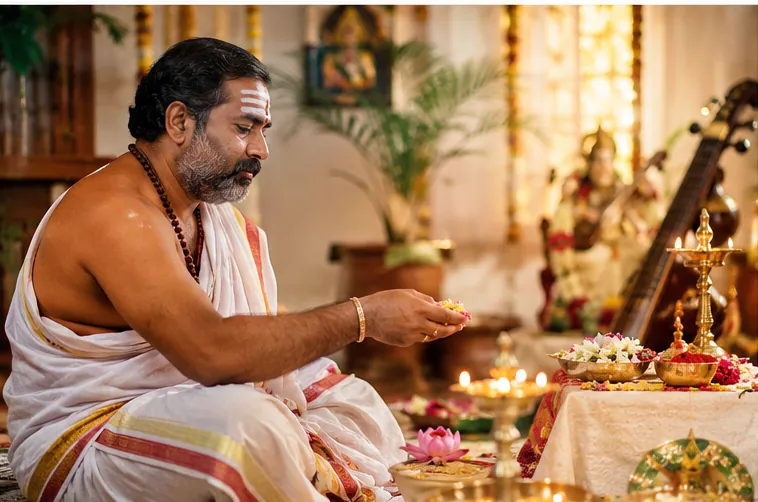
Arranging Samvatsarikam requires knowledge of ancestral rites, the correct tithi and the religious practices followed by the family.
99Poojas provides an enquiry channel for families looking for Telugu pandit services in Hyderabad.
Telugu Pandit for Samvatsarikam
A purohit familiar with the family's Pitru Karma tradition can explain the prescribed procedure, required participants and materials.
When booking, specify whether your family follows Smarta, Vaishnava, Madhva or another established Sampradayam.
Different traditions may follow different mantras, ritual sequences and requirements.
Samvatsarikam Priest for First-Year Ceremonies
If you are arranging the first-year observance, clarify whether your family requires Prathama Abdikam and any preceding ceremonies such as Masikam or Samvatsara Vimokam.
The complete programme should be confirmed before making travel, cooking or venue arrangements.
Details Needed for a Booking Enquiry
It is helpful to share:
- The date, approximate time and place of passing.
- Whether the ceremony is for the first year or a later annual observance.
- The relationship of the Karta to the departed person.
- The family's Sampradayam.
- The proposed venue in Hyderabad.
- Any guidance received from the family's regular priest.
- Whether help is needed with Bhoktas, samagri or meals.
Meaning & Significance
3. What Is Samvatsarikam? – Meaning and Religious Significance
Samvatsarikam is a traditional Hindu remembrance ceremony performed in honour of a departed family member.
The term is derived from Samvatsara, meaning year, and is commonly associated with the completion of the first year following a person's death.
In many Telugu families, the first-year ceremony is regarded as an important stage in the sequence of ancestral rites.
What Is the Purpose of Samvatsarikam?
The ceremony is performed to remember the departed person, express gratitude, honour ancestral traditions and make the prescribed offerings.
Many families view it as a meaningful responsibility toward their parents and ancestors.
Connection with Pitru Karma
Pitru Karma refers broadly to religious rites performed for departed ancestors.
It includes several observances that may take place shortly after death, during the first year and on subsequent death anniversaries.
Samvatsarikam forms part of this wider tradition.
Why Is the First Year Important?
In many Hindu traditions, the first year involves a sequence of prescribed rites.
The first-year completion observance may bring together earlier monthly rituals and the first annual Shraddham, depending on the community.
Is Samvatsarikam Performed Every Year?
The word Samvatsarikam is sometimes used more broadly for annual observances.
However, many Telugu service providers and families specifically use it for the first-year ceremony.
Subsequent annual rites are often described as Abdikam, Taddinam or annual Shraddham.
The intended procedure should be confirmed by the family rather than determined from the service name alone.
Who Is the Karta
4. Who Should Perform Samvatsarikam and Who Is the Karta?
The Karta is the person responsible for performing the prescribed ancestral rites.
The appropriate Karta is determined according to the family's religious tradition and circumstances.
Who Usually Acts as Karta?
In many traditional Telugu households, the eldest son is commonly expected to act as the Karta.
However, customs differ among families and religious traditions.
Can Another Family Member Perform the Ceremony?
If the customary Karta is unavailable, a knowledgeable purohit should advise on the appropriate alternative.
Eligibility and procedure should not be decided solely from a general website article.
What Does the Karta Do?
Depending on the ritual, the Karta may:
- Participate in Sankalpam.
- Perform prescribed water offerings.
- Offer Pindas.
- Participate in Tarpanam.
- Arrange or participate in Brahmin Bhojanam.
- Offer the prescribed Danam and Dakshina.
What Should Other Family Members Do?
Relatives may participate in remembrance prayers and help with arrangements, subject to the family's customs.
Some rites have specific participation rules, while others involve the wider family.
What If the Eldest Son Lives Outside Hyderabad?
Discuss the circumstances with the family's purohit.
Depending on the tradition, arrangements may involve the Karta travelling to the ceremony, following an approved alternative procedure or organising the rites at another suitable location.
When to Perform
5. When Should Samvatsarikam Be Performed?
Samvatsarikam is traditionally associated with the completion of the first year after a person's passing.
The exact date is generally determined according to the Hindu lunar calendar and the family's prescribed procedure.
☾
Is Samvatsarikam Performed Exactly One Year After Death?
It is associated with the first annual observance, but the ceremony date is not necessarily the same Gregorian calendar date.
Hindu lunar dates move relative to the English calendar.
◷
What If the First Anniversary Falls During a Busy Period?
Discuss the issue with the purohit as early as possible.
The family should not independently shift a prescribed tithi-based ritual without understanding the accepted procedure.
📜
What If the Earlier Masikam Ceremonies Were Not Performed?
Some traditions prescribe specific arrangements when earlier rites have been missed.
The required procedure can depend on which ceremonies were omitted and the family's Sampradayam.
This requires personalised priestly guidance.
✓
When Should Families Begin Planning?
Ideally, confirm the tithi and intended Vidhanam before arranging the priests, Bhoktas, venue, cooking and other responsibilities.
Multi-day ceremonies require more preparation than a single annual Taddinam.
Tithi Calculation
6. Samvatsarikam Tithi – How Is the Ceremony Date Calculated?
Samvatsarikam is commonly scheduled according to the departed person's lunar tithi, not simply the date printed on the Gregorian calendar.
A tithi is a lunar-calendar division determined by the relative positions of the Sun and Moon.
What Information Is Needed?
The purohit may request:
- Date of passing.
- Approximate time of passing.
- Place of passing.
- The tithi recorded during the earlier rites, if known.
- Family Sampradayam.
- The location where the ceremony will be performed.
Why Does the English Date Change?
A lunar tithi does not remain on the same Gregorian date every year.
Therefore, a death anniversary observed according to tithi may fall on a different English calendar date.
What If the Tithi Spans Two Calendar Days?
The correct observance day may depend on how the relevant tithi overlaps with the traditional time used for Shraddham.
The calculation is not always as simple as choosing the date on which the tithi begins.
Can Families Calculate the Date Using an Online Panchangam?
An online Panchangam can be a useful reference, but it should not replace confirmation by a knowledgeable priest.
Location, tithi timing and family-specific rules may affect the selected day.
Example of a Tithi Enquiry
A family knows that a relative passed away on 12 June of the previous year.
Rather than automatically booking 12 June again, they should provide the original date and time of passing to the priest.
The priest can identify the applicable lunar tithi and confirm the observance date for Hyderabad.
Contact 99Poojas with the relevant details to discuss tithi confirmation and booking requirements.Benefits & Significance
7. Benefits and Religious Significance of Samvatsarikam
Samvatsarikam holds religious and emotional significance for families remembering a departed loved one.
Its traditional purposes are rooted in faith, remembrance and family responsibility.
ॐ
Honouring Departed Ancestors
The ceremony provides a structured way to remember and pay respect to a departed family member.
📜
Continuing Ancestral Traditions
Many families perform Samvatsarikam as part of the customs passed down through generations.
🙏
Expressing Gratitude
The observance creates an opportunity to acknowledge the person's contributions to the family.
💧
Performing Traditional Pitru Karma
The Karta performs the prescribed offerings as a religious responsibility according to the family's tradition.
❋
Bringing Family Members Together
The ceremony may provide an opportunity for close relatives to gather in remembrance.
✦
Seeking Ancestral Blessings
Within Hindu religious belief, ancestral rites are associated with honouring the Pitrus and seeking their blessings.
These are traditional spiritual beliefs. They should not be presented as guarantees of protection, financial gain or changes in personal circumstances.
Procedure
8. Samvatsarikam Procedure – Step by Step
The Samvatsarikam procedure depends on the family's religious tradition, whether it is the first-year ceremony and the chosen Vidhanam.
The following explains common elements without presenting them as a universal sequence.
1
Confirm the Tithi and Vidhanam
The priest confirms the ceremony date and identifies the rituals required for the family.
2
Prepare the Ritual Space
A clean, suitable area is arranged for the Karta, priest and any required Bhoktas.
3
Preliminary Purification
The ceremony may begin with prescribed purification practices and preliminary prayers.
4
Sankalpam
The Karta states the religious intention of performing the ancestral rites.
5
Invocation of the Prescribed Ancestors
The priest guides the invocation and offerings according to the applicable Shraddha procedure.
6
Tarpanam
Where prescribed, water offerings are made through the appropriate mantras and procedure.
7
Pinda Pradanam
The Karta may offer Pindas prepared from prescribed ingredients.
8
Additional Shraddha Rituals
Depending on the Vidhanam, the ceremony may involve further offerings, prescribed mantras and specific roles for Bhoktas.
9
Brahmin Bhojanam
Where required by tradition, a meal is arranged for the participating Bhoktas or Brahmins.
10
Danam and Dakshina
The Karta offers the prescribed gifts and dakshina according to the family's tradition and means.
11
Concluding Rites
The priest guides the completion of the observance and any concluding prayers.
12
Completion and Family Responsibilities
The family follows the additional instructions given by the purohit regarding the completion of the ceremony.
Important: Certain rites involve specific rules about food, cleanliness, ritual vessels, dress and the order of offerings. Do not substitute this general explanation for the actual priest-guided Vidhanam.
Three-Day Ceremony
9. Three-Day Samvatsarikam Ceremony – Masikam, Vimokam and Prathama Abdikam
Some Telugu families observe a multi-day Samvatsarikam programme.
A commonly described arrangement includes the final Masikam, Samvatsara Vimokam and Prathama Abdikam.
However, the exact duration and naming vary among traditions.
1
Day 1: Final Masikam
Masikam refers to monthly ancestral rites traditionally performed during the first year.
In some procedures, the final Masikam forms the opening part of the first-year completion programme.
2
Day 2: Samvatsara Vimokam
Samvatsara Vimokam is a prescribed first-year transition observance in some traditions.
The ceremony may require specific mantras, offerings and additional Bhokta arrangements.
3
Day 3: Prathama Abdikam
Prathama Abdikam is the first annual Shraddham.
It includes the prescribed ancestral offerings, participation of the Karta and other ritual responsibilities.
Is a Fourth Day Required?
Some families include an additional concluding observance, sometimes called Shubham, and may perform Navagraha Shanti or another prescribed ceremony.
This is not a universal requirement.
Three-Day Programme – Illustrative Schedule
Day
Commonly Described Observance
Important Arrangement
Day 1
Final Masikam
Main priest, prescribed Bhoktas and materials
Day 2
Samvatsara Vimokam
Special ritual requirements and possible additional Bhokta
Day 3
Prathama Abdikam
Annual Shraddham, offerings, meals and dakshina
Optional Day 4
Additional concluding rites
Confirm whether required by the family's tradition
Is Samvatsarikam Always a Three-Day Ceremony?
No. Some families follow one-day arrangements, while others observe three or four days.
The programme depends on the family tradition, previous rites and the priest's prescribed procedure.
Pinda Pradanam & Tarpanam
10. Pinda Pradanam and Tarpanam During Samvatsarikam
Pinda Pradanam and Tarpanam are important elements of many Hindu ancestral rites.
Their inclusion and exact procedure depend on the chosen Vidhanam.
What Is Pinda Pradanam?
Pinda Pradanam is the ritual offering of Pindas to the departed ancestors.
Pindas are commonly prepared using rice or other ingredients prescribed by the tradition.
What Is Tarpanam?
Tarpanam involves prescribed water offerings accompanied by mantras.
In many traditions, black sesame seeds and Darbha grass are used.
Are Both Required?
They are common in many forms of Pitru Karma, but not every service described as Samvatsarikam follows the same procedure.
The priest should confirm the required rites.
Can the Family Prepare the Pindas?
The materials and preparation method should follow the priest's instructions.
Avoid preparing the offerings using a generic recipe without confirmation.
Samagri List
11. Samvatsarikam Samagri List
The Samvatsarikam samagri list depends on the family's Sampradayam, the number of ceremony days and the required offerings.
Commonly Used Materials
- Darbha grass.
- Black sesame seeds (Nalla Nuvvulu).
- Rice.
- Water.
- Ritual vessels.
- Panchapatra and other prescribed utensils.
- Plates or leaves used for offerings, where customary.
- Clean cloth.
- Pinda preparation materials.
- Prescribed grains or other offerings.
- Materials needed for any separately required rites.
🍚
Materials for Pinda Pradanam
Rice or other prescribed ingredients may be required for preparing Pindas.
The quantity and preparation depend on the family's traditions.
💧
Materials for Tarpanam
Water, Darbha and black sesame are commonly associated with Tarpanam in many traditions.
Cooking and Food Arrangements
Where Brahmin Bhojanam is prescribed, the family may need to arrange:
- Ingredients for the prescribed meal.
- A suitable cooking area.
- Appropriate utensils.
- Serving arrangements.
- Drinking water.
- Seating.
- Cleanup arrangements.
Samagri Preparation Checklist
Category
What to Confirm
Ritual materials
Complete list from the priest
Pinda materials
Ingredients and preparation method
Tarpanam materials
Water, Darbha and other prescribed items
Bhokta requirements
Items associated with their participation
Meal preparation
Menu, cooking practices and quantity
Danam items
Prescribed items, if applicable
Multi-day materials
Additional requirements for each day
Do not assume that a standard pooja samagri package covers every ancestral rite. Obtain a ceremony-specific checklist from your purohit.
Priest & Bhoktas
12. Brahmin, Bhokta and Priest Arrangements for Samvatsarikam
Samvatsarikam may require a main priest and additional participants known as Bhoktas.
The number and roles depend on the prescribed Vidhanam.
What Does the Main Purohit Do?
The main priest guides the Karta, recites the prescribed mantras and conducts the ritual sequence.
Who Are Bhoktas?
Bhoktas are participants who fulfil specific religious roles in certain Shraddha procedures.
Their participation is governed by the family's tradition.
How Many Bhoktas Are Required?
Some commonly advertised first-year arrangements include one main priest and two Bhoktas.
Certain ceremonies may require an additional participant with a specific ritual role.
However, these are examples, not universal requirements.
What Is a Vishnu Bhokta?
Some procedures include a Bhokta representing a prescribed Vishnu-related role.
Its inclusion should be confirmed with the officiating priest.
Does the Family Need to Arrange Bhoktas?
This depends on the booking.
Before confirming, ask whether the service provider is arranging the required participants or whether the family must do so.
Cost
13. Samvatsarikam Cost in Hyderabad
Samvatsarikam charges in Hyderabad depend on the number of ceremony days, priest dakshina, Bhokta arrangements, samagri, meal preparation, Danam and venue requirements.
A one-day annual Taddinam and a multi-day first-year Samvatsarikam can involve substantially different arrangements.
Samvatsarikam packages
Package
What's included
Price
Silver
1 experienced priest. You arrange the pooja materials.
₹4,500
Gold (recommended)
2 experienced priests. All pooja materials (samagri) provided by 99Poojas.
₹6,000
Extended Samvatsarikam or Pinda Pradanam with Homam
Additional rituals, Brahmana Bhojanam or Homam as per your family's tradition
Ask for a quote
How payment works
Package
Pay at booking (40%)
Pay after the pooja (60%)
Silver – ₹4,500
₹1,800
₹2,700
Gold – ₹6,000
₹2,400
₹3,600
Pay the 40% advance securely online when you book. The remaining 60% is paid after the pooja is completed. Cancellations made at least 48 hours before the pooja are refundable; cancellations within 48 hours are non-refundable.
Factors Affecting Samvatsarikam Charges
Cost Factor
What It Covers
Main priest dakshina
Conducting the prescribed rites
Bhokta dakshina
Required ritual participants
Number of days
One-day or multi-day ceremony
Samagri
Prescribed ritual materials
Brahmin Bhojanam
Meal preparation and serving
Cook
If a separate cook is required
Danam
Items prescribed by the family's tradition
Venue
Home or religious ceremony location
Travel
Applicable transport arrangements
Additional rites
Any separately prescribed observances
Why Do Samvatsarikam Prices Vary?
The term may refer to a one-day annual ceremony or a more elaborate first-year programme.
Prices cannot be compared fairly unless the ritual scope is the same.
Is Brahmin Bhojanam Included in the Price?
Not necessarily.
The quotation may include only priest services or may separately include cooking, food and serving arrangements.
Does the Price Include Danam?
Danam items may be arranged by the family or included according to the agreed package.
Confirm the details before payment.
How Can You Request a Quote?
Share the ceremony type, tithi, family Sampradayam, venue and required arrangements with 99Poojas.
Ask for a written explanation of inclusions rather than relying only on a total amount.
Request Samvatsarikam Charges – Contact 99PoojasWhat Is Included
14. What Is Included in Samvatsarikam Pandit Booking?
The actual booking inclusions should be agreed upon before confirmation.
Service or Item
What to Confirm
Main purohit
Included in quotation?
Tithi guidance
Included or separately arranged?
Masikam
Included where prescribed?
Samvatsara Vimokam
Included where required?
Prathama Abdikam
Included in the selected programme?
Bhoktas
Number and arrangements confirmed?
Pinda Pradanam
Included according to Vidhanam?
Tarpanam
Included where prescribed?
Samagri
Provided or arranged separately?
Brahmin Bhojanam
Included or family responsibility?
Cook
Available and included, if required?
Danam items
Included or arranged by family?
Dakshina
Fully included in the total?
Venue
Home or another agreed location?
Additional day
Required and priced separately?
Why Should Families Confirm the Inclusions?
A service advertised as Samvatsarikam may represent different ritual arrangements.
One booking may cover a single day, while another includes multiple ceremonies over several days.
Clarifying the details helps the family plan respectfully and avoid last-minute confusion.
At Home
15. Samvatsarikam at Home – Preparation and Arrangements
Samvatsarikam may be performed at home when the space and family arrangements are suitable for the prescribed ceremony.
✿
Preparing the Ritual Area
Select a clean, quiet area with sufficient space for the Karta, priest and any required Bhoktas.
🍲
Cooking Arrangements
Discuss the prescribed food preparation rules before planning the meal.
Some families follow particular cooking, ingredient and serving practices.
💧
Seating and Water
Arrange appropriate seating or floor mats, clean water and the required ritual vessels.
❋
Family Participation
Discuss who should be present and what responsibilities each person will have.
Apartment Arrangements
If the ceremony is performed in an apartment, consider:
- Space for the ritual participants.
- Cooking arrangements.
- Seating for Bhoktas.
- Access for the priest.
- Appropriate privacy.
- Building rules where relevant.
What Should Families Avoid?
Do not assume that all rituals can be shortened, rearranged or conducted using generic materials without priestly guidance.
Confirm any proposed changes before the ceremony.
Bhojanam, Danam & Dakshina
16. Brahmin Bhojanam, Danam and Dakshina During Samvatsarikam
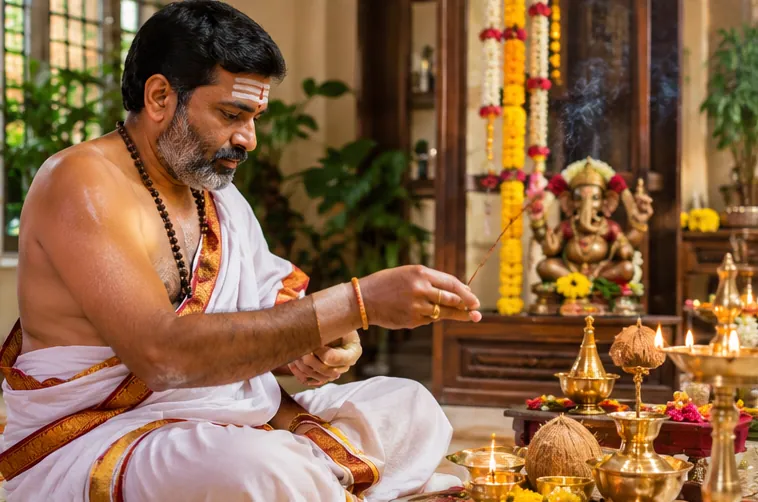
Brahmin Bhojanam, Danam and Dakshina may form part of the prescribed Samvatsarikam observance.
The details vary according to tradition and ceremony type.
🍃
What Is Brahmin Bhojanam?
Brahmin Bhojanam is the traditional meal offered to the prescribed participants in certain Shraddha procedures.
🎁
What Is Danam?
Danam refers to prescribed religious giving.
The types of items offered depend on the family's tradition and the Vidhanam being followed.
🙏
What Is Dakshina?
Dakshina refers to an offering or honorarium traditionally given to the priest or prescribed participants.
Are Dasadanalu Required?
Some first-year ceremonies include Dasadanalu, or ten prescribed donations.
However, they are not automatically part of every annual Shraddham.
Who Arranges the Meal?
The family may prepare the meal or arrange a cook, depending on the ceremony and service inclusions.
The priest should clarify the food requirements.
Can Families Choose Their Danam Items?
Discuss the accepted options with the priest.
The family should understand the religious significance, cost and practical requirements before purchasing items.
Duration
17. How Long Does Samvatsarikam Take?
Samvatsarikam duration depends on whether the observance is a single-day ceremony or a multi-day first-year programme.
One-Day Annual Observance
A later annual Taddinam may be completed within one day, with the exact duration depending on the procedure and meal arrangements.
Three-Day First-Year Ceremony
Some traditions observe a sequence of Masikam, Samvatsara Vimokam and Prathama Abdikam across three days.
Four-Day Programme
Other traditions may include an additional concluding day.
What Affects the Duration?
- Number of prescribed rites.
- Family Sampradayam.
- Availability of the Karta.
- Number of priests and Bhoktas.
- Meal preparation.
- Danam requirements.
- Any additional ceremonies.
Before making travel arrangements, confirm the complete ceremony schedule with the priest.
Terms Compared
18. Difference Between Samvatsarikam, Abdikam, Taddinam, Masikam and Shraddham
These terms are related to ancestral rites but can refer to different observances.
Term
Common Meaning
Typical Context
Samvatsarikam
First-year completion observance; sometimes used broadly for annual rites
First death anniversary
Abdikam
Annual ancestral Shraddham
Yearly observance
Taddinam
Common Telugu term for death-anniversary rites
Annual remembrance
Masikam
Monthly ancestral rite
First-year observances
Shraddham
Broad term for rites honouring ancestors
First-year and subsequent rites
Is Samvatsarikam the Same as Abdikam?
They are closely related.
Prathama Abdikam is the first annual Shraddham, which may form part of a broader first-year Samvatsarikam programme.
Is Samvatsarikam the Same as Taddinam?
Taddinam is commonly used in Telugu to describe death-anniversary rites.
Samvatsarikam often refers more specifically to the first-year observance.
What Is the Difference Between Masikam and Abdikam?
Masikam refers to a monthly rite.
Abdikam refers to an annual rite.
Why Does Terminology Vary?
Families from different religious traditions may use the same word for different ritual arrangements.
The most reliable way to identify the required ceremony is to describe the timing and family Sampradayam to the priest.
First-Year vs Annual
19. First-Year Samvatsarikam vs Annual Death Anniversary Rituals
The first-year observance may involve more extensive rites than subsequent annual ceremonies.
1
First-Year Samvatsarikam
Depending on tradition, the first-year programme may include:
☾
Annual Abdikam or Taddinam
Subsequent annual observances generally focus on the prescribed annual Shraddham.
They may be simpler than the first-year programme, although this depends on the family tradition.
Main Differences
Feature
First-Year Samvatsarikam
Later Annual Taddinam
Timing
Completion of first year
Subsequent years
Ritual scope
May include multiple ceremonies
Annual Shraddham procedure
Duration
May extend over several days
Often a shorter observance
Priest requirements
May require more participants
Depends on annual Vidhanam
Materials
May include additional items
According to annual ritual
Planning
Requires confirmation of first-year sequence
Requires annual tithi and ceremony arrangements
What If the Family Is Unsure Which Ritual Is Required?
Share the date of passing, details of any ceremonies already completed and the family's Sampradayam.
A knowledgeable purohit can determine the appropriate next observance.
Home or Venue
20. Can Samvatsarikam Be Performed at Home or at a Religious Venue?
Samvatsarikam may be arranged at home or at a suitable religious venue, depending on family tradition and the chosen procedure.
🏠
Samvatsarikam at Home
Home ceremonies may be preferred when the family has sufficient space and can arrange the prescribed food and ritual materials.
🛕
Samvatsarikam at a Religious Venue
Some families prefer a dedicated venue for ancestral rites, especially when their home cannot accommodate the necessary participants or preparations.
What Should You Compare?
Consideration
Home
Religious Venue
Ritual space
Family arranges
Confirm facilities with venue
Cooking
Family or arranged cook
Venue-specific arrangements
Bhokta seating
Must be prepared
Confirm availability
Materials
Check supplier responsibilities
Confirm venue package
Travel
Priest and participants travel
Family travels
Privacy
Depends on household
Depends on venue
Can a Multi-Day Ceremony Use Different Venues?
This depends on the chosen Vidhanam and religious guidance.
Do not divide the programme across venues without prior confirmation from the priest.
Why 99Poojas
21. Why Choose 99Poojas for Samvatsarikam in Hyderabad?
Samvatsarikam is a deeply personal family observance. Clear communication about the prescribed ceremony and practical arrangements is particularly important.
99Poojas provides a way to enquire about Telugu pandit services in Hyderabad.
అ
Telugu Pandit Enquiries
Share your language preference and family Sampradayam when requesting a priest.
☾
Tithi-Related Discussion
Provide the date, time and place of passing so the appropriate ritual date can be discussed.
📜
Ceremony Requirement Clarification
Explain whether you need first-year Samvatsarikam or a later annual Abdikam.
✿
Bhokta and Samagri Planning
Ask which ritual participants and materials are required.
₹
Cost Breakdown
Request clarification of dakshina, meals, Danam and other arrangements before confirming the booking.
📍
Hyderabad Location-Based Enquiries
Share your home or venue locality to check priest availability and travel requirements.
99Poojas aims to make the enquiry process clear while respecting the significance of the family's ancestral observances.
How to Book
22. How to Book Samvatsarikam with 99Poojas
1
Contact 99Poojas
Submit an enquiry through the website or available contact details.
2
Share the Relevant Dates
Provide the date, time and place of passing, if known.
3
Confirm the Type of Ceremony
Explain whether this is the first-year observance or a later annual Shraddham.
4
Share Your Family Tradition
Mention the Sampradayam and any instructions from your regular family priest.
5
Provide the Hyderabad Location
Share the proposed home or ceremony venue.
6
Discuss Priests, Bhoktas and Samagri
Clarify all required participants, materials, meals and Danam.
7
Confirm the Quotation and Schedule
Review the procedure, number of days, responsibilities and charges before finalising.
Areas in Hyderabad
23. Samvatsarikam Pandit Services Across Hyderabad
Families can enquire with 99Poojas about Telugu priest arrangements for Samvatsarikam in Hyderabad.
Availability must be confirmed for the ceremony type, tithi, locality and required ritual participants.
West Hyderabad
Kukatpally, KPHB, Miyapur, Nizampet, Bachupally, Pragathi Nagar, Chandanagar and Madinaguda.
IT Corridor and Nearby Residential Areas
Gachibowli, Kondapur, Madhapur, HITEC City, Manikonda, Nanakramguda, Financial District, Narsingi and Nallagandla.
Central and North Hyderabad
Ameerpet, Begumpet, Secunderabad, Alwal, Kompally, Banjara Hills and Jubilee Hills.
East and South Hyderabad
Uppal, Nagole, LB Nagar, Dilsukhnagar, Saroornagar and Vanasthalipuram.
Locations Outside These Areas
If your home or ceremony venue is outside the locations listed, share the complete address to enquire about possible arrangements.
Looking for a Samvatsarikam pandit in your Hyderabad locality? Contact 99Poojas with the required ceremony details.Arrangements & Reviews
24. Samvatsarikam Ceremony Arrangements and Customer Reviews
Understanding the Ceremony Arrangements
Families may find it helpful to see examples of a simple, respectfully arranged ritual space.
Useful photographs may show:
Respecting Family Privacy
Samvatsarikam is an ancestral remembrance ceremony, not a promotional celebration.
99Poojas should publish ceremony photographs only with explicit permission and sensitivity toward the family.
Customer Feedback
Genuine feedback may help other families understand:
- Communication about the correct tithi.
- Clarity of priest and Bhokta arrangements.
- Samagri preparation.
- Coordination of the ceremony schedule.
- Respectful conduct and communication.
FAQs
25. Frequently Asked Questions About Samvatsarikam in Hyderabad
1. What is Samvatsarikam?
Samvatsarikam is a Hindu ancestral remembrance ceremony commonly performed at the completion of the first year after a person's passing. It may include Prathama Abdikam, Tarpanam, Pinda Pradanam and other prescribed rites according to the family's tradition.
2. How much does Samvatsarikam cost in Hyderabad?
Samvatsarikam in Hyderabad costs ₹4,500 with the Silver package (one priest; your family arranges the samagri) or ₹6,000 with the Gold package (two priests, with all samagri provided by 99Poojas). You pay a 40% advance when booking and the remaining 60% after the pooja.
The cost depends on the number of days, priest dakshina, Bhoktas, samagri, meals, Danam and venue arrangements. Contact 99Poojas for a quotation based on your family's required ceremony.
3. How can I book a Telugu pandit for Samvatsarikam?
Contact 99Poojas with the date and time of passing, family Sampradayam, type of observance and Hyderabad location. Discuss the required rituals, Bhoktas, materials and charges before booking.
4. What is the religious significance of Samvatsarikam?
Samvatsarikam honours the memory of a departed family member and forms part of traditional Pitru Karma. Families perform it to express gratitude and fulfil religious responsibilities toward their ancestors.
5. When should Samvatsarikam be performed?
It is commonly associated with the first death anniversary, observed according to the prescribed Hindu lunar tithi. The exact date and sequence should be confirmed by a knowledgeable purohit.
6. Is Samvatsarikam performed after one year of death?
Yes. In many Telugu traditions, Samvatsarikam refers to the ceremony marking completion of the first year after a person's passing.
7. How is Samvatsarikam tithi calculated?
The tithi is determined from the Hindu lunar calendar using the relevant date and time details. The observance day also depends on applicable Shraddha rules, so priestly confirmation is important.
8. Is Samvatsarikam performed on the English date or Hindu tithi?
It is traditionally based on Hindu lunar tithi rather than simply repeating the same Gregorian calendar date each year.
9. What rituals are performed during Samvatsarikam?
Depending on the Vidhanam, the observance may include Sankalpam, Tarpanam, Pinda Pradanam, Shraddha offerings, Bhokta participation, Brahmin Bhojanam, Danam and Dakshina.
10. Is Samvatsarikam a three-day ceremony?
Some families follow a three-day programme, while others follow one-day or four-day arrangements. The duration depends on family tradition and the prescribed rites.
11. What happens on each day of Samvatsarikam?
A commonly described three-day programme includes final Masikam on the first day, Samvatsara Vimokam on the second day and Prathama Abdikam on the third day. The actual sequence may vary.
12. What is the difference between Samvatsarikam and Abdikam?
Samvatsarikam often refers to the first-year completion ceremony, while Abdikam refers to an annual Shraddham. Prathama Abdikam may form part of the first-year Samvatsarikam.
13. What is the difference between Samvatsarikam and Taddinam?
Taddinam is a common Telugu term for annual death-anniversary rites. Samvatsarikam is frequently used for the first-year observance, although terminology differs between families.
14. What is the difference between Masikam and Samvatsarikam?
Masikam refers to monthly ancestral rites, while Samvatsarikam refers to the first-year completion observance or, in some usages, an annual rite.
15. Is Pinda Pradanam performed during Samvatsarikam?
Pinda Pradanam is part of many prescribed Shraddha procedures. Whether and how it is performed depends on the family's Vidhanam.
16. Is Tarpanam required during Samvatsarikam?
Tarpanam is included in many ancestral rites. The exact procedure and participants should be confirmed with the officiating priest.
17. What materials are required for Samvatsarikam?
Common materials include Darbha, black sesame, rice, water, ritual vessels and prescribed offering materials. A complete ceremony may require additional items, meals and Danam.
18. How many pandits and Bhoktas are required?
Some traditional arrangements involve one main priest and two Bhoktas, while others require additional participants. The exact number depends on the ceremony and family tradition.
19. Who should perform Samvatsarikam in the family?
The Karta is determined according to family tradition. In many households, the eldest son is the customary Karta, but alternatives may be possible under priestly guidance.
20. Can Samvatsarikam be performed if the eldest son is unavailable?
The appropriate alternative depends on the family's religious tradition. Consult a knowledgeable priest before choosing another Karta or changing the procedure.
21. Is Brahmin Bhojanam required for Samvatsarikam?
Brahmin Bhojanam is included in many traditional Shraddha procedures. The number of participants and meal arrangements depend on the Vidhanam.
22. What Danam is performed during Samvatsarikam?
Danam requirements vary among traditions. Some first-year ceremonies prescribe particular gifts or Dasadanalu. Ask the priest for the applicable list and arrangements.
23. Does the pandit bring Samvatsarikam samagri?
This depends on the booking. Some arrangements may include materials, while others require the family to purchase them. Confirm the full checklist and charges beforehand.
24. Can Samvatsarikam be performed at home?
Yes. Many families arrange ancestral rites at home, provided the venue is suitable for the required participants, ritual space and meal preparations.
25. Can Samvatsarikam be performed in an apartment?
It may be possible with suitable space, privacy and cooking arrangements. Confirm the practical and religious requirements with the priest before booking.
26. How long does Samvatsarikam take?
The first-year programme may extend over several days, while a later annual Taddinam may be completed in one day. The actual duration depends on the prescribed procedure.
27. Can Samvatsarikam be performed on a different date if the family is unavailable?
Traditional tithi-based ceremonies should not be moved arbitrarily. Discuss any scheduling difficulty with the priest to identify what the family's tradition permits.
28. Can Samvatsarikam be performed for a mother or father?
Yes. Samvatsarikam and related ancestral rites are performed in remembrance of departed family members, including parents. The exact procedure depends on the relationship and family tradition.
29. Are the procedures different for Smarta and Vaishnava families?
They can differ. The prescribed mantras, ritual sequence, participants and materials may depend on whether the family follows Smarta, Vaishnava, Madhva or another Sampradayam.
30. How early should I book a Samvatsarikam pandit in Hyderabad?
Begin arranging the ceremony once the applicable tithi and ritual requirements are known. Early planning is particularly useful when multiple priests, Bhoktas, meals or several days of ceremonies are required.
Book Now
26. Book Your Samvatsarikam Pandit in Hyderabad
Samvatsarikam is a meaningful opportunity for families to honour the memory of a departed loved one and continue their ancestral traditions.
Whether you are arranging the first-year observance or a later annual Shraddham, confirming the correct tithi, religious procedure and family responsibilities beforehand can help you prepare with greater clarity.
With 99Poojas, you can enquire about Telugu pandit arrangements, discuss the prescribed rituals and understand the practical requirements for conducting Samvatsarikam in Hyderabad.
Arrange Samvatsarikam with 99Poojas
Website: https://99poojas.com/
Enquire About Pandit AvailabilityShare the ceremony type, relevant date details, family tradition and preferred Hyderabad location to begin your enquiry. You may also explore Pitru Pooja, Shanthi Pooja and Punyahavachanam.