Book a Telugu Pandit
Mrityunjaya Homam in Hyderabad
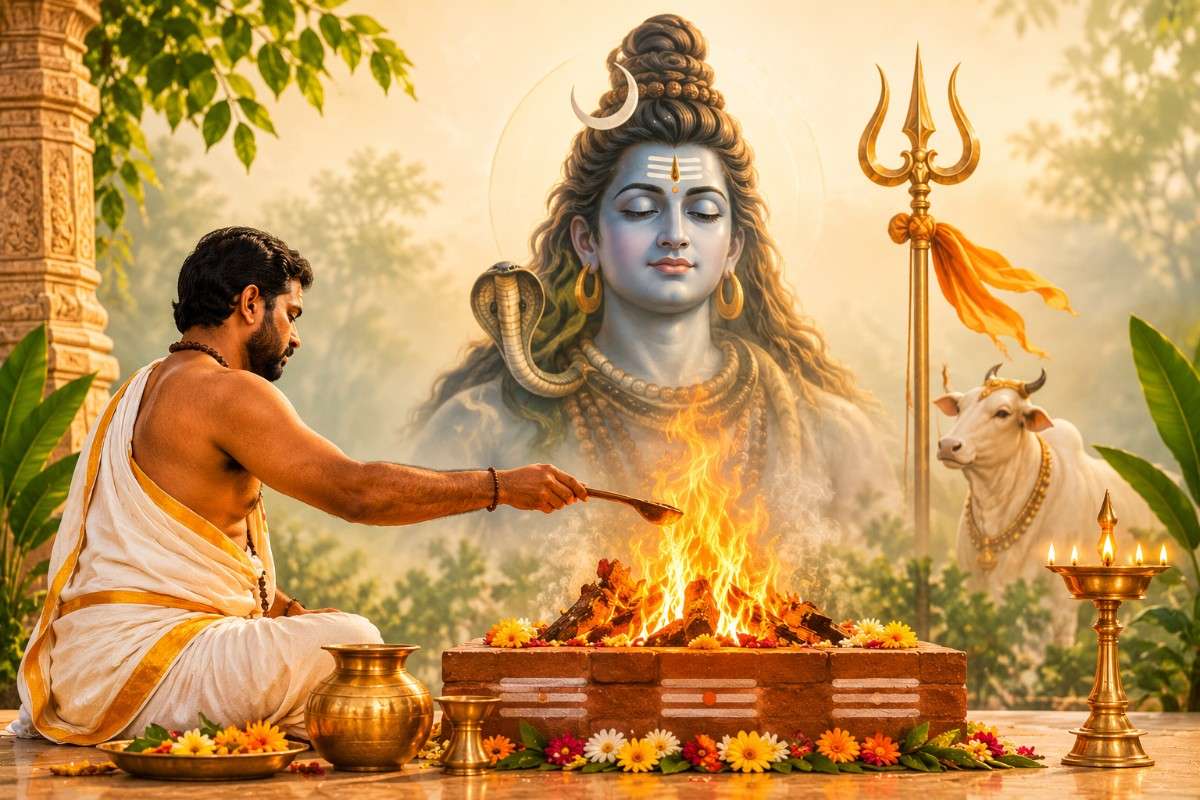
Planning Mrityunjaya Homam in Hyderabad for your family or a loved one? At 99Poojas, we help you enquire about Telugu pandits for this traditional Lord Shiva fire ritual.
Whether you wish to arrange Maha Mrityunjaya Homam at home or at another suitable venue, we help you discuss the ritual procedure, mantra Japam, pooja materials and priest requirements before booking.
Share your preferred date, location and family customs with us to enquire about availability, muhurtham and applicable charges.
ॐ
Telugu pandit
Language preference on request
📜
Mantra Japam
Count confirmed with the priest
🔥
Sacred-fire offerings
Prescribed ahutis and Poornahuti
✿
Devotional practice
Not a medical treatment
At a Glance
Mrityunjaya Homam in Hyderabad: At a Glance
Quick Answer
Mrityunjaya Homam is a traditional Hindu fire ritual dedicated to Lord Shiva in his Mrityunjaya form. It involves the Maha Mrityunjaya Mantra, sacred-fire offerings and prayers traditionally associated with longevity and wellbeing. Families in Hyderabad can enquire with 99Poojas about arranging the ceremony with a Telugu pandit. The mantra count, duration, number of priests, materials and charges depend on the agreed ritual procedure.
Ceremony Detail
Information
Pooja name
Maha Mrityunjaya Homam
Other names
Mrityunjaya Homa, Mrutyunjaya Homam, Maha Mrityunjaya Havan
Main deity
Lord Shiva as Mrityunjaya
Principal mantra
Maha Mrityunjaya Mantra, also known as Tryambakam Mantra
Scriptural reference
Rigveda 7.59.12
Traditional purpose
Devotional prayers for longevity, courage, peace and wellbeing
Ceremony type
Hindu sacred-fire ritual
Location
Hyderabad, Telangana
Venue
Home or another suitable, permitted venue
Language preference
Telugu can be requested
Mantra Japam
Count confirmed according to the selected procedure
Duration
Often several hours; confirm the actual schedule
Pandits
Depends on the agreed ritual scope
Samagri
Shiva worship materials and prescribed fire offerings
Charges
Based on the agreed arrangement
Booking
Enquire with 99Poojas
Key Takeaways
- Mrityunjaya Homam is a sacred-fire ceremony dedicated to Lord Shiva.
- The Maha Mrityunjaya Mantra appears in Rigveda 7.59.12.
- Mrityunjaya Puja, Mantra Japam and Homam are related but different forms of worship.
- The number of mantra repetitions and homam offerings should be confirmed with the priest.
- Charges depend on priest services, materials, duration and optional rituals.
- Families should verify venue permission, ventilation and fire safety before arranging a home homam.
- The ritual is a devotional practice, not a replacement for medical treatment.
Request a Pandit
Request a Pandit for Mrityunjaya Homam
Planning Mrityunjaya Homam pooja in Hyderabad? Share your ceremony requirements with 99Poojas to begin an enquiry.
Booking Enquiry Details
Please confirm the priest, ritual procedure, charges, date and booking conditions before finalising your arrangements.
Charges
Mrityunjaya Homam Charges in Hyderabad
The cost of Mrityunjaya Homam depends on the ritual procedure, mantra count, number of pandits, pooja materials, venue and additional arrangements.
A ceremony with a limited agreed Japam count may differ in cost from an extended Maha Mrityunjaya programme involving additional chanting or priests.
99Poojas offers two clear packages for Mrityunjaya Homam in Hyderabad, so you know the price before you book.
Mrityunjaya Homam packages
Package
What's included
Price
Silver
1 experienced priest. You arrange the pooja materials.
₹6,000
Gold (recommended)
2 experienced priests. All pooja materials (samagri) provided by 99Poojas.
₹7,500
Extended Maha Mrityunjaya Japam
A larger Japam count (such as 1,008 or more), extended chanting or more priests
Ask for a quote
How payment works
Package
Pay at booking (40%)
Pay after the pooja (60%)
Silver – ₹6,000
₹2,400
₹3,600
Gold – ₹7,500
₹3,000
₹4,500
Is Pandit Dakshina and Homam Samagri Included?
Yes. The package price covers the purohit's dakshina. With the Gold package, 99Poojas also brings all the samagri; with Silver, you arrange the materials yourself.
Pay the 40% advance securely online when you book. The remaining 60% is paid after the pooja is completed. Cancellations made at least 48 hours before the pooja are refundable; cancellations within 48 hours are non-refundable.
Request Mrityunjaya Homam ChargesArrangements & Inclusions
Mrityunjaya Homam Arrangements and What Is Included
A traditional Mrityunjaya Homam involves priest services, Lord Shiva worship, prescribed mantra chanting and sacred-fire offerings.
Before confirming a booking, make sure the proposed arrangement matches your family's intended ceremony.
Pandit Services and Ritual Scope
The conducting priest generally guides the sankalpam, preliminary worship, Shiva invocation, mantra chanting, fire offerings and concluding prayers.
The exact sequence depends on the agreed procedure and family tradition.
Homam Kundam and Fire Setup
The homam requires a suitable fire altar, sacred wood, ghee and prescribed offerings.
The venue must allow an open ritual fire and provide appropriate space, ventilation and safety precautions.
Included and Excluded Materials
Arrangement
Confirmation Required
Priest services
Complete procedure and duration
Maha Mrityunjaya Japam
Count and whether separately performed
Sacred-fire offerings
Prescribed ahutis and materials
Homam kundam
Supply and setup
Ghee and samidha
Quantity and responsibility
Kalasham and ritual vessels
Included or family-provided
Bilva leaves and flowers
Whether prescribed and included
Fruits and naivedyam
Family or provider responsibility
Poornahuti materials
Included or purchased separately
Travel
Applicable additional charges
Are All Mrityunjaya Homam Packages the Same?
No. A package described as Mrityunjaya Japam may involve chanting without a sacred-fire ritual.
Another arrangement may include a homam with a specified number of offerings.
Clarify the distinction before agreeing to the quotation.
Discuss Homam ArrangementsWhat Is the Homam
What Is Maha Mrityunjaya Homam?
Maha Mrityunjaya Homam is a Hindu fire ritual dedicated to Lord Shiva, involving prescribed offerings accompanied by the Maha Mrityunjaya Mantra.
The name Mrityunjaya is commonly interpreted as "conqueror of death." In devotional tradition, it expresses the worship of Lord Shiva as the one who grants spiritual courage and freedom from fear.
Lord Shiva as Mrityunjaya
Lord Shiva is worshipped in many forms, including Mrityunjaya and Tryambaka, the three-eyed Lord.
The Mrityunjaya tradition is associated with prayers for longevity, inner strength and liberation.
Meaning of the Maha Mrityunjaya Mantra
The Maha Mrityunjaya Mantra begins with the words Tryambakam Yajamahe.
It is found in Rigveda 7.59.12 and is traditionally addressed to Tryambaka.
The mantra expresses worship and a prayer for release from the bonds of mortality, using an image of natural separation from a ripened fruit.
Its significance is spiritual rather than a promise of physical immortality.
Mrityunjaya Puja vs Japam vs Homam
Although connected through Lord Shiva worship, these observances are different.
Mrityunjaya Puja
Devotional worship using prayers, offerings, lamps and other prescribed items.
Maha Mrityunjaya Japam
Repetition of the Maha Mrityunjaya Mantra according to an agreed count.
Mrityunjaya Homam
Sacred-fire offerings accompanied by the prescribed mantras and ritual procedure.
A family may request one form or a combination, subject to the conducting priest's guidance.
Why Devotees Perform It
Why Do Devotees Perform Mrityunjaya Homam?
Devotees traditionally perform Mrityunjaya Homam as an act of faith and prayer to Lord Shiva.
The ceremony is associated with devotional intentions concerning longevity, peace, courage and family wellbeing.
✧
Prayers for Longevity and Wellbeing
Families may observe the homam to pray for a loved one's wellbeing or to mark a meaningful spiritual occasion.
The ceremony offers a setting for traditional worship, chanting and family participation.
⌂
Family Devotion During Difficult Times
Some families consider Mrityunjaya worship when a loved one is unwell or when they are facing a difficult period.
For those who find comfort in religious observance, the ceremony can be personally meaningful.
However, the ritual should never be represented as a cure or a guaranteed way to alter medical outcomes.
Religious Faith and Medical Care
Mrityunjaya Homam is not a medical treatment.
There is no reliable clinical evidence that performing it cures illness, prevents death or replaces prescribed care.
Families should continue appropriate medical treatment and follow advice from qualified healthcare professionals.
If someone is too unwell to attend, the possibility of conducting the ceremony with an appropriate sankalpam should be discussed with the priest.
How It Is Performed
How Is Mrityunjaya Homam Performed?
Mrityunjaya Homam generally involves preliminary prayers, sankalpam, Lord Shiva worship, Maha Mrityunjaya Mantra chanting, offerings into a consecrated fire and concluding rituals.
The exact sequence may vary according to the priest's Vedic tradition and the agreed ceremony.
1
1. Sankalpam and Ganapathi Pooja
The ceremony commonly begins with prayers to Lord Ganesha and sankalpam.
2
2. Kalasha Sthapana and Shiva Avahanam
The priest prepares the kalasham and performs the applicable purification and invocation rituals.
3
3. Agni Pratishta
The sacred fire is established in the homam kundam according to the ritual procedure.
4
4. Maha Mrityunjaya Japam and Ahutis
The Maha Mrityunjaya Mantra is chanted according to the agreed procedure.
5
5. Poornahuti and Mangala Harathi
The homam concludes with Poornahuti, the prescribed final offering.
Ritual note: This is a general overview of commonly described stages. The complete sequence, mantras and offering quantities must be confirmed by the conducting priest.
Japam & Homam Counts
Maha Mrityunjaya Mantra Japam and Homam Counts
One of the most important details to clarify before booking is the number of mantra repetitions and sacred-fire offerings included in the ceremony.
A higher Japam count may involve additional chanting time, priest coordination and materials.
108 vs 1,008 vs Extended Japam
Some providers describe programmes using counts such as 108 or 1,008 repetitions. Extended chanting programmes may use larger agreed counts.
The suitable arrangement depends on the religious tradition and the priest's guidance.
Japam Arrangement
What It Means
What to Confirm
108 repetitions
A commonly offered limited chanting programme
Whether homam offerings are included
1,008 repetitions
An extended chanting programme
Number of priests and expected duration
Larger Japam programme
A separately agreed chanting count
Schedule, staffing and quotation
Homam with Japam
Mantra chanting combined with sacred-fire offerings
Exact chanting and offering counts
These are examples of advertised ritual formats, not compulsory counts.
Japam Count vs Fire-Offering Count
📿
Japam count
Japam count refers to the number of mantra repetitions.
🔥
Ahuti count
Ahuti count refers to the number of prescribed offerings made into the sacred fire.
These should not automatically be treated as identical.
Some traditions use particular relationships between chanting and homam offerings, but the selected procedure determines the actual requirements.
How Many Priests Are Needed?
The priest count may vary according to the Japam programme, ritual duration and family customs.
Confirm whether the ceremony requires one priest or a coordinated team.
What to Confirm Before Booking
Ask these questions:
- How many mantra repetitions are included?
- Are all recitations completed on the same day?
- Is the homam included or charged separately?
- How many ahutis will be offered?
- How many priests will conduct the ceremony?
- What is the estimated duration?
- Are all materials included?
Samagri List
Mrityunjaya Homam Pooja Samagri List
The materials for Mrityunjaya Homam generally include items for preliminary worship, Lord Shiva worship and the prescribed sacred-fire offerings.
The following checklist is for planning purposes. The conducting priest should provide the final list and quantities.
Common Shiva Pooja Materials
Category
Materials to Discuss
Shiva worship
Shiva Lingam or suitable deity image, according to the procedure
Kalasha setup
Kalasham, coconut, water and prescribed leaves
Flowers and leaves
Flowers and bilva leaves, where required
Traditional offerings
Turmeric, kumkum, sandalwood and akshata, as prescribed
Fruits
Bananas, coconuts and other suitable fruits
Lamps
Brass lamps, wicks, oil or ghee
Incense
Agarbatti and other approved incense
Ritual vessels
Plates, bowls, spoons and water vessels
Naivedyam
Fruits, sweets or other prescribed offerings
Homam Dravyam, Ghee and Samidha
Material
Purpose
Homam kundam
Sacred-fire altar
Samidha
Prescribed sacred wood
Ghee
Traditional fire offering
Homam dravyam
Approved mixture of ritual offerings
Darbha grass
Used in applicable ritual stages
Poornahuti items
Materials for the final offering
Fire-resistant base
Protects the venue from heat
Fire-safety provisions
Helps support safe ritual arrangements
Bilva Leaves and Other Prescribed Offerings
Bilva leaves are traditionally associated with Lord Shiva worship.
However, the materials used during preliminary worship are not necessarily the same as those offered into the fire.
Confirm with the priest which leaves, herbs or other items are appropriate for the selected procedure.
Do not burn unidentified or potentially hazardous materials.
Materials Arranged by the Family
Before purchasing supplies, request a checklist identifying:
- Items provided by the priest.
- Items supplied by the family.
- Exact quantities.
- Special preparation requirements.
- Approved substitutes.
- Items needed for Poornahuti.
Duration & Muhurtham
Duration, Muhurtham and Suitable Dates for Mrityunjaya Homam
How Long Does Maha Mrityunjaya Homam Take?
The duration depends on the procedure, chanting count, number of priests and any additional rituals.
Some Hyderabad booking providers describe shorter homam arrangements lasting approximately two to four hours.
An extended Japam programme may require considerably more time.
These examples are not fixed durations for 99Poojas.
Mondays, Pradosham and Shivaratri
Mondays, Pradosham and Maha Shivaratri are traditionally associated with Lord Shiva worship.
Families may consider these occasions when planning Mrityunjaya Homam.
However, a suitable muhurtham should be selected according to the family's tradition and the conducting priest's guidance.
Choosing a Suitable Muhurtham
Share your preferred date with the priest.
If relevant, the priest may request customary details or consult the Telugu Panchangam.
Avoid assuming that one particular date or time is appropriate for every ceremony.
Preparing the Schedule
Confirm the priest's arrival time, altar preparation, Japam duration, homam sequence and approximate completion.
Allow additional time for safe fire handling and concluding arrangements.
Homam at Home
Planning Mrityunjaya Homam at Home
Mrityunjaya Homam may be arranged at home when the venue can safely accommodate a sacred fire and the required permissions are in place.
The practical setup is especially important in apartments and enclosed residential spaces.
Space and Ventilation
Choose a clean, suitable location with adequate ventilation and enough room for the priest to conduct the ceremony.
Keep the fire away from curtains, furniture, decorations, stored materials and other combustible objects.
Sacred-Fire Safety
Before confirming a home homam:
- Check the building's rules concerning open flames.
- Discuss the placement of the homam kundam.
- Use a suitable fire-resistant surface.
- Keep children and pets away from the ritual fire.
- Have appropriate fire-safety equipment available.
- Avoid overcrowding around the altar.
- Take smoke exposure seriously, particularly for people with respiratory vulnerabilities.
- Ensure the fire is completely extinguished afterward.
Apartment and Venue Permissions
If you live in an apartment complex, obtain any required permission from the association or management.
Do not assume balconies, terraces, corridors or common areas are automatically safe or permitted for a homam.
If your home is unsuitable, discuss another permitted venue or a different devotional observance with the priest.
Family Participation
Prepare the confirmed materials and provide suitable seating.
The conducting priest should explain when family members are expected to participate in sankalpam, offerings and concluding prayers.
Discuss an At-Home Mrityunjaya HomamAbsent Family Member
Mrityunjaya Homam for an Absent Family Member
Some families wish to perform Mrityunjaya Homam for a loved one who cannot attend because of illness, travel or another circumstance.
Whether and how the ceremony can be conducted on that person's behalf depends on the priest's tradition and the agreed ritual procedure.
Sankalpam in Another Person's Name
A priest may permit an appropriate sankalpam in the name of an absent family member.
The required details and form of representation differ according to the tradition.
Do not assume that every priest follows the same method.
Information Required by the Priest
The priest may request the person's name, gotram or other customary information relevant to the sankalpam.
Share only the details required for the ceremony.
When the Person Cannot Attend
If the family member is unwell or receiving treatment, discuss the ceremony arrangements without disrupting medical care.
There is no need to assume that an ill person must attend a homam or be exposed to smoke.
The priest should confirm whether another family member may participate on their behalf.
Important Clarification
Performing a devotional ceremony for an absent or ill person does not replace medical treatment or guarantee recovery.
Enquire About Family Sankalpam ArrangementsTelugu Pandit
Book a Telugu Pandit for Mrityunjaya Homam in Hyderabad
Looking for a Mrityunjaya Homam pandit in Hyderabad?
At 99Poojas, you can enquire about Telugu-speaking priest arrangements for this traditional Lord Shiva ceremony.
The priest should be familiar with the requested homam procedure, relevant mantra chanting and your family's customs.
Experience With Maha Mrityunjaya Rituals
Before confirming the pandit, ask about familiarity with Maha Mrityunjaya Mantra Japam and the prescribed homam.
Clarify whether extended chanting or additional priests are required.
Telugu-Language Guidance
Many families prefer Sanskrit mantras with important instructions explained in Telugu.
If this is your preference, mention it when enquiring.
Confirm that the proposed priest can guide the family through sankalpam and the main ritual stages.
Priest Count and Family Tradition
Tell us if your family follows a particular tradition or has received instructions from a family priest.
The relevant procedure and priest count should be agreed before booking.
Questions to Ask the Pandit
- Which Mrityunjaya Homam procedure will be followed?
- Is separate Japam included?
- What is the mantra count?
- How many fire offerings are prescribed?
- How many priests are required?
- What materials must the family arrange?
- How long will the ceremony take?
- What are the total charges?
- Can the ceremony be performed at our venue?
How to Book
How to Book Mrityunjaya Homam with 99Poojas
Our enquiry process begins with understanding the ceremony you wish to arrange.
1
Share Your Ceremony Requirements
Specify whether you require Mrityunjaya Homam, Mantra Japam or a combination.
2
Select a Preferred Date and Venue
Provide the expected ceremony date, Hyderabad locality and venue type.
3
Discuss Pandit Availability
Enquire about a suitable Telugu pandit and confirm the proposed ritual procedure.
4
Review the Quotation
Check the mantra count, number of priests, samagri, homam kundam, travel charges and other inclusions.
5
Confirm the Booking
Finalise the booking only after the date, priest, procedure, charges and applicable terms have been agreed.
Areas in Hyderabad
Mrityunjaya Homam Services Across Hyderabad
99Poojas accepts enquiries for traditional pooja services in Hyderabad.
For Mrityunjaya Homam, the priest's availability and suitability of the proposed venue should be confirmed before booking.
Hyderabad Localities for Enquiries
Families may enquire from areas including:
- Kukatpally
- Miyapur
- Kondapur
- Gachibowli
- Madhapur
- Manikonda
- Nizampet
- Secunderabad
These are Hyderabad service-enquiry areas. Availability for this particular homam is subject to confirmation.
Mrityunjaya Homam Pandit Near Me
If you are looking for a Telugu pandit near your home, share your locality or PIN code, preferred date and ritual requirements.
For apartments, mention whether the property permits sacred-fire ceremonies.
Check Availability for Your LocationComparison
Mrityunjaya Homam vs Ayushya Homam vs Dhanvantari Homam
These Hindu rituals may be associated with prayers for wellbeing, but they have different religious focuses and procedures.
Feature
Mrityunjaya Homam
Ayushya Homam
Dhanvantari Homam
Principal deity or focus
Lord Shiva as Mrityunjaya
Ayushya-related Vedic prayers and deities, depending on tradition
Lord Dhanvantari
Traditional purpose
Prayers for longevity, courage and wellbeing
Prayers for long life and auspicious milestones
Prayers associated with health and wellbeing
Common occasions
Shiva worship and family devotional observances
Birthdays and Janma Nakshatram occasions
Dhanvantari worship and family prayers
Mantras
Maha Mrityunjaya Mantra and prescribed prayers
Ayushya-related mantras
Dhanvantari-related mantras
Procedure
Japam and prescribed sacred-fire offerings
Ayushya worship and fire offerings
Dhanvantari worship and fire offerings
Priest guidance
Required
Required
Required
Mrityunjaya Homam vs Ayushya Homam
Ayushya Homam is traditionally associated with longevity prayers and is commonly observed during birthdays or birth-star occasions.
Mrityunjaya Homam specifically centres on Lord Shiva and the Maha Mrityunjaya Mantra.
Mrityunjaya Homam vs Dhanvantari Homam
Dhanvantari Homam is dedicated to Lord Dhanvantari, traditionally associated with Ayurveda and wellbeing.
Mrityunjaya Homam follows a different devotional tradition centred on Lord Shiva.
Mrityunjaya Homam vs Rudrabhishekam
Both ceremonies honour Lord Shiva, but their main ritual forms differ.
🔥
Mrityunjaya Homam
A sacred-fire ritual involving prescribed offerings and mantras.
💧
Rudrabhishekam
Ritual bathing of the Shiva Lingam using prescribed substances while chanting Shiva-related mantras.
Which Ceremony Should You Choose?
Choose according to your family's religious intention, customary practice and priestly guidance.
None of these rituals should be presented as medically superior or as guaranteeing a particular health outcome.
Preparation & Guidance
Mrityunjaya Homam Preparation Checklist and Expert Guidance
Thoughtful preparation helps families understand the ritual, avoid unnecessary purchases and make informed booking decisions.
Before Booking
- Confirm the exact ritual procedure.
- Discuss the proposed Mantra Japam count.
- Confirm whether homam offerings are included.
- Ask about the number of priests.
- Review the expected duration.
- Confirm venue suitability.
- Request a complete quotation.
- Discuss cancellation and rescheduling terms.
Before the Ceremony
- Obtain the approved samagri list.
- Confirm which materials the priest will bring.
- Prepare the altar and family seating.
- Obtain required venue permissions.
- Arrange a suitable fire-resistant setup.
- Check ventilation and safety provisions.
- Confirm the priest's arrival time.
- Keep the booking contact details available.
Practical Expert Guidance: Confirm Three Separate Counts and Responsibilities
One useful way to avoid confusion is to distinguish three matters before booking.
1. Mantra Japam count
Confirm the exact number of repetitions agreed for the ceremony.
2. Homam offering count
Confirm whether the number of ahutis is different from the Japam count.
3. Material responsibility
Confirm who supplies the fire altar, samidha, ghee, dravyam and other items.
These details directly affect the ritual scope and quotation.
Common Preparation Mistakes
Avoid:
- Assuming Japam and Homam are the same service.
- Assuming 108 or 1,008 repetitions are compulsory for every arrangement.
- Booking without confirming the fire-offering procedure.
- Buying materials before receiving the priest's list.
- Using another provider's pricing as a 99Poojas quotation.
- Arranging an open fire without venue approval.
- Believing that a religious ritual replaces medical care.
Ritual review requirement: A qualified priest familiar with Maha Mrityunjaya Homam should verify the actual procedure, mantra counts and materials before publication.
Pandit, Photos & Experiences
Pandit Information, Ceremony Photos and Family Experiences
Families planning an important ceremony may wish to understand the pandit's experience and the proposed arrangements before confirming.
Verified Pandit Information
Where available, review the proposed priest's:
- Name
- Preferred language
- Relevant ritual background
- Familiarity with Mrityunjaya Homam
- Experience with the selected Japam programme
- Family tradition or sampradaya, where relevant
Publish only verified credentials and experience.
Original Ceremony Photographs
Real ceremony photographs can help families understand the altar, homam kundam, pooja materials, fire offerings and family participation.
Photographs from actual customer ceremonies should be used only with the necessary permissions. AI-generated devotional illustrations should be identified as illustrations rather than real booking evidence.
Genuine Family Experiences
Authentic feedback can help future visitors understand the booking process, communication and preparation arrangements.
For sensitive ceremonies involving illness, respect family privacy and avoid sharing personal medical information.
Original Experience Record
This record should only be published after documenting an actual ceremony.
FAQs
Frequently Asked Questions About Mrityunjaya Homam
1. What is Mrityunjaya Homam?
Mrityunjaya Homam is a traditional Hindu fire ritual dedicated to Lord Shiva in his Mrityunjaya form. It generally involves the Maha Mrityunjaya Mantra, sankalpam, deity worship, prescribed fire offerings and concluding prayers. The exact procedure depends on the conducting priest's tradition.
2. How much does Mrityunjaya Homam cost in Hyderabad?
Mrityunjaya Homam in Hyderabad costs ₹6,000 with the Silver package (one priest; your family arranges the samagri) or ₹7,500 with the Gold package (two priests, with all samagri provided by 99Poojas). You pay a 40% advance when booking and the remaining 60% after the pooja.
The cost depends on priest dakshina, Japam count, number of priests, samagri, venue and additional arrangements. Contact 99Poojas with your requirements to enquire about an itemized quotation. The final amount and inclusions should be confirmed before booking.
3. What are the traditional benefits of Mrityunjaya Homam?
Devotees traditionally perform Mrityunjaya Homam to pray for longevity, peace, courage and wellbeing. These are devotional intentions within Hindu religious tradition. The ceremony does not guarantee medical recovery, disease prevention or freedom from life's difficulties.
4. Can Mrityunjaya Homam be performed at home?
Yes, a home ceremony may be arranged when the venue permits an open ritual fire and suitable safety precautions are available. Confirm ventilation, homam kundam placement, building permissions and materials before booking.
5. How long does Maha Mrityunjaya Homam take?
The duration varies with the selected procedure, mantra count and number of priests. Some Hyderabad providers describe arrangements lasting approximately two to four hours, while extended chanting programmes may take longer. Confirm the actual schedule with the conducting priest.
6. What is the procedure for Mrityunjaya Homam?
The procedure commonly includes sankalpam, preliminary worship, invocation of Lord Shiva, establishment of the sacred fire, Maha Mrityunjaya Mantra chanting, prescribed offerings, Poornahuti and Mangala Harathi. The exact sequence depends on the ritual tradition.
7. How many times is the Maha Mrityunjaya Mantra chanted?
Some arrangements use 108 or 1,008 repetitions, while others involve larger agreed counts. There is no single count that should be assumed for every booking. Ask the priest to confirm the Japam count and any separate fire-offering requirements.
8. Is Mrityunjaya Japam different from Mrityunjaya Homam?
Yes. Japam involves repetition of the Maha Mrityunjaya Mantra, while Homam involves prescribed offerings into a consecrated fire. Some ceremonies combine both. Confirm which activities are included in the quotation.
9. What pooja materials are required for Mrityunjaya Homam?
Common materials include a suitable homam kundam, ghee, samidha, prescribed homam dravyam, kalasham, flowers, bilva leaves where required, fruits, lamps and ritual vessels. The complete list and quantities must be approved by the priest.
10. How many pandits are required for Mrityunjaya Homam?
The priest count depends on the ritual procedure, chanting requirements and ceremony duration. Some arrangements may use one priest, while extended programmes may require additional priests. Confirm the proposed priest team and total charges before booking.
11. Can I book a Telugu-speaking pandit for Mrityunjaya Homam?
You can request a Telugu-speaking pandit through 99Poojas. Share your preferred date, location and family traditions. The availability of a suitable priest must be confirmed before the booking is finalised.
12. Which day is suitable for Maha Mrityunjaya Homam?
Mondays, Pradosham and Maha Shivaratri are traditionally associated with Lord Shiva worship. Other dates may also be suitable. Ask the conducting priest to recommend a muhurtham according to your family's customs and the relevant Panchangam.
13. Can Mrityunjaya Homam be performed for someone who is ill?
Families may choose to offer devotional prayers for someone who is unwell. However, Mrityunjaya Homam is not a medical treatment and cannot be relied upon to cure or prevent illness. Continue appropriate medical care and discuss the religious arrangements with the priest.
14. Can the homam be performed if the family member cannot attend?
Some traditions may permit an appropriate sankalpam for an absent family member. The required details and method depend on the priest and agreed ritual procedure. Confirm how another family member may participate on their behalf rather than assuming a universal rule.
15. Is Mrityunjaya Homam different from Ayushya Homam?
Yes. Mrityunjaya Homam centres on Lord Shiva and the Maha Mrityunjaya Mantra. Ayushya Homam involves longevity-related Vedic prayers and is commonly associated with birthdays and other family milestones. Their ritual procedures differ.
16. What is the difference between Mrityunjaya Homam and Rudrabhishekam?
Mrityunjaya Homam involves offerings into a sacred fire accompanied by prescribed mantras. Rudrabhishekam centres on the ritual bathing and worship of the Shiva Lingam. Both honour Lord Shiva, but they use different ritual methods.
17. Are homam samagri and the fire altar included in the booking?
Materials and fire-altar arrangements depend on the agreed quotation. Ask whether the homam kundam, ghee, samidha, dravyam, kalasham and other pooja items are included or must be arranged by the family.
18. How early should I book a pandit for Mrityunjaya Homam in Hyderabad?
Enquire once your preferred date and venue are reasonably clear. Additional time may be necessary for extended Japam programmes, multiple priests or specialised materials. The booking is confirmed only after the details and charges are agreed.
Related Poojas
Explore Related Lord Shiva Poojas and Homams
💧
Rudrabhishekam
Rudrabhishekam is a traditional Shiva worship ceremony involving the ritual bathing of the Shiva Lingam with prescribed substances and prayers.
✦
Ayushya Homam
Ayushya Homam is traditionally associated with prayers for longevity and is often observed on birthdays or Janma Nakshatram occasions.
ॐ
Maha Shivaratri Pooja
Maha Shivaratri is a major Hindu occasion dedicated to Lord Shiva, traditionally observed through fasting, prayers and devotional worship.
✿
Dhanvantari Homam
Dhanvantari Homam is a distinct ritual dedicated to Lord Dhanvantari, traditionally associated with Ayurveda and wellbeing.
[Explore Dhanvantari Homam – INSERT URL]
Each ceremony has its own religious focus and procedure. Choose according to your family's tradition and the guidance of a knowledgeable priest.
Contact 99Poojas
Arrange Your Mrityunjaya Homam with 99Poojas
Mrityunjaya Homam is a meaningful devotional observance for families wishing to offer prayers to Lord Shiva.
If you are planning the ceremony in Hyderabad, begin by clarifying your preferred date, mantra requirements, venue and pooja materials.
At 99Poojas, we help you start the enquiry process and discuss the arrangements needed before booking.
Contact 99Poojas
Phone: +91 88850 43059 / +91 88850 43069
Email: 99poojas2023@gmail.com
Business Contact Address: Plot No. 39/C, Flat No. 302, 3rd Floor, SR Towers, Addagutta, HMT Hills, Kukatpally, Hyderabad – 500072, Telangana, India.
Enquire About Mrityunjaya HomamShare your ceremony requirements to discuss Telugu pandit availability, mantra chanting, samagri, muhurtham and applicable charges.
Content Information
Content Information
Important: This page describes Hindu devotional practices. The final ritual procedure, materials and mantra counts should be approved by the conducting priest. Mrityunjaya Homam is not a substitute for appropriate medical treatment.