Book Experienced Telugu Pandits
Bhoomi Pooja in Hyderabad
Begin your construction journey with traditional Bhoomi Pooja in Hyderabad through 99Poojas. We help you enquire about Telugu pandit services for Bhoomi Pooja, Shankusthapana and foundation-laying ceremonies, with guidance on auspicious muhurtham, rituals, pooja samagri and site preparations.
Whether you are planning to build an independent house, villa, apartment building or commercial property, you can discuss your preferred ceremony, family traditions and construction schedule before booking.
Bhoomi Devi Pooja
Shankusthapana
Shila Nyasam
Vastu Pooja
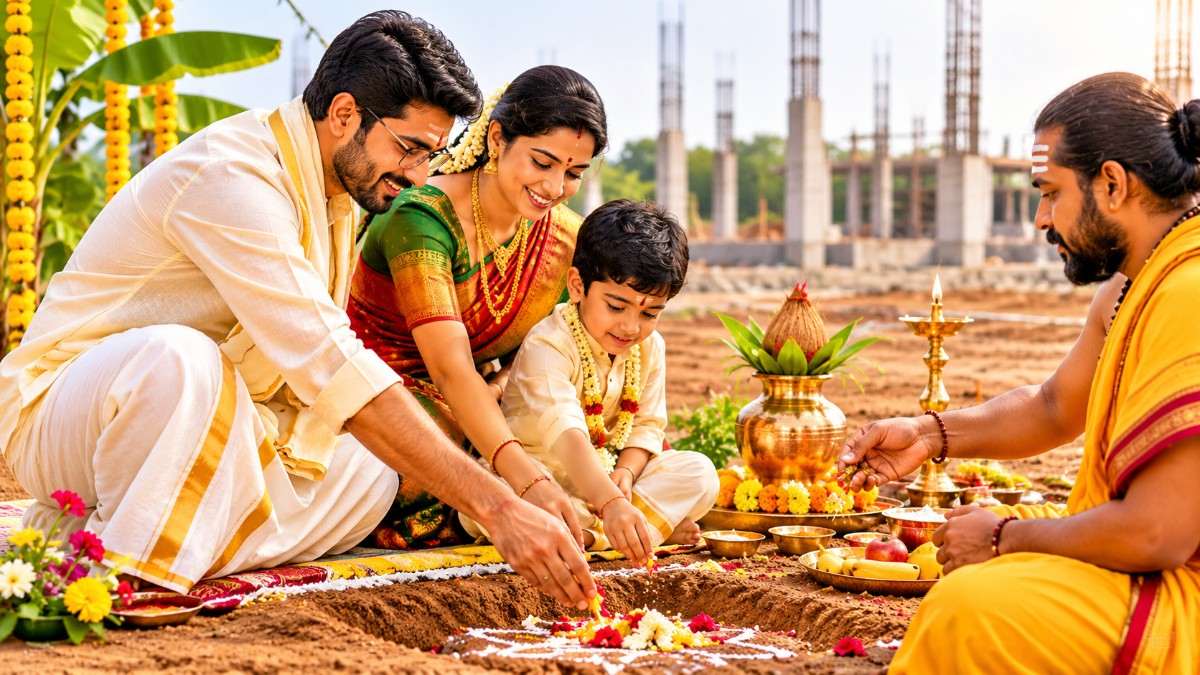
ॐ
Telugu purohit
Language preference on request
🧱
Shankusthapana
Foundation ceremony, where prescribed
◷
Muhurtham guidance
Using the Panchangam
🏗
Houses to commercial sites
Coordinated with your contractor
What Is Bhoomi Pooja?
Bhoomi Pooja is a traditional Hindu ceremony performed before beginning construction on a plot of land. It honours Bhoomi Devi (Mother Earth) and Vastu Purusha through prayers and offerings. In Telugu traditions, the ceremony is often associated with Shankusthapana, which marks the establishment of a foundation. The procedure may include Ganapathi Pooja, Sankalpam, Bhoomi worship and ceremonial foundation placement.
Bhoomi Pooja at a Glance
Ceremony Details
Information
Pooja name
Bhoomi Pooja / Bhumi Puja
Related Telugu name
Shankusthapana / Sankusthapana
Main deity
Bhoomi Devi (Mother Earth)
Associated deities
Lord Ganesha, Vastu Purusha and other prescribed deities
Purpose
Traditional prayers before starting construction
Suitable properties
Residential plots, villas, independent houses and commercial sites
Common rituals
Ganapathi Pooja, Sankalpam, Bhoomi Devi Pooja and Vastu Pooja
Foundation ceremony
Shankusthapana or Shila Nyasam, where prescribed
Muhurtham
Selected using the Panchangam and family traditions
Samagri
Kalasham, coconut, flowers, Navadhanyalu and prescribed foundation materials
Venue
Construction plot or another site appropriate to the chosen ritual
Booking
Contact 99Poojas to discuss pandit availability and charges
Key Takeaways
- Bhoomi Pooja is traditionally performed before beginning construction or excavation.
- It expresses gratitude and reverence toward Bhoomi Devi.
- Shankusthapana is closely associated with foundation-establishment rituals in Telugu traditions.
- The exact ceremony depends on the property's purpose and the prescribed Vidhanam.
- An auspicious muhurtham is generally selected before the ritual.
- Samagri, foundation materials, site preparation and priest charges should be confirmed before booking.
- The ceremony does not replace engineering approvals, structural planning or construction permits.
Book a Pandit
Book a Pandit for Bhoomi Pooja in Hyderabad
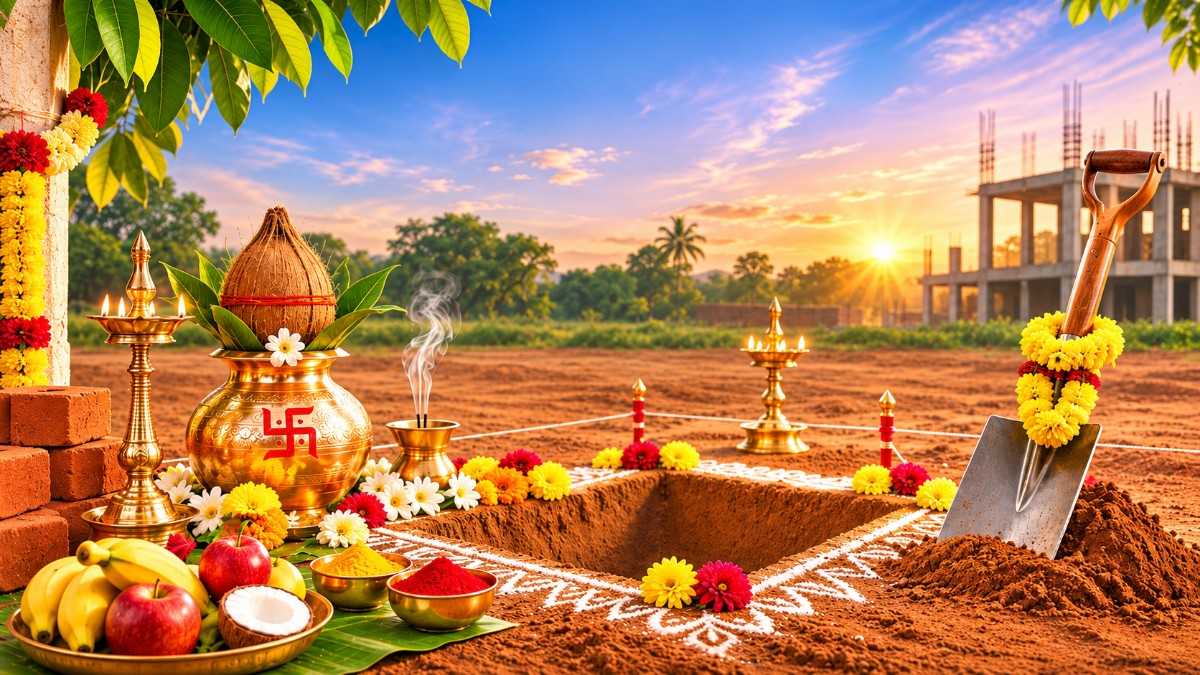
Planning Bhoomi Pooja involves more than selecting a date. The family must coordinate the religious ceremony with the property owner, site preparation and construction schedule.
At 99Poojas, we help customers enquire about Bhoomi Pooja pandit arrangements in Hyderabad and discuss the requirements for their chosen ceremony.
Telugu Pandit for Bhoomi Pooja
A Telugu-speaking purohit can guide the participating family through traditional prayers, Sankalpam, Bhoomi Devi worship and Shankusthapana rituals.
When enquiring about a priest, share your family's Sampradayam and whether you want the ceremony explanations in Telugu.
This is especially helpful when the family follows a particular regional or ancestral ritual procedure.
Bhoomi Pooja Priest for Construction Sites
A Bhoomi Pooja priest in Hyderabad may be requested for ceremonies associated with:
- New independent house construction.
- Residential plot development.
- Villa construction.
- Apartment-building foundations.
- Commercial building projects.
- Shops and offices under construction.
- Reconstruction of existing properties.
The required rituals and materials may differ depending on the project.
Information to Share Before Booking
Provide your preferred date, plot location, type of construction and whether you need Bhoomi Pooja, Shankusthapana or both.
You should also confirm whether your contractor has identified a safe area for the ceremonial foundation work.
Planning your construction ceremony? Contact 99Poojas to enquire about Telugu pandit availability.Benefits & Significance
Benefits and Religious Significance of Bhoomi Pooja
Bhoomi Pooja is traditionally associated with gratitude, divine blessings and an auspicious beginning to construction.
Its significance is religious, cultural and personal.
🌍
Expressing Gratitude to Mother Earth
Families perform Bhoomi Pooja to acknowledge the land and express reverence toward Bhoomi Devi.
ॐ
Seeking Blessings Before Construction
The ceremony is traditionally performed with prayers for the well-being of those involved in the project.
✦
Marking a Meaningful Beginning
Bhoomi Pooja creates a ceremonial starting point before the construction process begins.
📜
Following Family Traditions
Many Telugu families consider the ceremony an important part of constructing a new house.
❋
Bringing the Family Together
The occasion allows property owners, relatives and sometimes project participants to gather for prayers.
✧
Recognising Responsibility Toward the Land
The ceremony offers an opportunity to reflect on the importance of the land and the care required during construction.
Note: These are traditional beliefs and devotional purposes. Bhoomi Pooja does not guarantee construction safety, financial success, timely completion or protection from structural problems.
When & Why
When and Why Should You Perform Bhoomi Pooja?
Bhoomi Pooja is usually performed before excavation or foundation construction begins.
Families may choose the ceremony when starting a new residential or commercial building project.
⛏
Before Excavation
Many families prefer to conduct Bhoomi Pooja before the first major digging or excavation work.
This allows the religious ceremony to be coordinated with the construction schedule.
🧱
Before Laying the Foundation
Bhoomi Pooja may be performed alongside Shankusthapana or a foundation stone laying ceremony.
🏠
When Building a New House
Families constructing an independent home often arrange the ceremony before beginning foundation work.
🏡
Before Villa Construction
Villa owners may conduct Bhoomi Pooja at the plot before construction begins.
🏬
Before Commercial Construction
Businesses and developers may arrange the ceremony before beginning an office, shop or other commercial building project.
🛠
After Major Reconstruction Planning
Some families choose to perform a suitable religious ceremony before rebuilding a property.
The applicable procedure should be discussed with the priest.
Should Bhoomi Pooja Be Performed Before Site Work Begins?
If the family wishes to follow the traditional sequence, it is generally planned before the ceremonial start of excavation.
However, preliminary site surveys, soil investigations, measurements and legally required preparation may occur earlier.
Coordinate the ritual with your architect, engineer or contractor.
Pooja Procedure
Bhoomi Pooja Procedure – Step by Step
A traditional Bhoomi Pooja procedure commonly includes preliminary prayers, worship of Bhoomi Devi, Vastu-related rituals and ceremonial foundation work.
The exact sequence depends on the family's Sampradayam and the prescribed Vidhanam.
1
Select the Auspicious Muhurtham
Consult a knowledgeable purohit to identify a suitable date and time for the ceremony.
2
Prepare the Construction Site
Clean and level a safe area for the pooja.
3
Achamanam and Pranayama
Where prescribed, the ceremony begins with preliminary purification prayers.
4
Ganapathi Pooja
Lord Ganesha is traditionally worshipped before beginning an auspicious activity.
5
Sankalpam
The priest recites the intention of performing Bhoomi Pooja.
6
Punyahavachanam
Where included, Punyahavachanam involves purification prayers and the use of sanctified water.
7
Kalasha Sthapana
A Kalasham is prepared and worshipped according to the prescribed procedure.
8
Bhoomi Devi Pooja
Prayers and offerings are made to Bhoomi Devi.
9
Vastu Purusha Pooja
Vastu Purusha and associated deities may be worshipped through prescribed mantras and offerings.
10
Navagraha Pooja, Where Prescribed
Some ceremonies include worship of the nine planetary deities.
11
Shankusthapana or Foundation Ritual
Where prescribed, the priest guides the ceremonial establishment of the foundation marker, brick or stone.
12
Symbolic First Digging
The property owner or designated participant may make a small ceremonial digging gesture at the selected muhurtham.
13
Homam, If Included
Some families perform an additional Homam using prescribed offerings.
14
Purnahuti and Mangala Harathi
Where Homam is performed, Purnahuti marks its concluding offering. Harathi and blessings may follow.
15
Prasadam Distribution
The ceremony concludes with the distribution of prasadam and customary blessings.
Important: This is a general outline. Not every Bhoomi Pooja includes all these steps, and the order may differ according to the prescribed Vidhanam.
Shankusthapana
Shankusthapana and Foundation Stone Laying Ceremony
Shankusthapana is an important traditional ceremony associated with starting the foundation of a building.
It may be performed as part of Bhoomi Pooja or as a more specifically prescribed foundation-establishment ritual.
What Happens During Shankusthapana?
Depending on the tradition, the ceremony may involve:
- Selecting the ceremonial foundation location.
- Worshipping the prescribed deities.
- Preparing a foundation brick, stone or ritual marker.
- Making prescribed offerings.
- Placing the ritual object at the selected muhurtham.
- Performing concluding prayers.
What Is Shila Nyasam?
Shila Nyasam generally refers to the ritual placement or establishment of a stone or foundation element.
In some traditions, Shila Nyasam is performed during the foundation-laying ceremony with prescribed mantras and offerings.
Are Navaratnalu or Navadhanyalu Required?
Some ceremonies prescribe Navaratnalu, Navadhanyalu, metals or other traditional materials.
However, these items are not universal requirements for every Bhoomi Pooja.
Ask your priest for the appropriate list before purchasing expensive or specialised items.
Where Should the Foundation Stone Be Placed?
The ritual location may depend on the family's tradition and the purohit's guidance.
Any placement within an actual foundation must also be coordinated with the qualified structural engineer.
A ritual object should not compromise reinforcement, concrete, waterproofing, stability or any other structural requirement.
Who Performs the Foundation Ritual?
Depending on family tradition, the property owner, a couple or another designated participant may perform the ceremonial placement under the priest's guidance.
Is Shankusthapana Necessary for Every Bhoomi Pooja?
Not necessarily.
Some families arrange a simpler land-worship ceremony, while others specifically request Shankusthapana.
Confirm the required procedure before finalising the booking.
Samagri List
Bhoomi Pooja Samagri List
The exact Bhoomi Pooja samagri list depends on the ceremony, whether Shankusthapana is included and the family's traditions.
Use the following as a preliminary checklist.
Common Pooja Materials
- Turmeric (Pasupu).
- Kumkum.
- Akshatalu.
- Sandalwood paste or powder.
- Coconut.
- Mango leaves.
- Kalasham.
- Fresh flowers.
- Flower garlands.
- Betel leaves.
- Betel nuts.
- Bananas and other fruits.
- Rice.
- Navadhanyalu, where prescribed.
- Camphor.
- Incense sticks.
- Oil or ghee lamps.
- Cotton wicks.
- Panchapatra and Uddharini.
- Harathi plate.
- Water.
- Naivedyam ingredients.
🧱
Foundation Ceremony Materials
Where Shankusthapana is included, the priest may request:
🔥
Optional Homam Samagri
If Homam is part of the ceremony:
Who Arranges the Bhoomi Pooja Materials?
Before booking, confirm which items are provided by the priest and which must be arranged by the property owner.
A practical approach is to divide the materials into:
Basic pooja items
Flowers, fruits, turmeric, kumkum, coconuts and lamps.
Foundation-specific items
Bricks, stones, tools and other prescribed materials.
Homam materials
Required only when a sacred fire ritual is included.
Bhoomi Pooja Samagri Checklist
Material Category
Preparation
Fresh flowers and fruits
Purchase close to the ceremony date
Kalasham and pooja vessels
Clean and keep ready
Foundation brick or stone
Confirm type and location
Digging tool
Arrange only for the ceremonial procedure
Navadhanyalu
Confirm whether prescribed
Navaratnalu or metals
Purchase only after priest confirmation
Homam materials
Arrange only if Homam is included
Prasadam
Prepare as instructed
Ask your pandit for the final samagri list before purchasing the materials.
Auspicious Days
Auspicious Days and Muhurtham for Bhoomi Pooja
Bhoomi Pooja muhurtham is the auspicious date and time selected for performing the religious ceremony before construction.
The selection is traditionally based on the Hindu Panchangam and the family's religious customs.
How Is Bhoomi Pooja Muhurtham Selected?
A knowledgeable purohit may consider:
Tithi
The lunar day.
Nakshatram
The lunar constellation.
Vaaram
The weekday.
Lagnam
The ascendant considered suitable for the ritual.
Panchangam
The traditional calendar used to assess the timing.
Family Sampradayam
Customs followed by the household.
Is There One Auspicious Day for Every Family?
No. The appropriate date and time may depend on family tradition, location, the selected ritual and the Panchangam.
A general online list should not replace personalised religious guidance.
Can Bhoomi Pooja Be Performed on Sunday?
The suitability of any particular weekday depends on the prescribed tradition and the Panchangam.
Do not assume that every Sunday is suitable or unsuitable.
Should the Muhurtham Be Selected Before Scheduling Excavation?
Ideally, coordinate the religious date with your construction schedule before confirming the ceremony.
Your contractor should know whether the family wishes to perform a symbolic first dig or another foundation-related ritual.
Practical Muhurtham Planning for Hyderabad
Open construction plots can become hot, dusty or difficult to access during certain weather conditions.
Arrange shade, drinking water and a safe worship space for participants.
During the monsoon, check whether rainwater, mud or exposed excavations could affect the ceremony.
Contact 99Poojas to discuss your preferred Bhoomi Pooja date and muhurtham requirementsPooja Cost
Bhoomi Pooja Cost in Hyderabad
Bhoomi Pooja charges in Hyderabad depend on pandit dakshina, ceremony type, samagri, foundation rituals, additional Homam and site location.
A simple land-worship ceremony and an elaborate Shankusthapana may require different arrangements.
99Poojas offers two clear packages for Bhoomi Pooja in Hyderabad, so you know the price before you book.
Bhoomi Pooja packages
Package
What's included
Price
Silver
1 experienced priest. You arrange the pooja materials.
₹4,500
Gold (recommended)
2 experienced priests. All pooja materials (samagri) provided by 99Poojas.
₹5,500
Elaborate Shankusthapana or with Homam
Foundation-stone rituals, a separate Homam or more priests
Ask for a quote
How payment works
Package
Pay at booking (40%)
Pay after the pooja (60%)
Silver – ₹4,500
₹1,800
₹2,700
Gold – ₹5,500
₹2,200
₹3,300
Is Purohit Dakshina Included in the Price?
Yes. The package price covers the purohit's dakshina. With the Gold package, 99Poojas also brings all the samagri; with Silver, you arrange the materials yourself.
Pay the 40% advance securely online when you book. The remaining 60% is paid after the pooja is completed. Cancellations made at least 48 hours before the pooja are refundable; cancellations within 48 hours are non-refundable.
Enquire About Bhoomi Pooja Charges – Contact 99PoojasWhat Is Included
What Is Included in Bhoomi Pooja Pandit Booking?
The exact inclusions depend on the booking arrangement and the ritual procedure selected.
The following checklist helps you compare quotations.
Service or Item
What to Confirm
Pandit Dakshina
Included in the total quotation?
Ganapathi Pooja
Included in the procedure?
Sankalpam
Performed for the property owner?
Punyahavachanam
Included where prescribed?
Kalasha Sthapana
Included in the selected ritual?
Bhoomi Devi Pooja
Included as a main ceremony?
Vastu Purusha Pooja
Included or optional?
Shankusthapana
Included or arranged separately?
Foundation Brick or Stone
Who supplies it?
Navadhanyalu
Included in samagri?
Navaratnalu
Required and included, if prescribed?
Homam
Included or additional?
Muhurtham Consultation
Included or separately charged?
Travel
Included or additional?
Why Is This Checklist Important?
Two Bhoomi Pooja quotations may cover different rituals and materials.
One may include only the priest's services, while another may cover additional materials or foundation-related procedures.
Compare the actual inclusions rather than looking only at the total price.
Site Preparation
Bhoomi Pooja Site Preparation and Arrangements
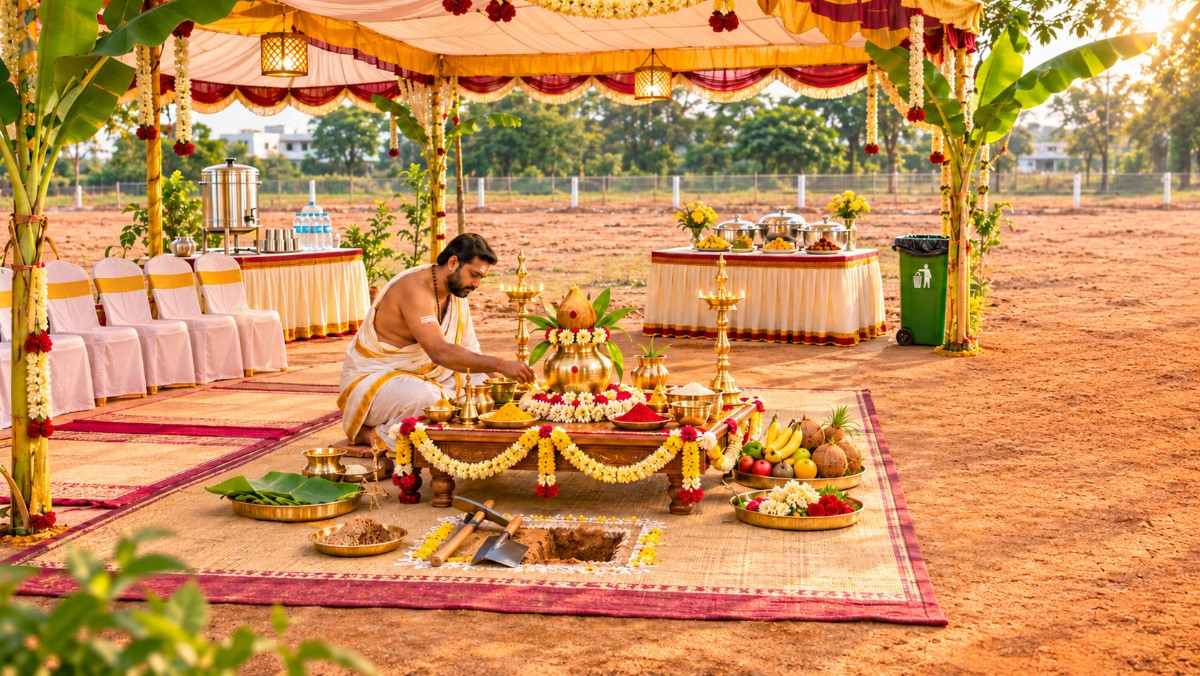
Bhoomi Pooja is commonly performed on an open plot or construction site.
Preparing a safe ceremonial area is important because the property may not yet have regular access, water, electricity or other facilities.
🧹
Clean the Plot Before the Ceremony
Clear the selected pooja area of loose debris, sharp objects and unnecessary construction materials.
Do not disturb protected utilities or undertake excavation without the relevant professional guidance.
✿
Arrange a Safe Pooja Space
Choose level, stable ground where the priest and family members can sit comfortably.
Avoid placing the pooja setup near unsupported excavations or heavy equipment.
🧱
Prepare the Ceremonial Foundation Location
If the ceremony includes Shankusthapana or symbolic digging, confirm the location with both the priest and the site engineer.
Do not dig into an area containing underground electrical cables, water lines or other utilities.
👷
Coordinate with the Contractor
Inform the contractor about the selected muhurtham, ritual location and expected programme.
Ensure that construction machinery and hazardous work remain separated from the ceremony area.
Arrange Basic Facilities
Depending on the site, prepare:
- Clean drinking water.
- Shade or shamiana.
- Mats or chairs.
- A small stable table or pooja peetam.
- Safe access for elderly participants.
- Waste collection and cleanup arrangements.
- Lighting if required.
- A suitable area for prasadam.
If Homam Is Included
Use an appropriate fire-safe setup and keep flammable materials away from the sacred fire.
Follow site safety rules and any applicable local restrictions.
What About Construction Permissions?
Bhoomi Pooja is a religious ceremony and does not replace required building approvals.
Before starting construction, verify the necessary permissions, structural drawings and other applicable requirements with qualified professionals and relevant authorities.
Duration
How Long Does Bhoomi Pooja Take?
The duration of Bhoomi Pooja depends on the selected Vidhanam, foundation-laying requirements, number of priests and additional rituals.
A relatively simple ceremony may be planned for around one and a half to three hours, while more elaborate arrangements can take longer.
What Affects the Ceremony Duration?
- Ganapathi Pooja
- Sankalpam
- Punyahavachanam
- Bhoomi Devi worship
- Vastu Purusha Pooja
- Shankusthapana
- Foundation stone placement
- Additional Homam
- Concluding Harathi and blessings
Does Shankusthapana Require Additional Time?
It may require additional time for site preparation, foundation materials, ceremonial placement and related prayers.
Confirm the expected sequence with your priest.
How Much Time Should You Reserve?
Allow sufficient time before the muhurtham for the priest's arrival, material setup and site preparation.
Avoid scheduling machinery operations or major excavation immediately around the ceremonial activities.
Property Types
Bhoomi Pooja for Residential Plots, Villas and Commercial Buildings
Bhoomi Pooja may be performed for different types of construction projects according to the owner's traditions.
📐
Bhoomi Pooja for Residential Plots
Families who have purchased a residential plot may arrange Bhoomi Pooja before constructing their house.
🏠
Bhoomi Pooja for Independent Houses
For an independent house, the ceremony is often coordinated with the beginning of foundation work.
🏡
Bhoomi Pooja for Villa Construction
Villa owners may perform Bhoomi Pooja and Shankusthapana at the construction site before the foundation stage.
🏢
Bhoomi Pooja for Apartment Buildings
Developers or landowners may arrange a ceremony before construction of an apartment building.
The number of participants and ceremonial arrangements may be greater than for a single-family property.
🏬
Bhoomi Pooja for Commercial Properties
Bhoomi Pooja may be performed before construction of offices, shops, warehouses or other commercial buildings.
🛠
Bhoomi Pooja for Reconstruction
Families planning major reconstruction may discuss whether Bhoomi Pooja, Shankusthapana or another religious observance is appropriate.
Does the Procedure Change by Property Type?
The principal religious purpose may remain similar, but foundation arrangements, site conditions and the chosen ritual format can differ.
For larger projects, coordinate the ceremony with the project manager or engineer.
Ceremonies Compared
Difference Between Bhoomi Pooja, Shankusthapana, Vastu Pooja and Griha Pravesham
These ceremonies are connected with land, construction and property, but they serve different traditional purposes.
Ceremony
Main Purpose
Usual Stage
Common Ritual Focus
Bhoomi Pooja
Worship of the land before construction
Before excavation or construction
Bhoomi Devi and associated deities
Shankusthapana
Foundation-establishment ceremony
Beginning of foundation work
Foundation marker, stone or prescribed ritual placement
Vastu Pooja
Worship associated with Vastu Purusha
Various property-related occasions
Vastu Purusha and related worship
Auspicious ceremonial entry into a home
When the home is ready for occupation
House-entry rituals and related poojas
Bhoomi Pooja vs Shankusthapana
Bhoomi Pooja focuses on worshipping the land.
Shankusthapana is associated with establishing the foundation.
They are often combined in Telugu family traditions.
Bhoomi Pooja vs Vastu Pooja
Bhoomi Pooja is usually associated with beginning construction.
Vastu Pooja may be performed in connection with a building or property at different stages.
Bhoomi Pooja vs Griha Pravesham
Bhoomi Pooja is performed before construction begins, while Griha Pravesham is performed when entering a completed home.
Can These Ceremonies Be Combined?
Some rituals may be combined where the prescribed Vidhanam and the stage of construction allow it.
However, Bhoomi Pooja and Griha Pravesham generally occur at different stages of the building process.
Before Construction
Can Bhoomi Pooja Be Performed Before Construction Begins?
Yes. Bhoomi Pooja is traditionally performed before beginning major construction or excavation work on a plot. The ceremony is often associated with the symbolic first digging or commencement of foundation work.
📐
Can Bhoomi Pooja Be Performed Immediately After Purchasing a Plot?
Families may perform Bhoomi Pooja after acquiring land, but whether that is the appropriate occasion depends on their traditions and construction plans.
If foundation work will begin much later, ask your priest whether a separate Shankusthapana should be performed closer to construction.
🚜
Can Site Levelling Be Done Before Bhoomi Pooja?
Some preliminary work may be necessary to make the site accessible and safe.
However, if the family wishes to observe Bhoomi Pooja before the first excavation, coordinate the sequence with the contractor and priest.
🏗
Can Construction Begin Immediately After Bhoomi Pooja?
From a religious perspective, families may consider the ceremony an auspicious beginning.
Actual construction can begin only when the necessary approvals, engineering preparations and safety requirements are satisfied.
⚖
Is Bhoomi Pooja Required by Law?
Bhoomi Pooja is a religious observance, not a substitute for construction permissions or statutory requirements.
Families choose to perform it according to their beliefs and traditions.
Why 99Poojas
Why Choose 99Poojas for Bhoomi Pooja in Hyderabad?
Bhoomi Pooja is an important occasion for families beginning a construction project.
Choosing the appropriate priest, understanding the procedure and preparing the site can help avoid last-minute confusion.
99Poojas provides an enquiry channel for traditional pooja services in Hyderabad.
అ
Telugu Pandit Enquiries
Request a Telugu-speaking priest and discuss the customs followed by your family.
🧱
Bhoomi Pooja and Shankusthapana Guidance
Clarify whether you require land worship, foundation establishment or both.
◷
Muhurtham Planning
Share your preferred date and whether you already have a muhurtham selected.
✿
Samagri Coordination
Discuss the materials required for the religious ceremony, including any special foundation offerings.
✉
Clear Booking Communication
Confirm the rituals, priest availability, charges and practical arrangements before completing the booking.
📍
Hyderabad Location-Based Enquiries
Share your site location and preferred timing to check the available arrangements.
Our aim is to help you prepare for your Bhoomi Pooja with clear information and respect for your family's traditions.
How to Book
How to Book Bhoomi Pooja with 99Poojas
1
Contact 99Poojas
Submit an enquiry through the website or available contact details.
2
Share Your Preferred Date
Mention the planned construction commencement date and whether you already have an auspicious muhurtham.
3
Provide Your Hyderabad Location
Share the locality, plot address and an accurate location pin if the site is difficult to find.
4
Explain Your Ceremony Requirements
Mention whether you need Bhoomi Pooja, Shankusthapana, Shila Nyasam or additional Homam.
5
Confirm Pandit Availability
Check whether an appropriate Telugu pandit is available on your preferred date.
6
Confirm Samagri and Charges
Review the priest's fees, ritual materials, foundation items and any additional requirements.
7
Complete the Booking
Finalise the arrangements once the date, procedure and quotation have been agreed.
Areas in Hyderabad
Bhoomi Pooja Pandit Services Across Hyderabad
99Poojas handles pooja-service enquiries for Hyderabad. Property owners can check Bhoomi Pooja pandit availability based on the construction-site address and preferred muhurtham.
West Hyderabad
- Kukatpally
- KPHB
- Miyapur
- Nizampet
- Bachupally
- Pragathi Nagar
- Chandanagar
IT Corridor and Nearby Development Areas
- Gachibowli
- Kondapur
- Madhapur
- Financial District
- Nanakramguda
- Kokapet
- Narsingi
- Manikonda
- Nallagandla
- Tellapur
North and Central Hyderabad
- Secunderabad
- Kompally
- Alwal
- Ameerpet
- Begumpet
- Banjara Hills
- Jubilee Hills
East and South Hyderabad
- Uppal
- Nagole
- LB Nagar
- Dilsukhnagar
- Saroornagar
- Vanasthalipuram
Locations Outside Hyderabad
If your site is located in the wider Hyderabad region, share the complete address and location pin when enquiring.
Pandit availability and applicable travel arrangements must be confirmed for the specific location.
Looking for a Bhoomi Pooja pandit near your construction site? Contact 99Poojas.Photos & Reviews
Bhoomi Pooja Photos and Customer Reviews
Bhoomi Pooja Ceremony Gallery
Photographs of actual ceremonies can help families understand the setup and requirements of the ritual.
The gallery may feature:
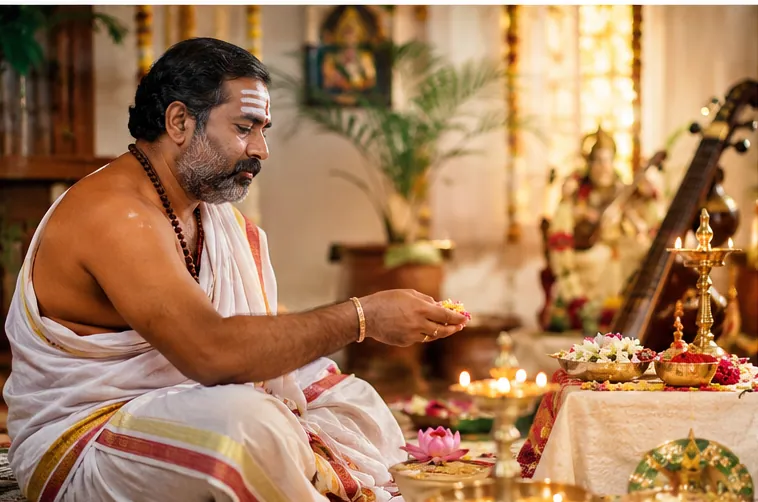
Telugu priests conducting Bhoomi Pooja.
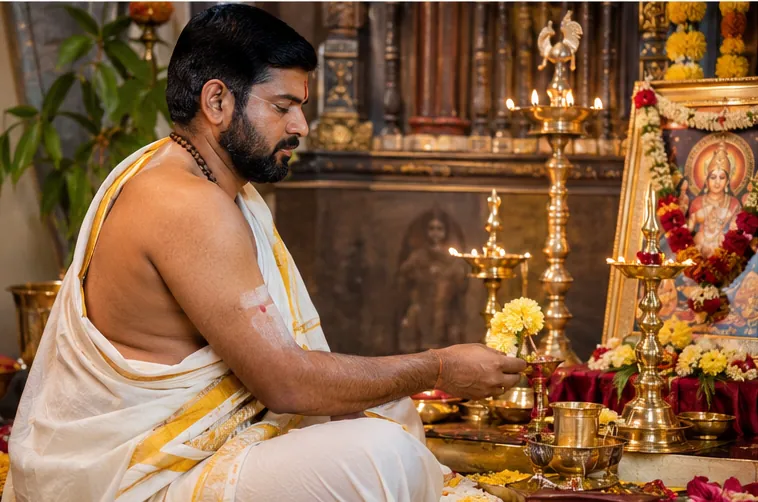
Ganapathi Pooja at a construction plot.
Bhoomi Pooja Ceremony GalleryExplore traditional Bhoomi Pooja ceremonies, Shankusthapana rituals, sacred foundation stone laying and pooja arrangements at residential and commercial construction sites.
Customer Reviews and Testimonials
Genuine customer feedback can help prospective customers understand the booking process.
Useful reviews may discuss:
- Pandit coordination.
- Communication about the muhurtham.
- Samagri guidance.
- Site preparation instructions.
- Priest punctuality.
- Overall ceremony arrangements.
FAQs
Frequently Asked Questions
1. What is Bhoomi Pooja?
Bhoomi Pooja is a traditional Hindu ceremony performed before beginning construction. It honours Bhoomi Devi and often includes prayers to Lord Ganesha and Vastu Purusha. The ceremony expresses gratitude toward Mother Earth and marks an auspicious beginning for the project.
2. How much does Bhoomi Pooja cost in Hyderabad?
Bhoomi Pooja in Hyderabad costs ₹4,500 with the Silver package (one priest; your family arranges the samagri) or ₹5,500 with the Gold package (two priests, with all samagri provided by 99Poojas). You pay a 40% advance when booking and the remaining 60% after the pooja.
Bhoomi Pooja charges depend on pandit dakshina, ceremony type, samagri, Shankusthapana requirements, Homam and site location. Contact 99Poojas with your preferred date and plot details to request a quotation. Confirm the included services before booking.
3. How can I book a Telugu pandit for Bhoomi Pooja?
Contact 99Poojas with your preferred muhurtham, plot location, construction type and required rituals. Request a Telugu-speaking pandit and confirm availability, samagri responsibilities and charges before finalising the booking.
4. What are the benefits of performing Bhoomi Pooja?
In Hindu tradition, Bhoomi Pooja is performed to seek blessings, express gratitude toward Mother Earth and mark an auspicious beginning to construction. These are religious beliefs rather than guarantees of construction safety or financial success.
5. When should Bhoomi Pooja be performed?
Bhoomi Pooja is traditionally performed before starting major excavation or foundation construction. The preferred date and timing are generally selected using the Panchangam and family traditions.
6. Is Bhoomi Pooja necessary before house construction?
Bhoomi Pooja is a religious custom followed by many Hindu families, but it is not a universal legal or engineering requirement. Whether to perform it depends on the property owner's beliefs and family traditions.
7. What is the difference between Bhoomi Pooja and Shankusthapana?
Bhoomi Pooja focuses on worship of the land, while Shankusthapana refers to the foundation-establishment ceremony. In Telugu traditions, both are often performed together. The exact distinction varies according to the chosen ritual procedure.
8. What is the Bhoomi Pooja procedure for a new house?
The ceremony commonly includes Ganapathi Pooja, Sankalpam, Kalasha Sthapana, Bhoomi Devi worship, Vastu Purusha Pooja and ceremonial digging or foundation placement. Additional rituals may be included according to the prescribed Vidhanam.
9. What materials are required for Bhoomi Pooja?
Common items include turmeric, kumkum, Akshatalu, flowers, coconut, Kalasham, mango leaves, fruits and lamps. Shankusthapana may require a foundation brick, stone, Navadhanyalu or other prescribed materials. Obtain the final checklist from your priest.
10. Which day is auspicious for Bhoomi Pooja?
The auspicious day is traditionally selected according to the Panchangam, considering factors such as tithi, nakshatram, vaaram and lagnam. The suitable date may differ according to the family's customs and the chosen ceremony.
11. How is Bhoomi Pooja muhurtham selected?
A purohit may consider the Panchangam, the property owner's traditional requirements and the planned construction schedule. The selected time should also be coordinated with site access and safe arrangements for the ceremony.
12. Can Bhoomi Pooja be performed on an empty plot?
Yes. Bhoomi Pooja is commonly performed on an empty plot before construction begins. The site should have a clean, accessible and safe area for the priest and participating family members.
13. What is the significance of laying the foundation stone during Bhoomi Pooja?
The foundation stone laying ceremony symbolises the beginning of construction. In traditional Shankusthapana or Shila Nyasam, a prescribed foundation element may be placed with prayers at the selected muhurtham.
14. Which deity is worshipped during Bhoomi Pooja?
Bhoomi Devi is the principal deity associated with land worship. Lord Ganesha, Vastu Purusha and other deities may also be worshipped according to the selected ritual procedure.
15. Is Vastu Pooja included in Bhoomi Pooja?
Vastu Purusha worship is included in many Bhoomi Pooja procedures, but it is not necessarily identical to a separately booked Vastu Pooja. Confirm the specific rituals included in your ceremony.
16. Is Homam required for Bhoomi Pooja?
A separate Homam is not automatically required for every Bhoomi Pooja. Some families follow a simpler procedure, while others include Homam. The requirement depends on the prescribed Vidhanam and family traditions.
17. How long does Bhoomi Pooja take?
A simple ceremony is often planned for approximately one and a half to three hours, but the actual duration varies. Elaborate Shankusthapana or additional Homam may require more time.
18. How many pandits are required for Bhoomi Pooja?
Some Bhoomi Pooja ceremonies can be performed by one priest. Elaborate rituals may require additional purohits. Confirm the priest requirements according to the chosen procedure before booking.
19. Does the pandit bring Bhoomi Pooja samagri?
This depends on the booking arrangement. Some materials may be supplied by the priest or provider, while others must be purchased by the property owner. Confirm the complete list and any additional charges.
20. Can Bhoomi Pooja be performed for a commercial building?
Yes. Property owners and developers may perform Bhoomi Pooja before constructing commercial buildings, shops, offices or other business premises according to their religious traditions.
21. Can Bhoomi Pooja be performed before constructing an apartment building?
Yes. Developers or landowners may organise Bhoomi Pooja before beginning an apartment construction project. The ritual arrangements should be coordinated with the project team and the chosen priest.
22. Should Bhoomi Pooja be performed before excavation?
Many Hindu families traditionally perform Bhoomi Pooja before the first major excavation. However, essential site investigations and permitted preparation may occur earlier. Coordinate the ritual with the engineer and contractor.
23. Can construction begin immediately after Bhoomi Pooja?
Religiously, the ceremony may mark the intended beginning of construction. Actual work should begin only after the required approvals, engineering preparations and safety arrangements are in place.
24. Can Bhoomi Pooja and Shankusthapana be performed on the same day?
Yes. Bhoomi Pooja and Shankusthapana are commonly combined in Telugu traditions. The priest can confirm the procedure, muhurtham and required materials for the combined ceremony.
25. How early should I book a Bhoomi Pooja pandit in Hyderabad?
Enquire once your proposed construction date and plot readiness are reasonably certain. Early planning is useful when you need a specific muhurtham, Shankusthapana arrangements or additional priests. Availability must be confirmed for the selected date and location.
Book Now
Book Your Bhoomi Pooja Pandit in Hyderabad
Building a new home or commercial property is an important milestone. Bhoomi Pooja offers families an opportunity to begin their construction journey with traditional prayers, gratitude toward Mother Earth and the blessings of their chosen deities.
Whether you are planning a simple land-worship ceremony or an elaborate Shankusthapana, preparing the site, choosing the muhurtham and confirming the materials beforehand can make the occasion easier to organise.
At 99Poojas, you can enquire about Bhoomi Pooja pandit arrangements, discuss the required rituals and check availability for your preferred date.
Plan Your Bhoomi Pooja with 99Poojas
Explore our Pujari in Hyderabad services for traditional Hindu ceremonies.
Book Bhoomi PoojaShare your preferred date, plot location, property type and ceremony requirements to get started.